


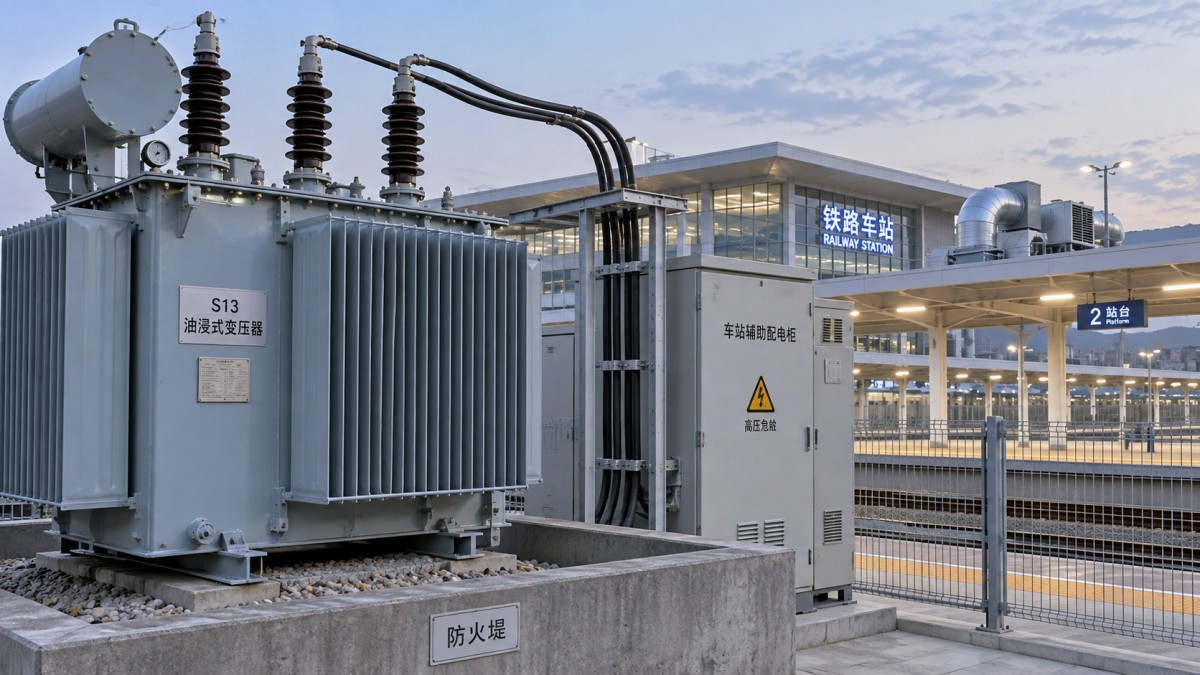
Yes—an S13 oil-immersed transformer can supply railway auxiliary loads, provided its electrical ratings, thermal capability, protection arrangements, and installation conditions match the project. Station lighting, ventilation, pumps, and the input supplies to signaling-support systems can fall within its application scope. The S13 designation alone, however, does not establish railway suitability, harmonic tolerance, or continuity of supply.
The decisive distinction is between an auxiliary distribution transformer and a traction transformer. A unit selected for a conventional medium-voltage auxiliary feeder is not automatically suitable for direct connection to a railway traction supply. Even within auxiliary distribution, adequate nameplate capacity does not guarantee acceptable voltage during motor starting, safe operation with nonlinear loads, or compliance with underground fire requirements.
Define the supply boundary before selecting the transformer
The evaluation should begin with the single-line diagram. Establish whether the transformer receives power from a dedicated utility feeder, a railway auxiliary network, or a supply derived from traction infrastructure. These arrangements can have different voltage characteristics, earthing requirements, fault levels, and disturbance exposure.
A conventional three-phase S13 distribution transformer may be suitable where the incoming voltage and frequency match its rating. Direct connection to a single-phase traction system, or operation under an unusual voltage-to-frequency ratio, requires a different assessment. Excessive voltage relative to frequency can overexcite the core, increasing heating and noise even when the secondary load is modest.
Also distinguish the transformer’s load from the equipment ultimately being served. Signaling electronics supplied through a UPS present the transformer with the UPS input characteristic, including charging demand and rectifier harmonics. The transformer does not, by itself, provide the ride-through, isolation, or power-quality performance required by the signaling system.
A specification described as “S13 Series Oil-Immersed Power Transformer for railway” should therefore identify the actual supply arrangement and operating duties rather than rely on the application label.
Size against operating cases, not the connected-load total
A useful load schedule separates continuously operating loads, intermittent loads, motor loads, and nonlinear electronic loads. Lighting, ventilation, drainage pumps, lifts, communications equipment, and battery chargers do not necessarily reach maximum demand simultaneously. Their operating relationships matter more than a blanket diversity allowance.
For substantially sinusoidal loads, apparent power can be estimated from active power divided by power factor. With nonlinear loads, use true power factor and RMS current: displacement power factor alone does not account for waveform distortion. Check each phase separately, since a heavily loaded phase can reach its thermal limit while total three-phase demand remains below the nameplate rating.
The relevant duty cases include:
- Normal maximum demand, with realistic coincidence assumptions.
- Emergency operation, including ventilation or pumping combinations specified by the railway design.
- Transfer conditions when one transformer or feeder is unavailable.
- Recovery after an outage, when motors restart and UPS batteries recharge.
Consider a hypothetical installation with 400 kVA of normal demand. A 500 kVA transformer appears to provide headroom, but that comparison is insufficient if a large fan starts during battery recharge or if the unit must carry transferred loads. Approval requires checking transient voltage performance and the duration of the higher thermal duty—not simply adding a percentage margin.
Overload capability must come from the proposed unit’s thermal characteristics and an applicable loading assessment. It should not be assumed from the S13 series name. Ambient temperature, prior loading, cooling conditions, and permissible insulation ageing all affect the result.
Voltage regulation and harmonics can determine suitability
Transformer impedance creates a trade-off. Higher impedance reduces prospective secondary fault current but increases voltage drop under load and during motor starting. Lower impedance improves voltage stiffness while increasing the fault duty imposed on downstream switchgear. Selection must satisfy both requirements.
A starting assessment should include upstream source impedance, transformer impedance, cable impedance, motor starting method, and the loads already operating. The acceptance limit belongs at the equipment terminals, not merely at the transformer secondary. Soft starters and variable-frequency drives can reduce starting current, but their performance and harmonic effects still need assessment.
Tap selection addresses steady voltage mismatch; it is not a substitute for dynamic voltage regulation. If the proposed unit has an off-circuit tap changer, adjustment requires de-energization and cannot correct rapid supply fluctuations.
LED drivers, UPS rectifiers, chargers, and variable-frequency drives can produce harmonic currents that increase winding and stray losses. A standard temperature-rise result under sinusoidal loading does not establish thermal capability under the project’s distorted current waveform. Obtain the expected harmonic spectrum and ask the manufacturer to assess additional losses, allowable loading, and any required design changes.
Single-phase electronic loads also require attention to triplen harmonics, which can add in the neutral rather than cancel. Confirm the neutral terminal, conductor, and earthing arrangement against the calculated neutral current. A delta winding can provide a path for certain zero-sequence harmonic components, but choosing Dyn11 does not eliminate secondary neutral heating or every power-quality concern.
Installation conditions may rule out an otherwise adequate unit
An outdoor auxiliary substation and an enclosed underground station are materially different installation environments. Oil containment, fire separation, access, ventilation, flood exposure, and emergency arrangements can determine whether an oil-immersed transformer is acceptable.
Mineral-oil insulation introduces a combustible liquid inventory. Where local rules or the railway project specification restrict that inventory, an S13 oil-immersed unit may be unsuitable regardless of its electrical performance. A dry-type transformer or another permitted insulating-liquid design may warrant evaluation, but changing technology still requires checking thermal, enclosure, and fire requirements.
Confirm cooling performance at the actual site altitude and ambient temperature. Restricted airflow around radiators can invalidate assumptions behind the rated output. Water ingress, condensation, pollution, corrosion, and nearby mechanical vibration also need defined limits. A general distribution-transformer specification does not prove suitability for every trackside environment.
Insulation coordination should address system voltage, surge exposure, arrester selection, and cable connections. Railway-related disturbances must be traced to the actual supply arrangement; neither ordinary utility conditions nor severe traction-related exposure should be assumed without evidence.
Continuity of service depends on the complete distribution design
A transformer can satisfy its technical specification and still leave essential railway services exposed to a single failure. Where the project requires supply redundancy, evaluate independent feeders, transformer capacity after transfer, automatic transfer behavior, and UPS autonomy together.
Two installed transformers do not establish N−1 capability if the surviving unit cannot carry the defined essential load, or if both depend on a common vulnerable upstream supply. Load shedding may be necessary to preserve signaling support and emergency functions while disconnecting nonessential building services.
Protection coordination must allow for transformer energization inrush and motor starting without sacrificing fault clearance. Confirm downstream breaker interrupting ratings using the calculated fault level. If parallel operation is intended, check voltage ratio, tap position, phase displacement, impedance compatibility, and load sharing; matching capacity alone is insufficient.
Require model-specific evidence before acceptance
The approval package should establish guaranteed loss values, impedance, vector group, tap range, insulation levels, temperature-rise limits, cooling method, and service conditions. It should also include relevant routine and type-test evidence, short-circuit withstand evidence acceptable under the project specification, protection details, and installation drawings.
Standards must be identified by the editions accepted for the destination market and railway contract. General transformer compliance and ISO 9001 certification do not demonstrate compliance with every railway-specific requirement. Legacy standard references in a supplier profile should not replace the project’s technical acceptance criteria.
Loss comparison is worthwhile for continuously energized auxiliary supplies, but it remains separate from railway suitability. As an alternative benchmark, the published range for S20 Series Oil-Immersed Power Transformers lists capacities from 30 to 2,500 kVA and Yyn0 or Dyn11 connections. Those options can support a like-for-like assessment; they do not establish interchangeability with an S13 unit. Compare guaranteed no-load and load losses at the same capacity, reference conditions, and expected duty profile.
An S13 unit is a defensible choice when the auxiliary supply matches its ratings, the calculated duty remains within verified thermal and voltage limits, the installation permits oil insulation, and the complete power system meets continuity requirements. Missing harmonic assessments, unacceptable motor-start voltage dips, prohibited oil installations, or an incompatible supply arrangement are reasons to withhold acceptance—not issues that a larger kVA rating necessarily resolves.



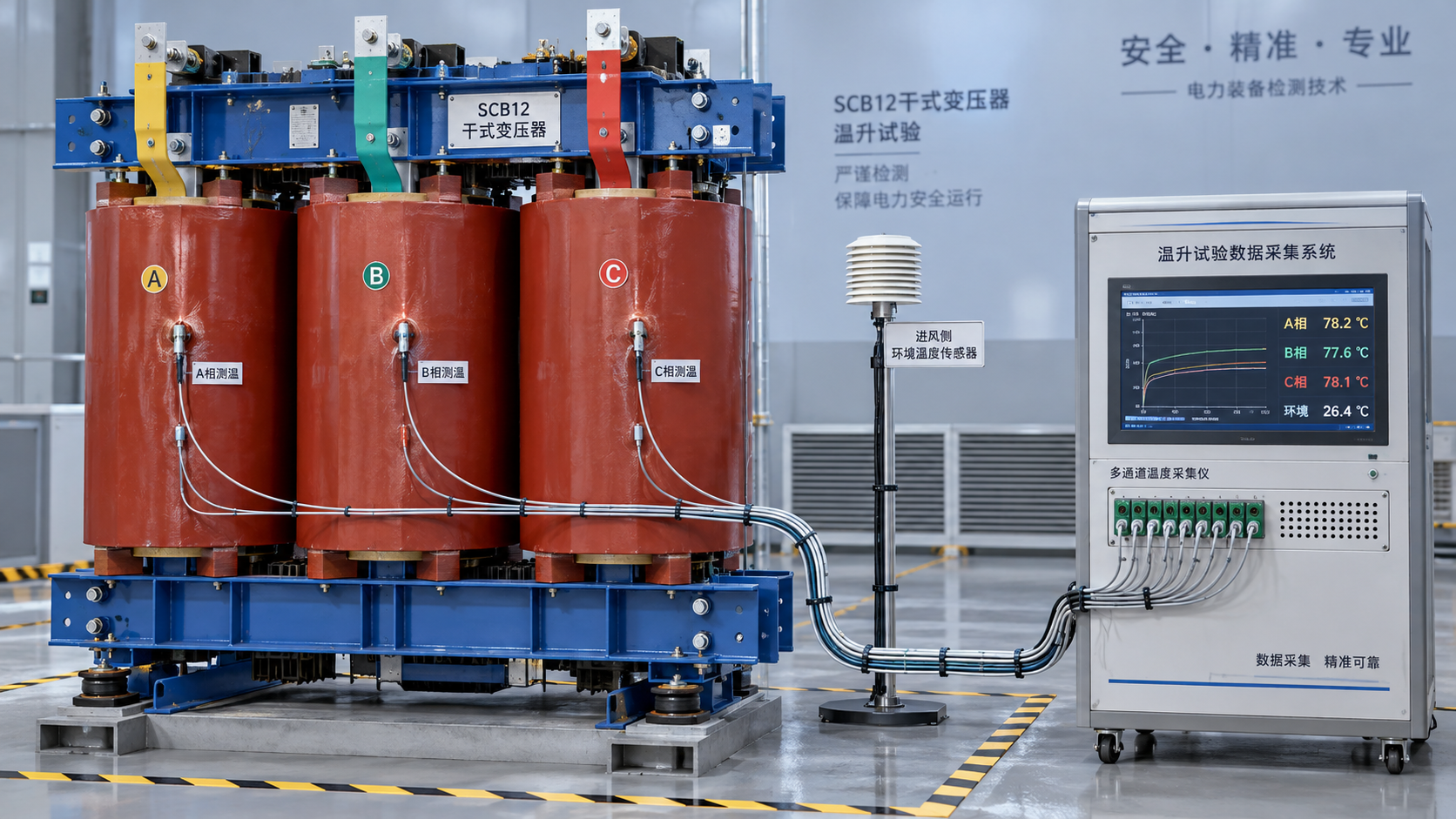
 How to verify the temperature-rise test of an SCB12 dry-type transformer
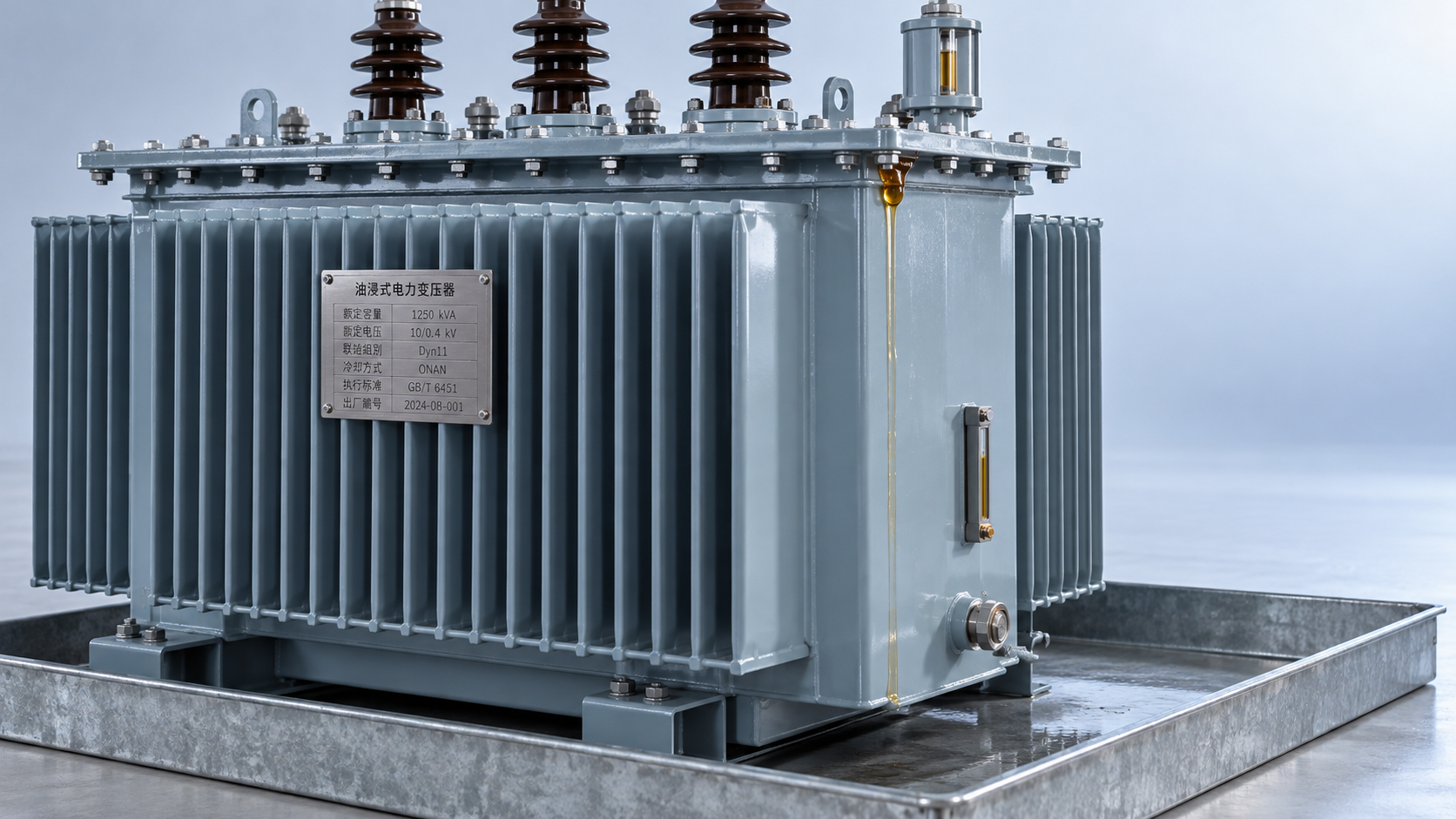
 Distribution transformer maintenance tips for spotting oil leaks
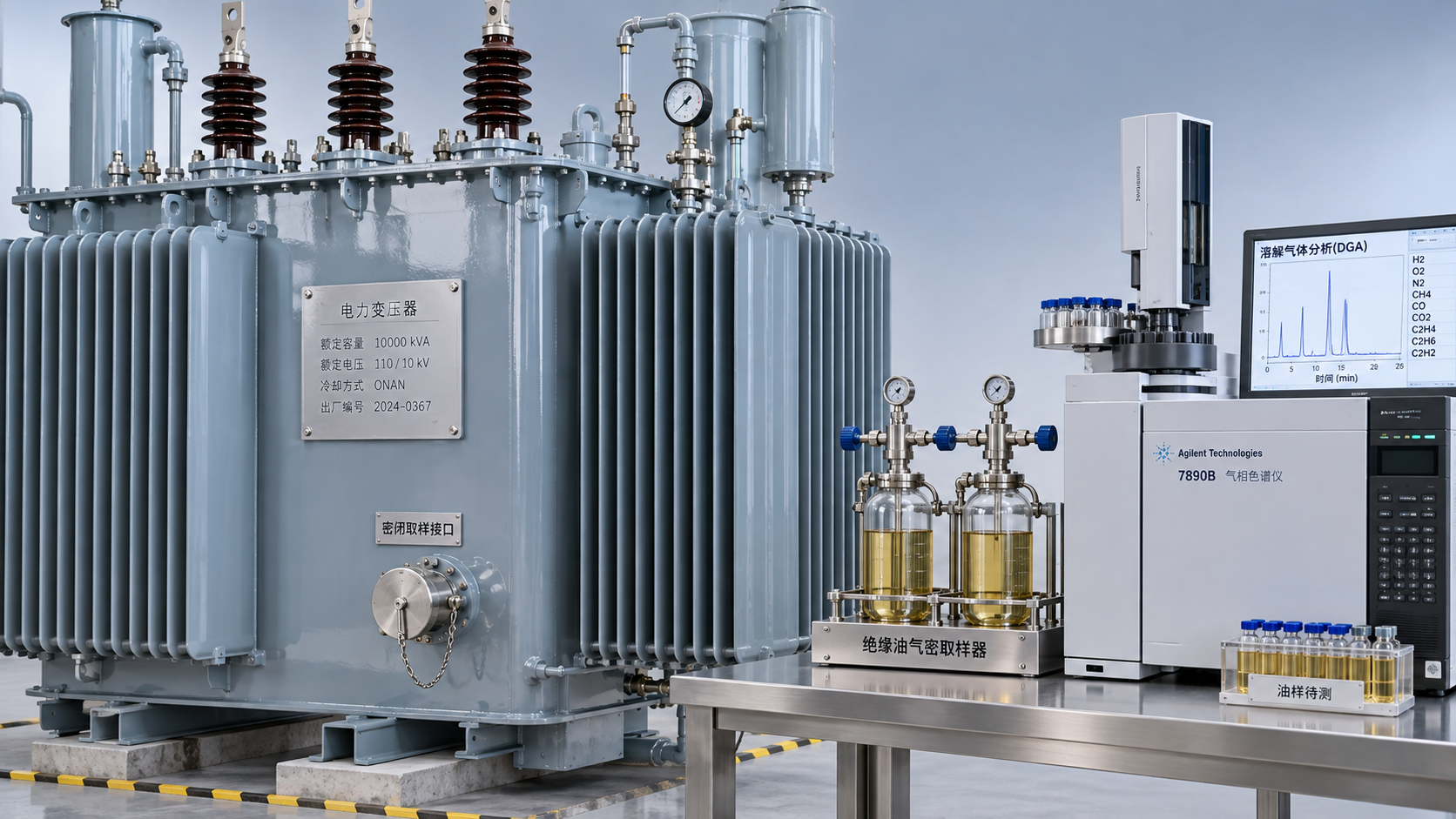
 What dissolved gas analysis reveals about an oil-immersed transformer
 Why an oil-cooled transformer overheats despite a normal oil level
 How the amorphous core affects SCBH15 dry-type transformer losses
 Sizing S13 oil-immersed transformers for variable wind farm output
GET A FREE QUOTE
We offer reliable products, competitive prices, and nationwide professional support, committed to providing customers with efficient and energy-saving power equipment solutions.