


A small oil stain beneath a distribution transformer deserves attention, even when the unit is operating normally. Start by checking, from an authorized safe observation position, whether fresh oil is appearing, where the highest visible wet point lies, and whether the oil-level indication has changed. Oil can travel down the tank before dripping, so the puddle location alone rarely identifies the source.
The most useful distribution transformer maintenance tips combine visual checks with temperature-aware oil-level records and clear escalation rules. A persistent leak can reduce the oil available for insulation and cooling; a compromised seal may also allow moisture ingress. Operators should document the evidence, not tighten fittings, open covers, or attempt repairs on energized equipment.
First decide whether this is an observation task or an urgent fault
Before approaching, follow the site’s electrical safety procedures, access restrictions, and required clearances. Use a viewing window, installed camera, or approved observation point where available. Do not open an energized enclosure simply to obtain a better view. Oil on the ground can also create slipping and environmental hazards.
Active dripping, an expanding pool, an oil-level alarm, or leakage accompanied by abnormal temperature, smoke, arcing, or unusual noise requires prompt escalation. Notify the responsible electrical personnel and follow the site’s emergency or controlled shutdown procedure. Do not operate switches or valves unless authorized to do so.
A dry, older stain without fresh wetness is less urgent, but it still needs a recorded baseline and follow-up. Appearance alone cannot establish that the leak has stopped or that the remaining oil level is adequate.
Trace the wet path upward, not just toward the puddle
Gravity, wind, and rain can carry oil away from its source. Look for the uppermost accessible wet edge, a narrow shiny trail, or dust that has become dark and sticky. Compare adjacent surfaces: a localized wet patch around a joint is more informative than general dirt across the tank.
The following locations deserve particular attention during an external inspection. Any close inspection or physical contact must wait for an appropriately isolated, verified-safe condition established by qualified personnel.
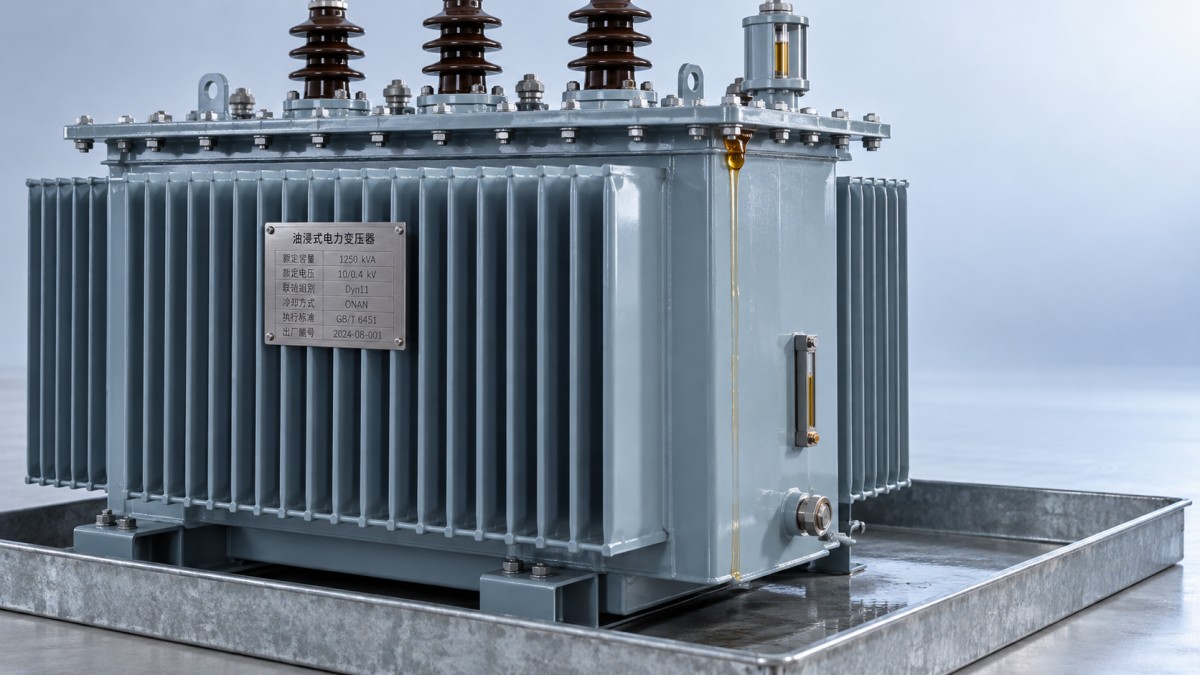
Do not assume every wet surface contains transformer oil. Rainwater, condensation, and residue from earlier servicing can confuse the picture. Never touch or smell an unknown liquid to identify it. Qualified personnel can investigate safely using the site’s approved method and relevant fluid-handling precautions.
Read oil level alongside temperature and transformer design
An oil-level indication is useful only when interpreted correctly. Oil expands as temperature rises and contracts as it cools, so comparing a hot, heavily loaded afternoon reading with a cool morning reading may suggest a loss that has not occurred. Record ambient temperature, indicated oil temperature where available, and operating load alongside each reading.
Look for a downward trend under comparable conditions, a reading outside the manufacturer’s permitted range, or a level change that accompanies fresh leakage. A normal-looking indication does not cancel visible leak evidence: a small loss may not yet produce a noticeable gauge change, and the indicator itself may require checking.
Some sealed distribution transformers do not provide an operator-readable oil-level gauge. Do not improvise by opening a filling plug or inserting a probe. Use the manufacturer’s inspection instructions and have qualified personnel determine how oil quantity or internal condition should be assessed.
A sealed tank changes what you should expect to see
The S11 Series Oil-Immersed Power Transformer uses a fully sealed structure without an oil conservator. Its corrugated sheets accommodate oil-volume changes through their elasticity, while isolation from air helps slow oil deterioration and insulation aging.
For this design, a conservator inspection is not applicable; external seals, fittings, welds, and corrugated tank surfaces remain relevant inspection points. The sealed construction does not make an oil leak acceptable or remove the need for external condition checks. Do not open the tank or add oil merely because a conventional conservator reference is absent.
Create a record that shows whether the leak is progressing
A useful report lets the next shift or maintenance team compare the same location without relying on memory. From a safe position, photograph both the whole transformer and the suspected source. Use consistent viewing angles and existing features as references rather than placing markers on energized equipment.
- Identify the unit: asset number, location, and the affected side or fitting.
- Describe the evidence: dry staining, fresh surface wetness, a forming droplet, active dripping, or pooling.
- Record operating conditions: date, time, weather, load, available temperature readings, oil-level indication, and alarms.
- Note recent activity: servicing, transport, installation, or nearby work that could help explain the finding.
- State what changed: whether the wet area has spread or new oil has appeared since the previous observation.
Inspection frequency should follow the site’s maintenance program and the assessed severity, not a universal interval. A newly discovered active leak needs a responsible person’s decision on continued operation and follow-up timing. It should not simply be left for the next routine inspection.
Separate safe observation from repair work
Operators can report accessible visual evidence and restrict access according to site procedures. Physical cleaning, seal replacement, tightening, sampling, and oil replenishment belong to authorized personnel working under the required isolation and safety controls. Oil containment must not require entering an unsafe electrical area.
Do not “give the bolts another turn” to stop seepage. Excessive or uneven tightening can damage a gasket, distort a flange, or stress a bushing assembly. Correct torque and tightening sequence depend on the specific equipment. Similarly, an external sealant patch may hide the source without providing a suitable repair.
Once the transformer is made safe, the maintenance team can clean the suspected area using compatible materials, confirm the leak origin, and inspect the joint or tank condition. Depending on the findings, work may involve replacing a seal, repairing a fitting, or obtaining a manufacturer-approved tank repair. Any oil added must meet the transformer’s specified requirements; topping up alone does not resolve the leak.
After repair, establish a clean baseline and verify that the area stays dry through the manufacturer’s prescribed checks and subsequent operating temperature changes. Confirm acceptable oil quantity using the approved method, and record the repair details. Where significant loss or possible moisture entry occurred, qualified personnel should decide whether oil testing or further electrical checks are needed before return to service.



 How to verify the temperature-rise test of an SCB12 dry-type transformer
 Distribution transformer maintenance tips for spotting oil leaks
 What dissolved gas analysis reveals about an oil-immersed transformer
 Why an oil-cooled transformer overheats despite a normal oil level
 How the amorphous core affects SCBH15 dry-type transformer losses
 Sizing S13 oil-immersed transformers for variable wind farm output
GET A FREE QUOTE
We offer reliable products, competitive prices, and nationwide professional support, committed to providing customers with efficient and energy-saving power equipment solutions.