Welcome to Jiangsu Shengda Power Equipment Co., Ltd.


Low-Loss Custom Transformer Specification: Key Parameters Engineering Teams Must Define Before RFP Release
Time: Sep 24, 2026
Before you draft an RFP for a *low-loss custom transformer*, pause—not to double-check the budget or timeline, but to ask: *What does “low-loss” actually mean in my project’s context?* It’s not just a marketing tagline. It’s a technical commitment that ripples across energy bills, thermal management, space planning, maintenance cycles, and even grid stability. And yet, many engineering teams treat specification as a formality—filling out tables with generic values, deferring critical decisions until procurement or factory acceptance testing. That delay rarely saves time. More often, it triggers redesigns, extended lead times, or compromises on efficiency that erode ROI over decades.
At Jiangsu Shengda Power Equipment Co., Ltd., we’ve supported over 200 infrastructure and industrial projects where the most consequential engineering choices weren’t made in the factory—but in the quiet moments before the RFP went live. Our S11–S22 oil-immersed and SCB10–SCB18 dry-type series aren’t off-the-shelf units dressed up as custom solutions. They’re built from the ground up around *your* defined parameters—not ours. Which means your specification isn’t just a checklist. It’s the first act of systems engineering.
Let’s walk through the parameters that deserve deliberate, cross-functional alignment—before any vendor receives your document.
**Electrical Performance Isn’t Just About kVA and Voltage**
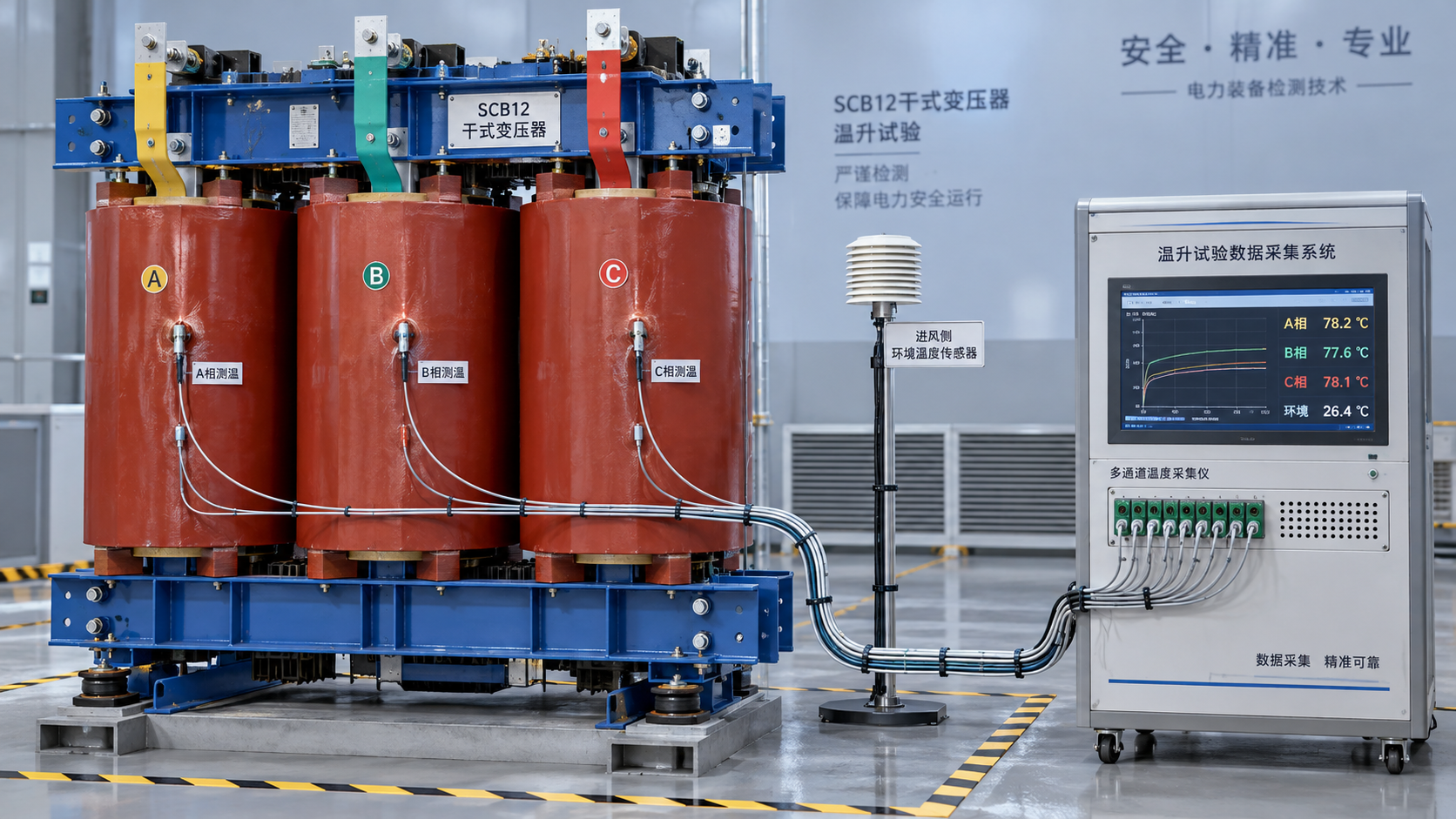
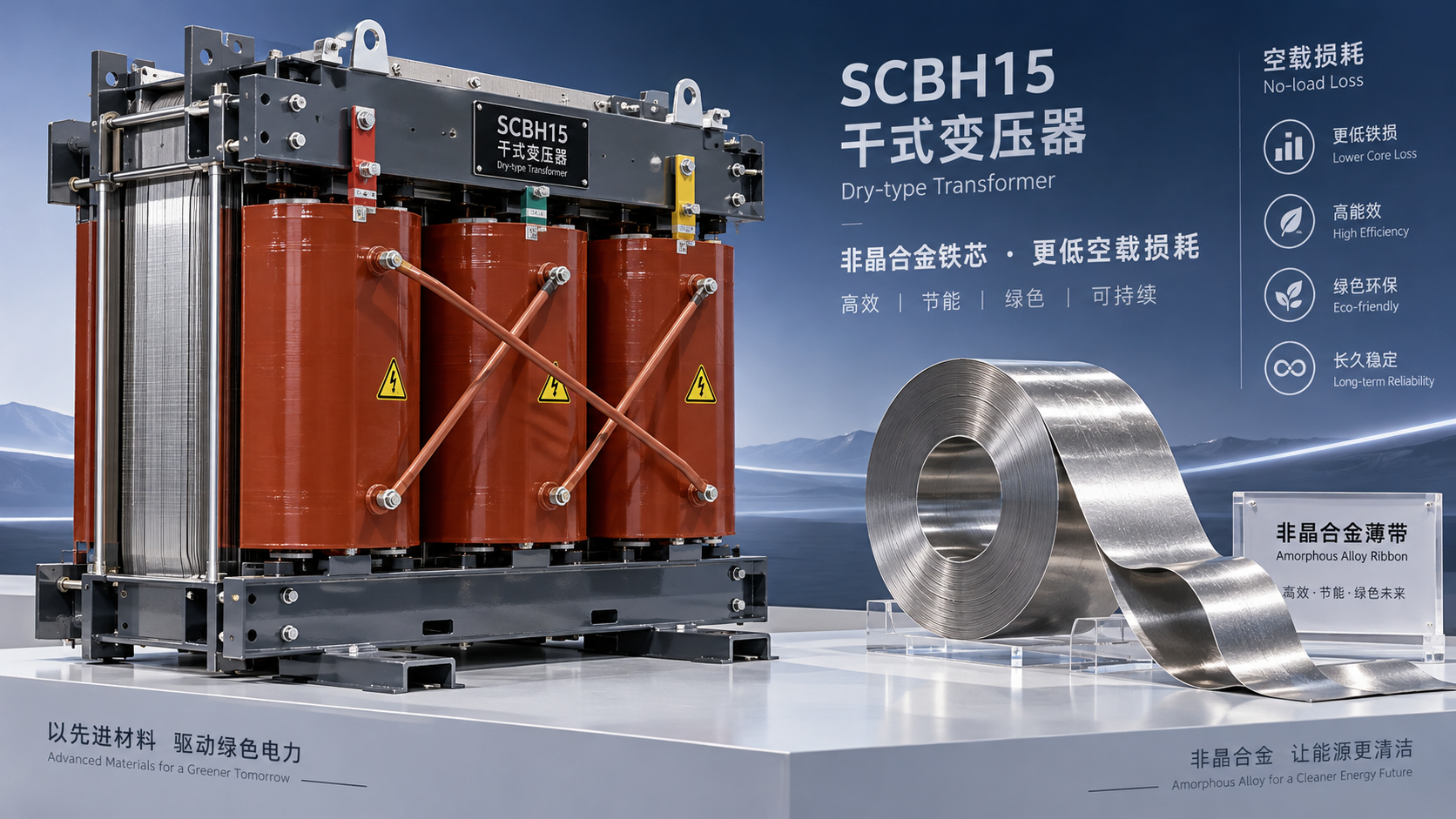
Yes, rated capacity (e.g., 1000 kVA), primary/secondary voltage (10 kV / 400 V), and vector group (Dyn11) are table stakes. But loss behavior is where real differentiation lives. No-load loss (P₀) and load loss (Pk) must be specified *at defined operating points*—not just “compliant with GB/T6451-2008.” For example, if your site experiences frequent partial loading, a transformer optimized for full-load efficiency may underperform in practice. Ask: *At what load profile (25%, 50%, 75%, 100%) do we need verified loss data?* Also clarify whether losses are required at 75°C or 85°C top-oil temperature—and whether harmonics (THD > 5%) will be present. Dry-type units like the SCB12 Type Dry-Type Transformer deliver a documented >20% reduction in no-load loss versus SCB11—*but only when core geometry, material grade (e.g., 0.23 mm grain-oriented silicon steel), and winding design align with your actual duty cycle.*
**Thermal Realities Shape Mechanical Decisions**
Losses convert to heat. Heat dictates cooling method, enclosure rating, and installation clearances. Specify cooling type explicitly: ONAN (oil-natural/air-natural), ONAF (forced air), or—for dry-types—AF (forced air) vs. AN (natural convection). Don’t assume “standard cooling” fits your substation layout. A compact urban substation with limited airflow may require AF-rated windings and IP23 enclosures—even if ambient temps are moderate. Conversely, a rural 35 kV feeder station with open-air mounting might safely use AN with IP20, reducing fan-related maintenance and noise. The SCB12 Type Dry-Type Transformer integrates temperature control display and load recording—not as add-ons, but as embedded diagnostics enabling predictive thermal management. That capability only delivers value if your spec requires real-time winding hot-spot monitoring (IEC 60076-7 compliant), not just ambient sensor readouts.
**Mechanical Integration Is Often Overlooked—Until It’s Not**
A transformer doesn’t exist in isolation. Its footprint, weight distribution, lifting lugs, rail spacing, bushing orientation, and cable entry points affect civil works, crane selection, and switchgear interface. Specify seismic category if applicable (e.g., GB 50260), especially for 35 kV units in high-risk zones. Clarify grounding requirements: Is a dedicated neutral bushing needed? Must the tank be equipotential-bonded per IEC 61936-1? And don’t skip enclosure protection—IP ratings matter beyond dust/water resistance. IP20 offers basic personnel protection indoors; IP23 adds rain resistance for semi-outdoor placement; IP54 may be essential near coastal or chemically aggressive environments. Material choice (ordinary steel, stainless steel, aluminum alloy) affects corrosion life, not just aesthetics.
**Noise and Partial Discharge Are Operational Signifiers**
Low-loss transformers are often deployed closer to occupied spaces—data centers, hospitals, commercial hubs. Noise isn’t just a comfort issue; excessive sound can trigger regulatory non-compliance or tenant complaints. JB/T10088-2016 sets baseline limits, but specifying *“10–15 dB below JB/T10088-2016 Level Y”*—as achieved by the SCB12—creates enforceable performance criteria. Similarly, partial discharge (PD) level isn’t a pass/fail checkbox. For dry-types, PD < 5 pC at 1.1×Um/√3 signals robust resin casting integrity. That’s enabled by vacuum thin-film degassing and precision stirring—not just “low PD” as a claim. Your RFP should demand PD test reports at factory acceptance, not just compliance statements.
**Standards and Certification: Precision Over Assumption**
Listing “GB/T6451-2008 compliant” is insufficient. Specify *which clauses* apply: Is short-circuit withstand (Clause 8.4) required at 100% system X/R ratio? Does harmonic current derating follow IEC 60076-14 Annex B? And remember: ISO9001 certification confirms process control—not product performance. What matters is traceability: Can the vendor provide mill certificates for core steel? Test reports signed by CNAS-accredited labs? Third-party witness records for impulse tests?
Finally, consider lifecycle ownership. A *low-loss custom transformer* isn’t purchased—it’s commissioned, monitored, and maintained. Does your spec require integrated load recorders with Modbus/RS485 output? Remote temperature alarms? Compatibility with your existing SCADA platform? These aren’t “nice-to-haves.” They determine whether efficiency gains translate into actionable insights—or remain buried in annual utility reports.
The strongest RFPs we see don’t list features. They describe *behavior*: “Under sustained 75% load at 40°C ambient, the unit shall maintain top-oil temperature ≤ 65°C without forced cooling,” or “Noise measured at 1 m radial distance shall not exceed 55 dB(A) during continuous 100% load operation.” That level of specificity transforms procurement from negotiation to validation.
Jiangsu Shengda doesn’t optimize for catalog numbers—we optimize for your operational truth. Whether you’re scaling a renewable microgrid or upgrading legacy infrastructure, defining these parameters upfront doesn’t slow down your project. It prevents rework, validates TCO models, and ensures the transformer you specify today remains a silent, efficient partner for its full 30+ year service life. Because low-loss isn’t just about watts saved. It’s about confidence—engineered, verified, and delivered.



Previous:No more content
Next:No more content
News Recommended
 How to verify the temperature-rise test of an SCB12 dry-type transformer
 Distribution transformer maintenance tips for spotting oil leaks
 What dissolved gas analysis reveals about an oil-immersed transformer
 Why an oil-cooled transformer overheats despite a normal oil level
 How the amorphous core affects SCBH15 dry-type transformer losses
 Sizing S13 oil-immersed transformers for variable wind farm output
GET A FREE QUOTE
We offer reliable products, competitive prices, and nationwide professional support, committed to providing customers with efficient and energy-saving power equipment solutions.