


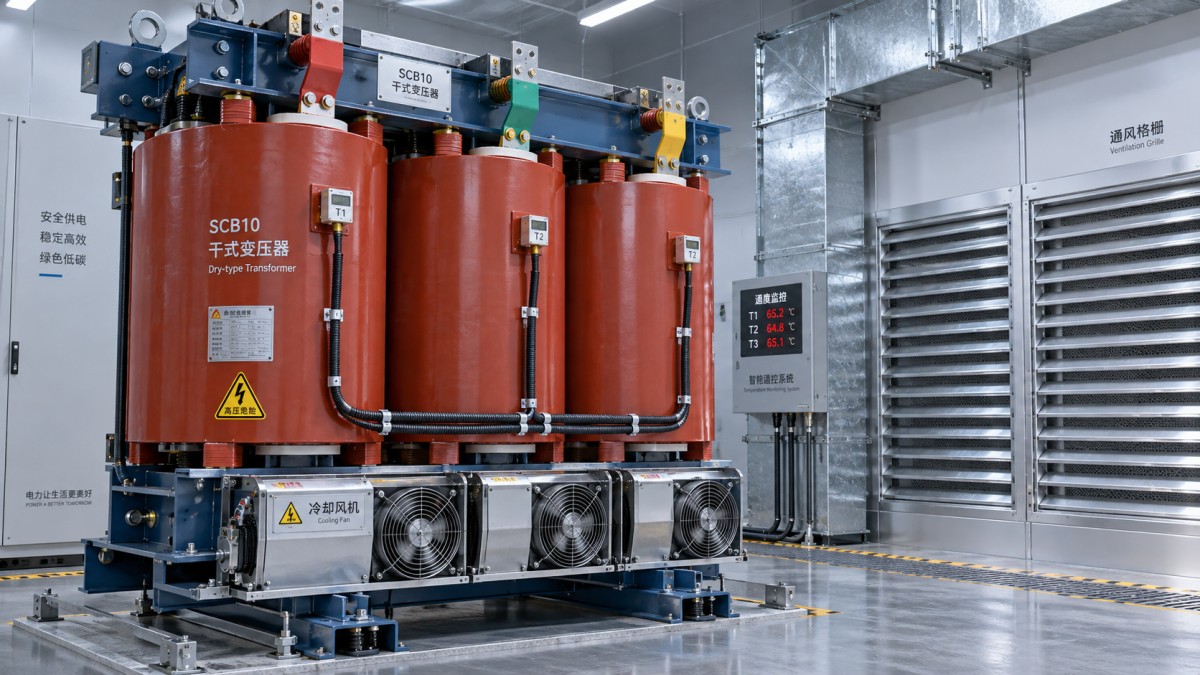
The cooling fans on an SCB10 dry-type transformer should normally start when the monitored winding temperature reaches the controller’s configured fan-start threshold. They should stop after the temperature falls to the lower fan-stop threshold, subject to any programmed delay. Fans may also run during an approved manual test or when the installation requires forced-air cooling for its operating load.
Continuous operation does not automatically indicate a fault. The useful question is whether the fans are responding correctly and keeping winding temperatures within the transformer’s operating limits. In the SCB10 Type Dry-Type Transformer cooling system, fan status, winding temperature, load, and room ventilation need to be assessed together.
What actually tells the fans to start?
A typical arrangement uses temperature sensors embedded in the windings, connected to a temperature controller. The controller displays the measured temperatures and issues a fan command when its configured control condition is met. Many installations use the highest valid phase temperature for cooling control, although the actual logic depends on the controller and wiring.
This means fans can start even when the transformer is operating below its rated load. A hot transformer room, restricted ventilation, or residual heat from an earlier load peak can keep winding temperatures high. Conversely, fans may remain off during moderate loading when natural airflow removes enough heat.
Some systems also include manual operation, remote commands, staged fan groups, or periodic test functions. Before interpreting unexpected fan operation, establish which control mode is active. A manual override can keep fans running regardless of winding temperature.
A fan command is not proof of airflow. The controller may show that its output is active while a failed motor, interrupted auxiliary supply, or contactor problem prevents the fans from running. Actual fan operation must be distinguished from the command indication.
Is there a standard fan-start temperature for every SCB10?
The SCB10 designation alone does not establish a universal fan-start temperature. Settings depend on the transformer’s thermal design, insulation system, cooling arrangement, sensor location, and protection scheme. The operating reference is the supplied transformer documentation and the approved settings for its temperature controller.
Three temperature functions should remain distinct: starting the fans, issuing a high-temperature alarm, and initiating an overtemperature trip. Cooling normally begins before the alarm condition develops. An alarm calls for investigation or an operating response; a trip provides protection when the configured shutdown condition is reached.
An insulation thermal class is not a fan-start setting. It describes thermal capability within an insulation system and does not directly define an acceptable controller reading. Similarly, a specified winding temperature rise is a rise above the cooling-air temperature under defined conditions, rather than an absolute temperature to enter into the controller.
Copying settings from another transformer can therefore create problems even when both units carry an SCB10 designation. Raising the fan-start threshold to reduce noise can allow higher operating temperatures; lowering it excessively can cause unnecessary fan operation. Changes should follow the transformer’s documented thermal requirements and the site’s authorized setting procedure.
Why do the start and stop temperatures differ?
The difference between the fan-start and fan-stop thresholds is called hysteresis. It keeps the fans from switching repeatedly as the measured temperature moves slightly above and below a single threshold.
Once the fans start, they normally continue until the winding temperature falls to the lower stop setting. If temperature stays between the two thresholds, running fans may remain on, while stopped fans may remain off. Both states can be correct because the controller takes the previous operating state into account.
Transformers also retain heat. After the electrical load drops, winding temperature takes time to fall, so the fans need not stop immediately. Programmed delays or minimum running times may extend this period. Frequent switching within a short interval, however, warrants checking the configured temperature differential, controller timing, and sensor stability.
When continuous fan operation is normal—and when it needs attention
During sustained heavy loading or hot ambient conditions, the fans may run continuously because the windings never cool to the stop threshold. If temperatures settle within the approved operating range and airflow is adequate, this can be normal thermal control.
The trend matters more than the sound of running fans. Stable temperatures under steady conditions suggest that cooling is balancing heat generation. Temperatures that continue rising while all fans operate indicate that the available cooling is not keeping pace, or that the temperature measurement needs investigation.
Fans move heat away from the transformer into the surrounding room. The room must then discharge that heat. Blocked air inlets, restricted exhaust paths, or recirculation of warm exhaust air can make effective fans appear inadequate. Installing more fan capacity will not necessarily solve poor room ventilation.
A change from the transformer’s usual behavior is particularly useful evidence. Continuous running at a previously manageable load may result from hotter inlet air, dirty cooling passages, reduced fan performance, phase imbalance, or additional losses associated with harmonic currents. Compare current conditions with earlier operating records before concluding that the transformer needs replacement.
If the windings have cooled below the stop threshold but the fans remain on, look at manual or remote commands, programmed delays, and the switching circuit. The cause may be a control condition or a contactor that remains closed rather than excessive transformer temperature.
What to check if the fans fail to start
Fans being off is only abnormal when a valid operating condition requires them to run. A cool transformer operating within its natural-air rating may need no forced cooling. Once the applicable start threshold is reached, the following checks help locate the problem:
- Read all winding temperatures. Compare the relevant control temperature with the start setting. A sensor fault indication requires investigation; it should not be interpreted as a cool winding.
- Check the operating mode. Confirm automatic control is enabled and identify any remote interlock, inhibit, or programmed delay.
- Compare the command with actual operation. An active fan output with stationary fans directs attention toward the auxiliary supply, protective devices, contactor, wiring, or motors.
- Check airflow performance. A turning fan may still deliver insufficient air because of obstruction, incorrect rotation, damage, or restricted cooling passages.
- Use the approved test function. A controller’s fan-test function can help distinguish a temperature-control problem from a fan-circuit problem without changing operating thresholds.
Observe indications from accessible operating positions. Inspection inside the enclosure, electrical measurements, and work near fans require qualified personnel and the appropriate isolation procedure. Fan circuits may have a separate supply, and automatic starting remains possible while that supply is available.
If cooling fails while temperature rises, follow the site procedure for reducing load or taking the transformer out of service. Continued operation is especially consequential when the load depends on forced-air capacity.
Running fans does not automatically authorize a higher load
Natural-air cooling is commonly designated AN, while forced-air cooling is designated AF. Where separate ratings are provided, the transformer’s nameplate and technical documents define the capacity available under each cooling condition.
Switching on fans does not establish a universal overload allowance. Forced-air operation depends on the transformer’s assigned rating, ambient conditions, airflow arrangement, and thermal limits. If required fans fail, the acceptable operating load may need to fall to the capacity permitted without them.
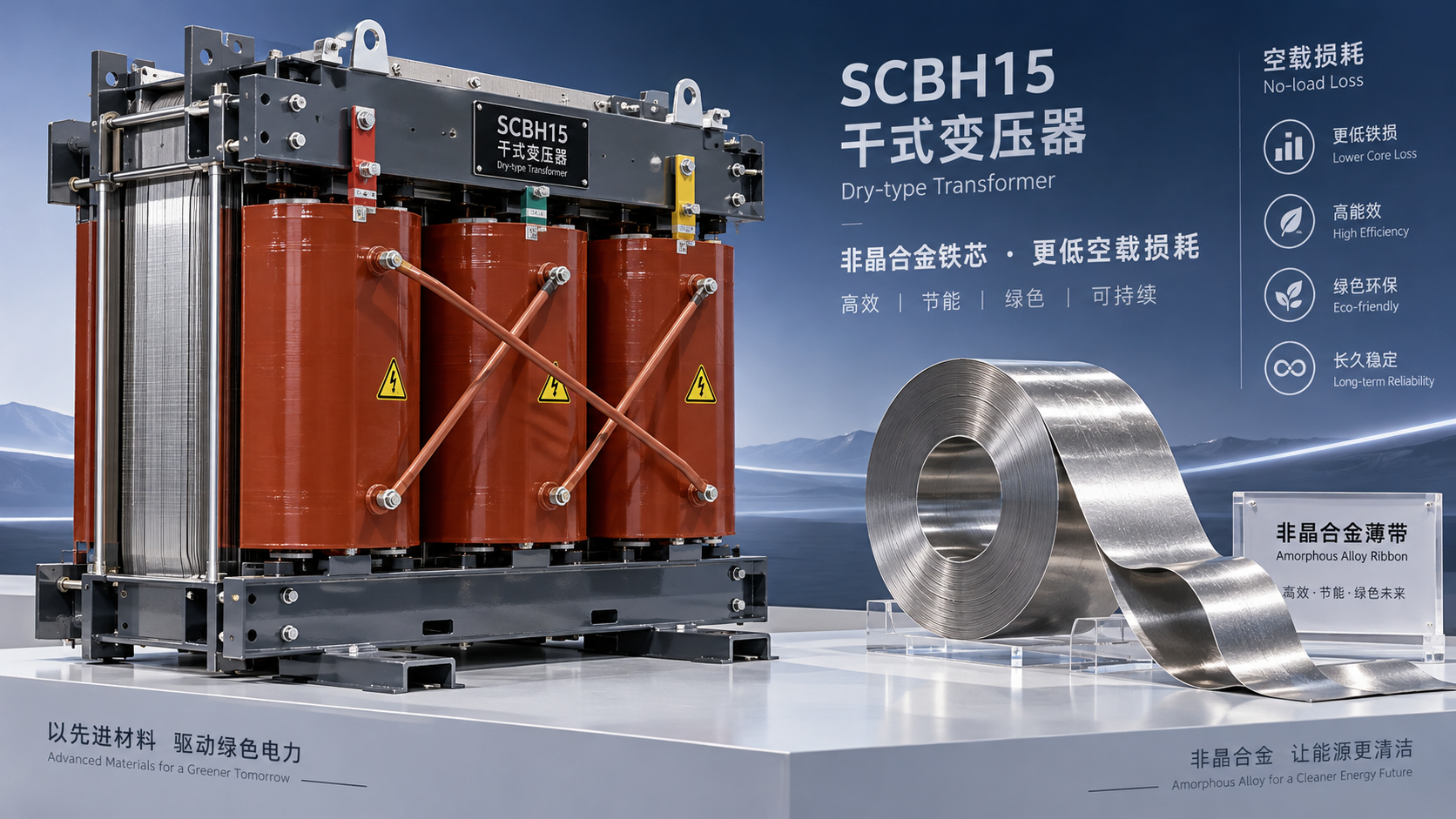
For sites reviewing persistent heat and ventilation demands, transformer losses also deserve attention. Jiangsu Shengda Power Equipment Co., Ltd.’s SCBH15 Type Dry-Type Transformer uses an amorphous-alloy core and includes temperature control and protection. Lower no-load losses can reduce the continuous heat contribution from an energized transformer, particularly where it spends substantial time lightly loaded. Replacement selection still needs to consider load losses, room ventilation, and the assigned cooling ratings; a different core material does not resolve every cooling problem.
For the installed SCB10, keep an operating record of phase temperatures, load, inlet-air temperature, controller mode, and actual fan operation. Those readings show whether continuous running is expected, whether cooling performance has changed, and whether the next action belongs with ventilation, the fan circuit, or load management.



 How to verify the temperature-rise test of an SCB12 dry-type transformer
 Distribution transformer maintenance tips for spotting oil leaks
 What dissolved gas analysis reveals about an oil-immersed transformer
 Why an oil-cooled transformer overheats despite a normal oil level
 How the amorphous core affects SCBH15 dry-type transformer losses
 Sizing S13 oil-immersed transformers for variable wind farm output
GET A FREE QUOTE
We offer reliable products, competitive prices, and nationwide professional support, committed to providing customers with efficient and energy-saving power equipment solutions.