


A medium voltage transformer intended for high-altitude operation must satisfy two separate requirements: it must carry the required load without exceeding thermal limits, and its external insulation must withstand the electrical stresses at the site’s reduced air density. Increasing the nameplate capacity may address the first requirement, but it does not automatically solve the second.
The decisive procurement requirement is therefore a guaranteed operating duty at the specified elevation, ambient temperature and installation conditions—not simply a catalogue rating accompanied by an “altitude suitable” statement. For both 10 kV and 35 kV installations, the transformer, its terminations and the surrounding equipment need a coordinated assessment before the design is approved.
Define the site conditions before selecting the rating
The IEC 60076 framework generally treats elevations up to 1,000 metres as normal service conditions. Above that level, the applicable requirements depend on transformer type and the relevant standard provisions. The contract should identify the governing standards and editions rather than relying on a generic declaration of IEC or GB compliance.
Elevation alone is insufficient for selection. A cold mountain site and a hot, enclosed installation at the same altitude present different thermal demands. Outdoor weather data also cannot establish the air temperature around a transformer installed inside a compact substation.
The enquiry should provide:
- Site elevation and maximum, daily average and seasonal ambient temperatures.
- Continuous load, peak duration, expected load growth and any emergency loading requirement.
- System voltage, highest voltage for equipment, frequency, earthing arrangement and required insulation levels.
- Indoor or outdoor location, enclosure arrangement, ventilation restrictions and solar exposure.
- Dust, pollution, condensation and other environmental conditions affecting insulation or cooling.
- Nonlinear loads, motor starting duties and other operating conditions that influence heating or voltage performance.
These inputs should form one agreed design basis. If the transformer supplier assumes unrestricted outdoor cooling while the enclosure supplier assumes a standard heat load, each component can appear compliant while the assembled installation remains unsuitable.
Separate the thermal question from the insulation question
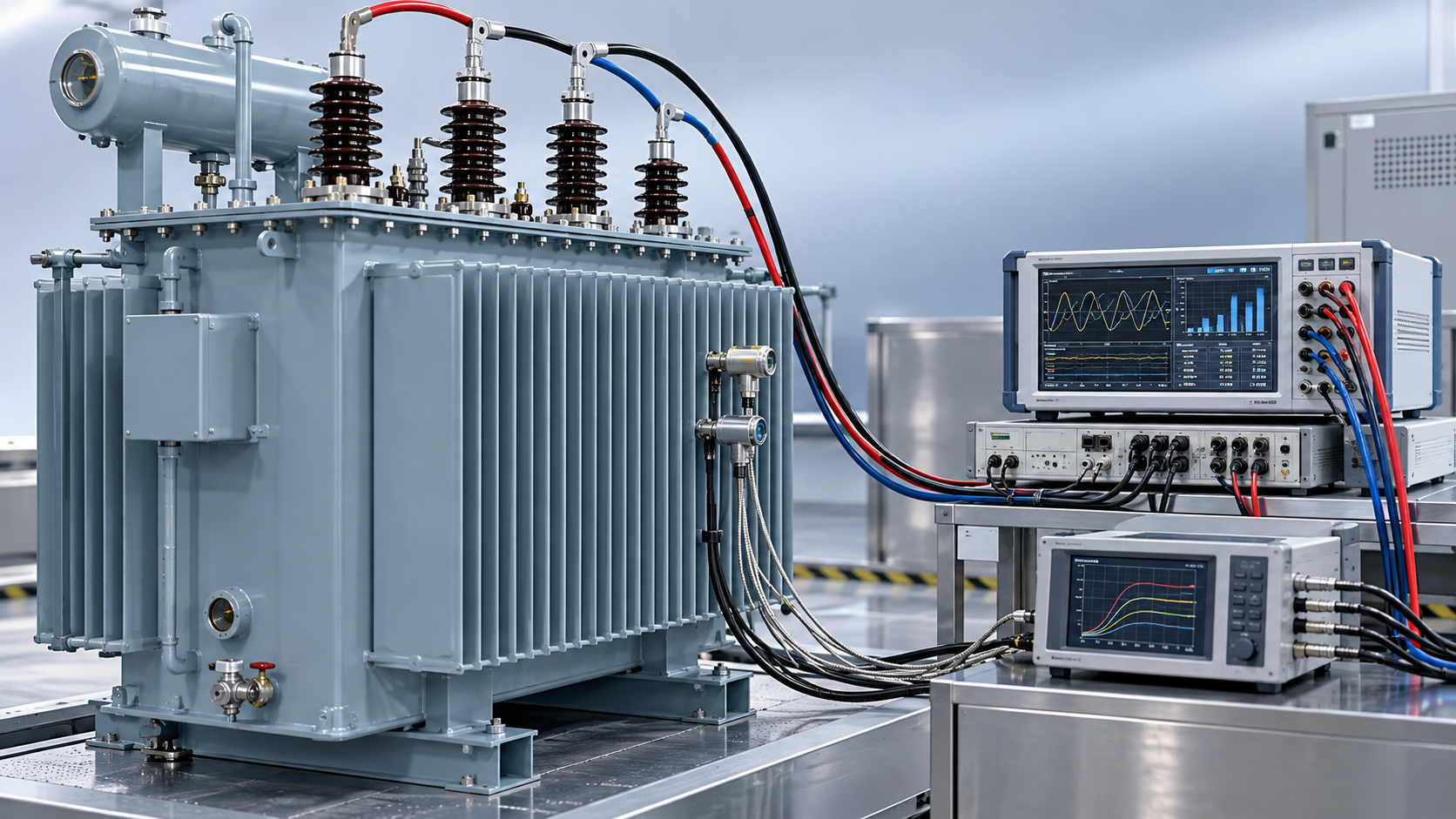
Reduced air density affects heat transfer from surfaces to the surrounding air. In an oil-immersed transformer, oil still transports heat from the active parts to the tank or radiators, but the final rejection of that heat to ambient air remains altitude-sensitive. A dry-type transformer depends more directly on air cooling around its windings and through its ventilation passages.
Cooling performance must therefore be assessed against winding hot-spot temperature, applicable temperature-rise limits and, for liquid-immersed designs, top-oil temperature. A colder ambient can provide useful thermal margin, but that margin must be demonstrated across the specified load and temperature combinations.
External insulation is a different issue. Lower air density reduces the dielectric strength of air, affecting exposed bushings, terminals, phase-to-phase distances and phase-to-earth clearances. Internal oil or solid insulation does not experience the same direct atmospheric effect, although the complete insulation system still requires verification.
A transformer can pass a thermal assessment and still have inadequate external insulation at altitude. Equally, enlarged electrical clearances do not demonstrate adequate cooling.
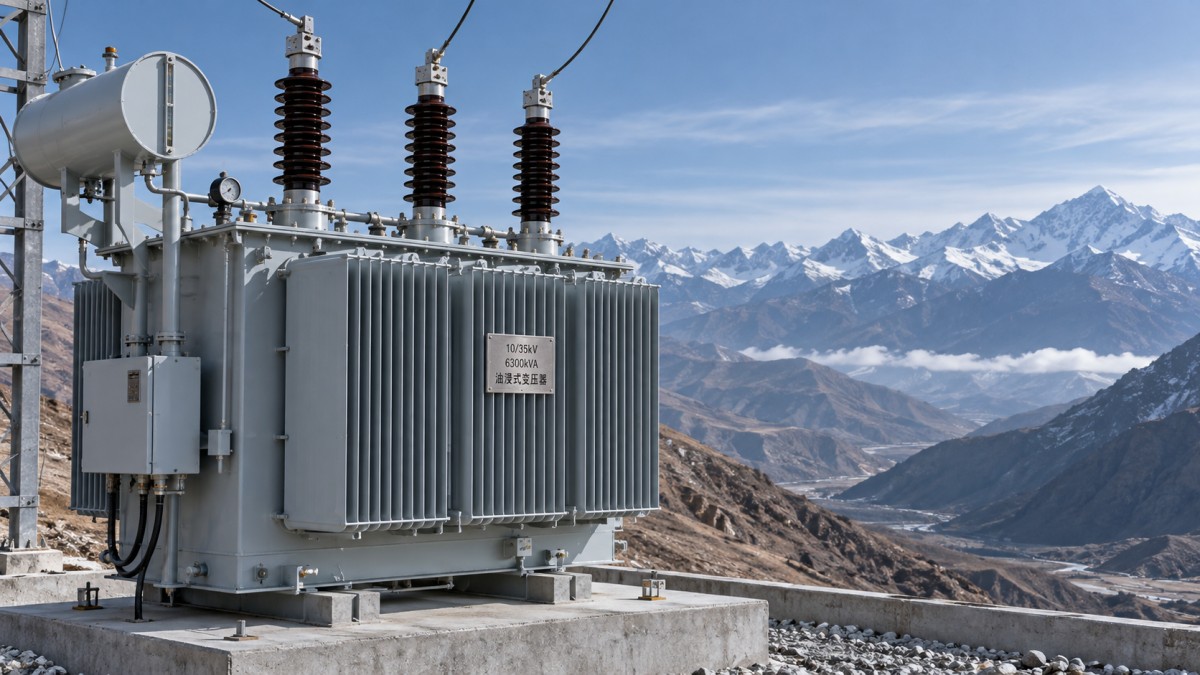
A layout drawing showing bushings, cable terminations, grounded enclosure surfaces and ventilation paths is particularly useful at this stage. It makes clear which risks belong to the transformer itself and which arise from its installation.
Compare guaranteed site capacity, not catalogue kVA
There is no universal derating percentage suitable for every high-altitude transformer. The result depends on cooling mode, thermal design, ambient conditions, enclosure restrictions and the applicable standard method. A blanket reduction copied from another supplier or transformer type is not a reliable design basis.
A supplier may address altitude through a reduced permissible load, additional cooling surface, a lower-temperature-rise design or another engineered modification. These alternatives should be compared on the same site conditions and required duty.
Consider a hypothetical continuous requirement of 900 kVA. If a supplier confirms that a particular design can deliver only 90% of its nameplate rating under the specified site conditions, a 1,000 kVA unit would meet that continuous duty without additional capacity margin. The 90% figure is illustrative, not an altitude rule. The selection must still account for load growth, peak operation and any other specified duty.
Request a statement of guaranteed available capacity at site, supported by the thermal calculation basis. Where fan-assisted cooling is proposed, distinguish the naturally cooled rating from the fan-assisted rating. Fan failure, auxiliary power availability and maintenance access then become part of the operating decision.
Losses also matter because they determine the heat the installation must remove. As a catalogue example, the S20 Series Oil-Immersed Power Transformers lists capacities from 30 to 2,500 kVA, with 10 kV-class primary-voltage options and model-specific no-load and load losses. Those values can support preliminary heat-load comparisons, but they do not establish high-altitude capability. Site-rated capacity, cooling arrangements and external insulation provisions still require confirmation. The listed range should not be treated as evidence of a 35 kV offering.
Check insulation coordination beyond the transformer terminals
For 10 kV and 35 kV systems, selection should start with the system’s highest voltage for equipment and required withstand levels, not nominal voltage alone. The applicable insulation-coordination method should establish the necessary atmospheric correction for external insulation.
Ask the supplier to identify which bushings, clearances and terminal arrangements have been selected or modified for altitude. A statement that “insulation is reinforced” provides little basis for accepting the design unless it is tied to declared ratings, dimensions and verification evidence.
Clearance and creepage must also be distinguished. Clearance addresses the shortest distance through air; creepage follows an insulating surface and is strongly influenced by pollution and wetting. Increasing creepage distance does not automatically compensate for inadequate air clearance.
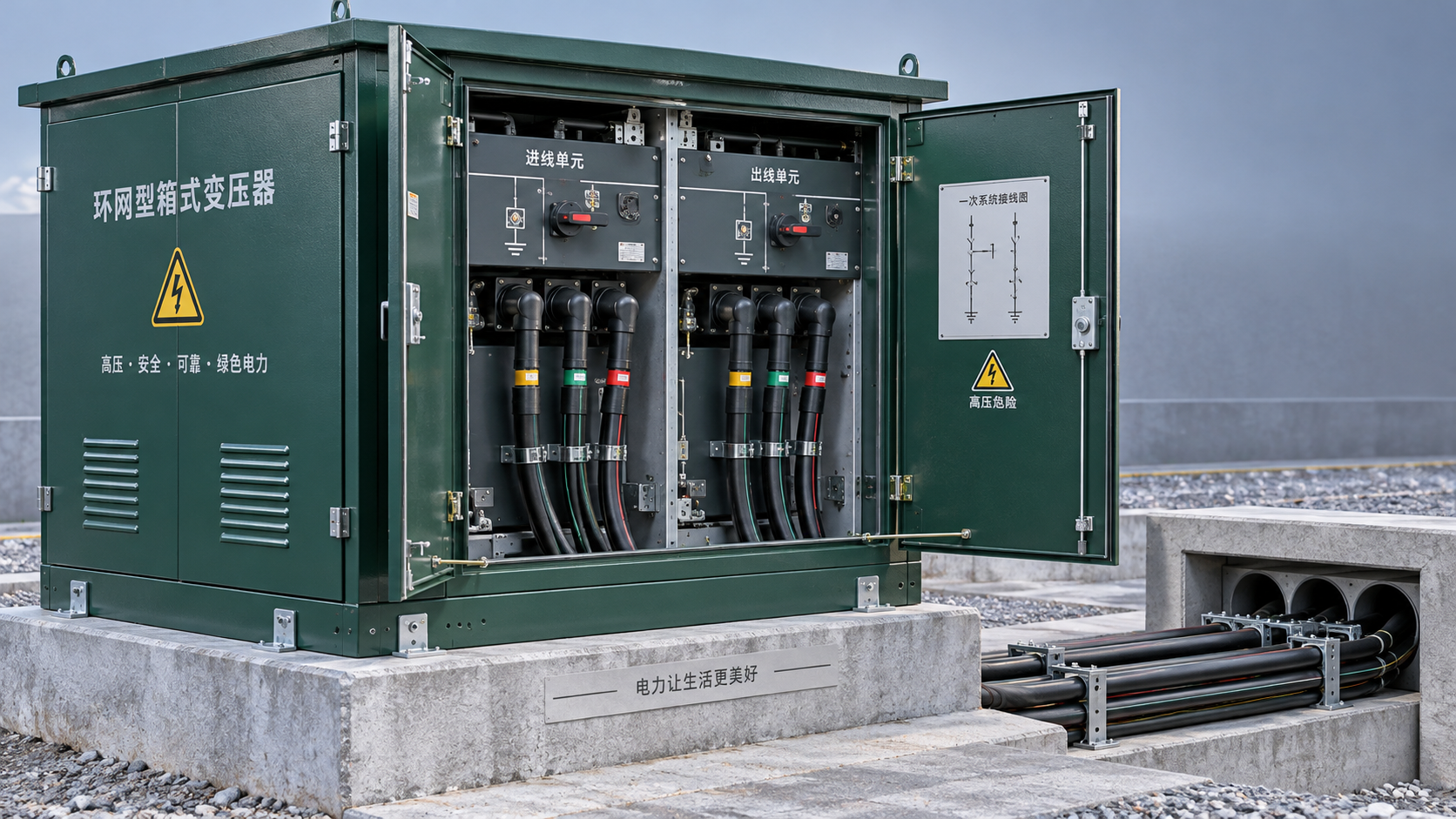
The assessment should include cable sealing ends, switchgear interfaces, surge arresters and nearby grounded metalwork. An altitude-suitable transformer placed inside an enclosure with insufficient terminal clearance remains an installation risk. Surge-arrester selection and placement should follow the coordinated protection design rather than serve as a substitute for adequate insulation.
Choose oil-immersed or dry-type construction around the installation
Oil-immersed construction can provide an effective internal heat-transfer path, but its radiators or tank still need sufficient exposure to cooling air. Fire precautions, liquid containment and access requirements may constrain the arrangement. Where a sealed tank is proposed, request confirmation that its pressure and mechanical design cover the specified transport and operating conditions.
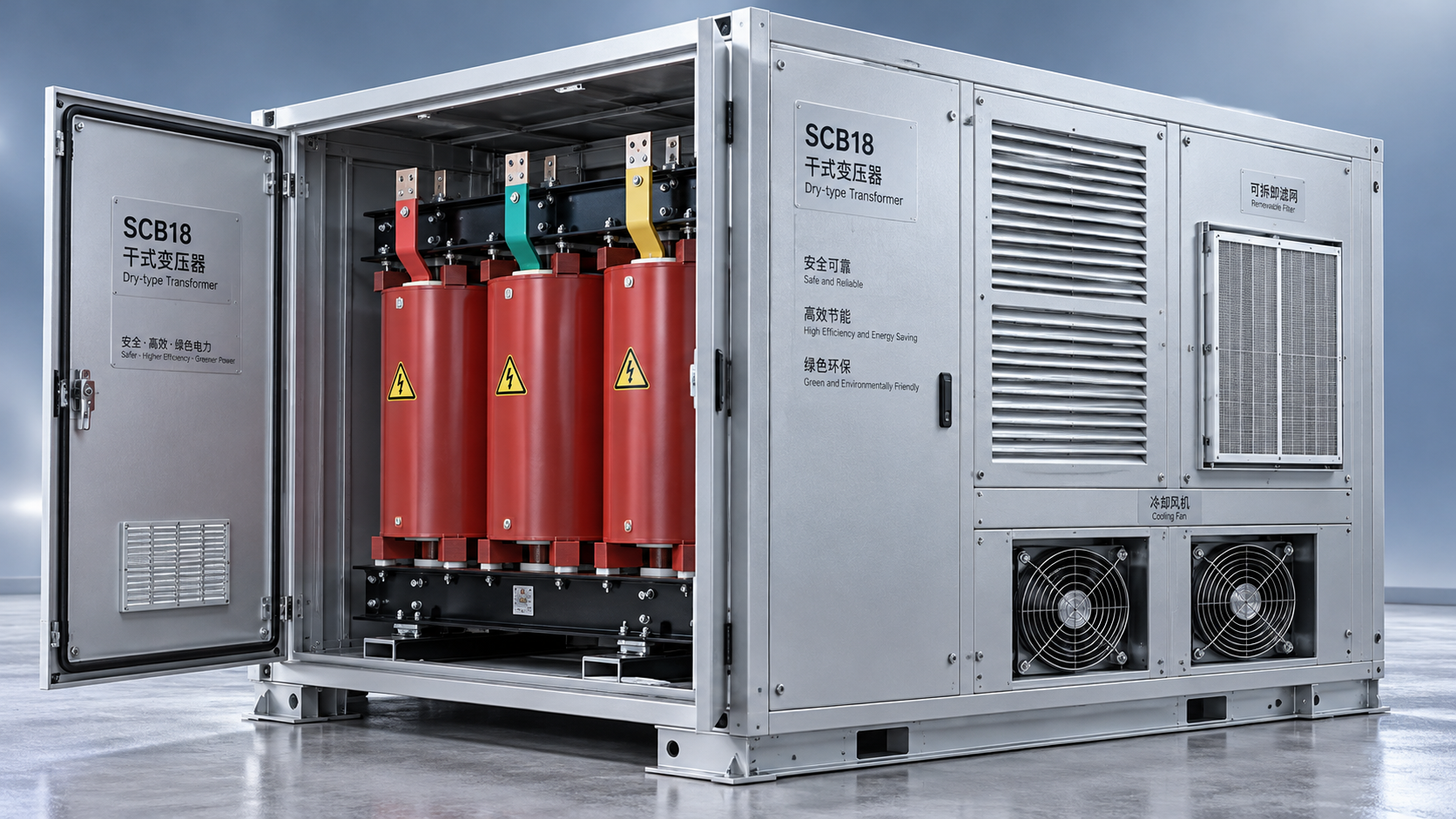
Dry-type construction may suit installations where liquid containment is undesirable, but it should not be assumed to be inherently altitude-ready. Airflow around the windings, external insulation distances and enclosure ventilation require explicit assessment. A bare-transformer rating is not necessarily the rating available inside the supplied housing.
For either construction, request the losses at the specified operating point and the ventilation basis for the complete installation. Cooling should not depend on favourable wind unless that dependence is explicitly engineered and accepted. Filters, blocked air passages and recirculation of heated exhaust air can undermine the original thermal assumptions.
Make acceptance evidence part of the purchase specification
An ISO 9001 certificate or an energy-efficiency declaration does not demonstrate altitude suitability. The relevant evidence is design-specific: a guaranteed site-duty statement, thermal justification, insulation coordination, approved interface drawings and a defined test plan.
A factory temperature-rise test conducted at a lower elevation does not directly reproduce the site’s cooling conditions. Likewise, a dielectric test under factory atmospheric conditions does not, by itself, establish every external-insulation requirement at the installation altitude. The supplier should explain how test results, atmospheric corrections and design calculations together substantiate compliance.
Before manufacture, resolve any changes that affect bushing height, radiator dimensions, terminal spacing, enclosure size or ventilation. These can alter foundations, transport clearances and cable routing. Discovering them after the transformer arrives creates an interface problem rather than a straightforward equipment substitution.
The final technical schedule should state the guaranteed continuous capacity at elevation, applicable temperature limits, insulation ratings, cooling dependencies and installation restrictions. Acceptance should be tied to those commitments. That makes a high-altitude transformer selection a verifiable engineering decision, rather than an assumption attached to a standard nameplate.



 Choosing a medium-voltage transformer for high-altitude operation
 How harmonic loads affect the temperature rise of an SCB11 transformer
 What an F1 fire behaviour rating means for a flame-retardant transformer
 How enclosure specifications affect SCB18 dry-type transformer cost
 How to compare loss guarantees for S22 oil-immersed transformers
 When to choose a loop-feed pad-mounted transformer over radial feed
GET A FREE QUOTE
We offer reliable products, competitive prices, and nationwide professional support, committed to providing customers with efficient and energy-saving power equipment solutions.