


Choose a loop-feed pad mounted transformer when the distribution circuit needs a through-cable connection and a practical way to isolate feeder sections or restore supply from another direction. Choose radial feed when the transformer terminates a single supply path and an alternative feeder route would provide no usable operational benefit. The deciding factors are feeder topology, acceptable outage duration, and switching capability—not transformer kVA alone.
A loop-feed arrangement does not, by itself, provide redundant power, automatic transfer, or uninterrupted service. Its value depends on the surrounding cable network, available source capacity, protection scheme, and switching equipment. Without those elements, the additional cable interfaces may offer little more than provision for future expansion.
The important difference is the primary connection arrangement
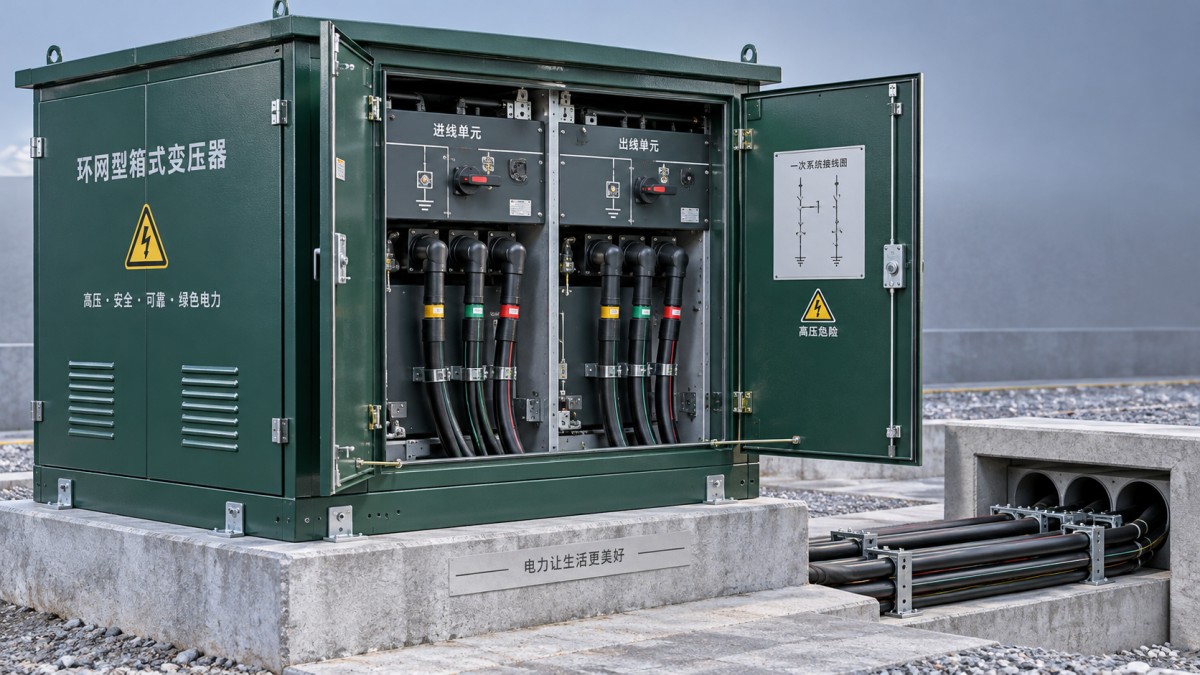
In a common three-phase radial-feed design, the transformer has one set of three primary cable interfaces. A loop-feed design commonly has two sets, allowing incoming and outgoing feeder cables to connect at the transformer location. The exact internal connections and switching provisions must be confirmed from the manufacturer’s schematic rather than inferred from the number of bushings.
This distinction concerns the medium-voltage feeder connection. It does not inherently change the transformer’s voltage ratio, impedance, efficiency, or secondary load capability. Two transformers with equivalent electrical ratings can serve the same load while offering different primary-network flexibility.
Additional interfaces also do not necessarily provide independently switchable incoming, outgoing, and transformer circuits. Some arrangements connect both cable sets to a common internal bus; others incorporate sectionalizing switches. The specification must identify which paths can be opened and whether the transformer branch can be isolated while the feeder remains available.
Choose loop feed when an alternate route can actually restore supply
An open-loop network provides the clearest justification. Transformers are connected along a feeder loop, with a normally open point preventing the circuit from operating as a closed ring. After a cable fault, suitable switching can isolate the damaged section and reconnect healthy sections from the other direction.
For example, a campus distribution circuit may have several transformer locations between two feeder ends. If a cable section becomes unavailable, the switching arrangement may allow unaffected transformers to receive power through the remaining route. That benefit exists only if the faulted section can be isolated and the alternate path can carry the transferred load.
The two feeder ends are not necessarily independent sources. If both depend on the same upstream bus or supply transformer, the loop can improve recovery from a local cable fault without protecting against loss of that shared upstream asset. Reliability assessment must distinguish route diversity from source diversity.
Restoration time matters as much as topology. Manual switching requires fault identification, access to equipment, an approved switching sequence, and available operating personnel. Remote-controlled switches can shorten that process, but automatic restoration requires a deliberately engineered control and protection scheme. Loads that cannot tolerate even a brief interruption still need an appropriate continuity solution, such as a UPS; loop feed does not remove that requirement.
Do not credit loop feed with protection against every outage
A loop can help bypass a failed feeder section. It cannot make a failed transformer continue supplying its secondary load. An internal transformer fault, damaged secondary termination, or failed low-voltage main device still interrupts the associated load unless a separate secondary supply arrangement exists.
Maintenance flexibility also depends on circuit design. A transformer with a separately isolatable branch may be removed from service while the feeder path remains energized. A unit without that capability may require upstream switching or a cable bypass arrangement. Merely specifying “loop feed” does not establish either outcome.
This distinction prevents an expensive selection error: paying for additional primary connections while assuming they provide transformer redundancy. Where the principal requirement is continuity during transformer failure or replacement, the evaluation must address alternate transformer capacity and secondary transfer arrangements, not just the primary cable layout.
Check the current path, not only the transformer load
Transformer primary load current is only one part of a loop-feed rating review. Cable interfaces, internal buswork, and switches may carry downstream feeder current in addition to the current serving the local transformer. Under a restoration configuration, that through-current can increase substantially even though the transformer’s own load remains unchanged.
Evaluate the highest credible loading for each permitted switching state. Check alternate-source capacity, cable ampacity, switch and connector continuous-current ratings, and voltage drop at the electrically remote loads. A route that can be energized but cannot carry the transferred demand is not an adequate restoration path.
Cable interfaces require equal attention. Loadbreak and deadbreak connectors are not interchangeable operating concepts. Confirm voltage class, current rating, insulation interface, cable conductor range, shielding and grounding provisions, and compatibility with the utility’s accessories. A separable connector should never be assumed suitable for interrupting load merely because it can be disconnected.
Switch duties must also be explicit. Load interruption, fault closing, short-time withstand, and fault interruption are different capabilities. A loadbreak switch is not automatically a fault-interrupting device. The applicable duty belongs in the equipment specification and must align with the available fault current.
Protection must work after the supply direction changes
An alternate feed can change both the magnitude and direction of fault current. Protection coordination therefore needs to cover normal operation and the restoration configurations the operating plan permits. Reviewing only the normal radial state leaves an important gap.
Transformer branch protection should coordinate with upstream feeder devices while accommodating transformer energization and the required loading envelope. The cable loop also needs a workable method of isolating feeder faults. Transformer fuses alone do not provide selective protection for every fault on the through-feeder circuit.
If restoration can energize several transformers together, assess the combined inrush and any cold-load pickup that could operate upstream protection. Where two sources could be connected simultaneously, verify the interlocking and operating restrictions. Closing a normally open point must not unintentionally parallel sources whose system design prohibits that operation.
Radial feed remains appropriate when the extra path has no defined job
A standalone building supplied by one underground feeder, with no planned outgoing circuit or alternate route, has a strong case for radial feed. It can meet the same transformer loading requirement without adding unused cable interfaces and associated termination work.
Radial feed can also be appropriate when continuity is already addressed elsewhere—for example, by upstream transfer equipment supplying a single final feeder. The relevant question is whether loop connections at the transformer improve recovery from failures in that final feeder section. If they do not, they may simply duplicate complexity.
Future expansion can justify a loop-feed configuration before the complete loop exists, but the expansion should have a defined cable route, connection arrangement, and operating concept. Unspecified “future flexibility” is a weak basis for additional equipment, especially if the eventual utility interface could require different connector or switching provisions.
Keep feeder selection separate from transformer construction
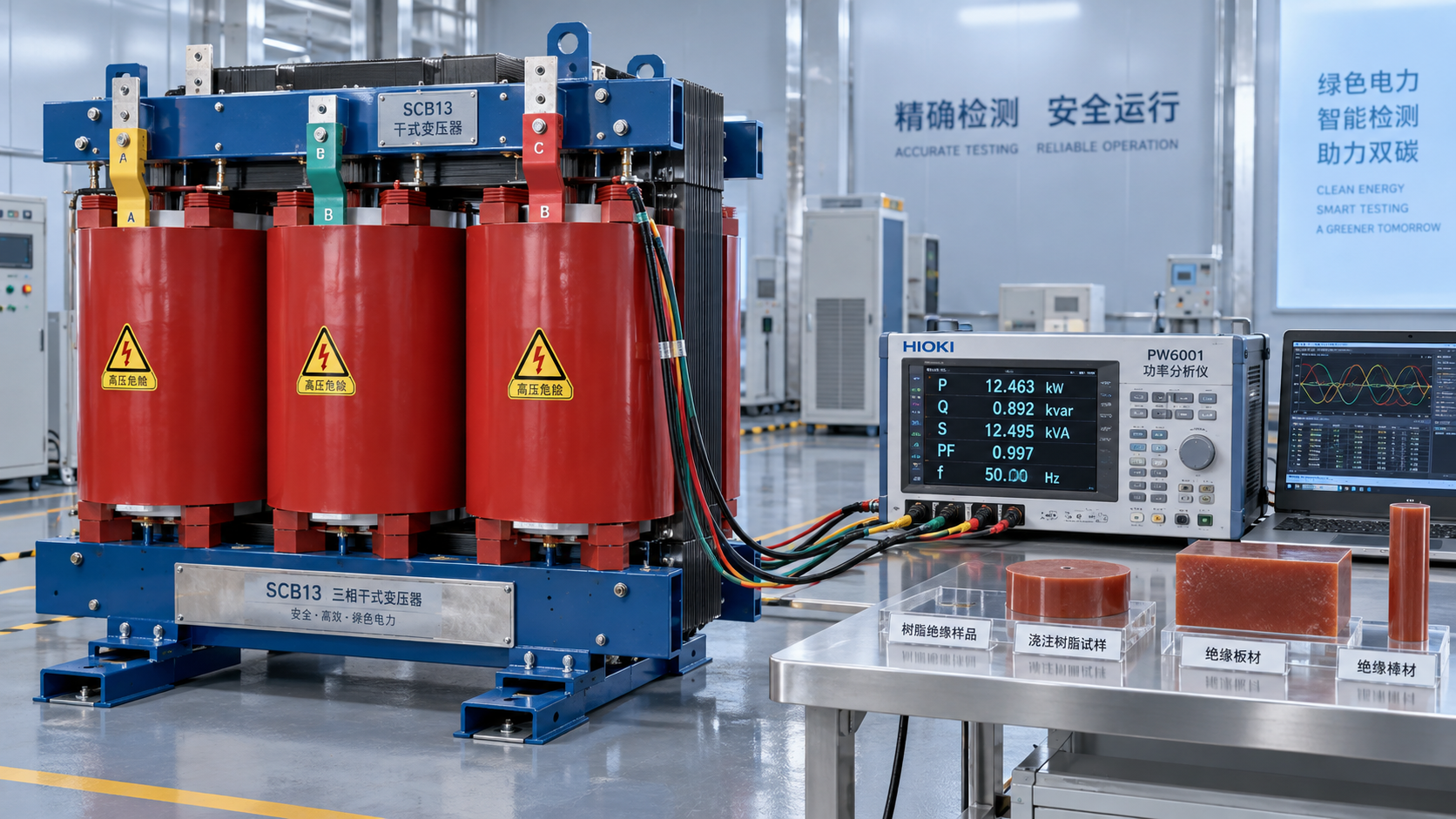
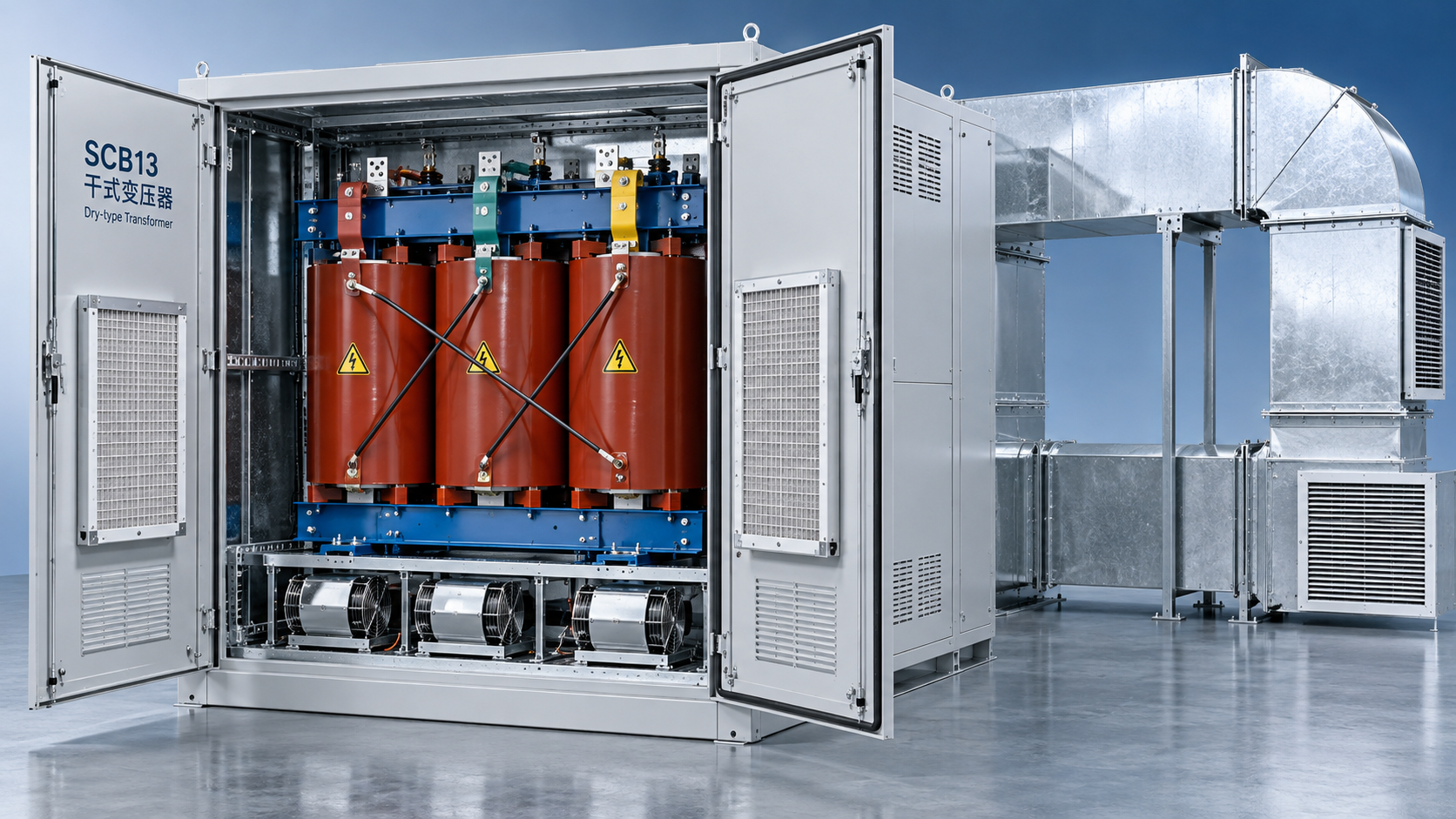
Loop versus radial feed is a network-interface decision; dry-type versus liquid-filled construction is a separate equipment decision. For an indoor load center with particular fire-protection requirements, a resin-insulated unit such as the SCB14 Type Dry-Type Transformer may be relevant to the transformer-construction assessment. It does not, by its model designation, establish a loop-feed pad-mounted arrangement. Medium-voltage switchgear, enclosure suitability, ventilation, and cable connections must be evaluated separately.
For an outdoor pad-mounted installation, additional cables also affect compartment space, bending radii, pulling arrangements, and maintenance access. Confirm that the site layout permits safe operation of the specified switching devices and handling of cable accessories. A connection scheme that fits electrically but cannot be serviced safely is not a workable selection.
Specify the operating outcome before selecting the configuration
A sound loop-feed specification starts with a single-line diagram showing the normal open point, permitted alternate supply paths, and required isolation boundaries. It then defines the maximum through-current, connector system, switching duties, protection coordination, and restoration procedure. This makes competing equipment proposals comparable on function rather than terminology.
Loop feed is justified when those details demonstrate a useful, adequately rated route for sectionalizing, restoration, or planned expansion. When the system remains a single-path supply with no credible alternate operating state, radial feed is the more direct choice. The extra connections should serve a defined network function—not stand in for a reliability strategy that has yet to be designed.



 When to choose a loop-feed pad-mounted transformer over radial feed
 How much spare capacity should a distribution transformer have?
 Checking S13 oil-immersed transformers for renewable inverter loads
 How to assess environmental claims for SCB13 dry-type transformers
 Sizing an S13 oil-immersed transformer for industrial motor starting
 What enclosure protection does an SCB13 transformer need against dust?
GET A FREE QUOTE
We offer reliable products, competitive prices, and nationwide professional support, committed to providing customers with efficient and energy-saving power equipment solutions.