


In industrial power projects, even small errors in transformer design for industrial use can lead to energy loss, overheating, costly downtime, and long-term reliability risks. For project managers and engineering leaders, understanding these common design mistakes is essential to selecting safer, more efficient transformer solutions that meet technical requirements, operating conditions, and compliance standards.
In practice, design errors rarely come from one single parameter. They usually result from mismatched load assumptions, insufficient cooling margins, weak insulation coordination, poor installation planning, or limited attention to lifecycle maintenance. For decision-makers responsible for 10kV and 35kV industrial systems, these mistakes can affect delivery schedules, operating costs, and long-term plant reliability.
Jiangsu Shengda Power Equipment Co., Ltd. focuses on the R&D, production, and sales of transformers and related products, with products manufactured under strict quality control and in compliance with GB1094.1-2-1996, GB/T6451-2008, and ISO9001 requirements. This article explains where transformer design for industrial use often goes wrong and what project teams should verify before final selection.
Load Estimation Errors That Create Long-Term Risk
Why inaccurate demand forecasting is a common starting point
One of the most frequent mistakes in transformer design for industrial use is sizing the unit only for current demand instead of the real 3- to 5-year operating profile. A plant may start with 60% loading but later add motors, VFDs, HVAC systems, or production lines. If the transformer is selected with little reserve, overload events become more likely during seasonal peaks or process expansion.
Project managers should verify at least 4 load dimensions: continuous load, peak load, starting current, and future expansion capacity. For many industrial sites, a practical reserve margin is often 15% to 30%, depending on the process criticality and expected load growth. Designing too tightly may reduce upfront cost, but it often increases total operating risk over 10 to 20 years.
Typical consequences of underestimating load
When load assumptions are too low, winding temperature rises faster, insulation ages earlier, and fan-assisted cooling may run more frequently than planned. This can also reduce energy efficiency at high load factors and create nuisance trips in connected protection systems. In facilities with 24/7 operation, even 2 to 4 hours of unplanned downtime can create major production losses.
The table below helps project teams compare design choices based on realistic industrial loading conditions rather than nominal nameplate demand alone.
For project owners, the key takeaway is simple: correct sizing is not just about KVA. It is about matching the transformer to real plant behavior, operating cycles, and foreseeable expansion. This is a foundational step in reliable transformer design for industrial use.
Cooling, Insulation, and Environmental Misjudgments
The cost of designing for ideal conditions instead of site reality
Another major mistake in transformer design for industrial use is assuming that a factory environment is electrically clean and thermally stable. In reality, transformers may operate in ambient temperatures above 40°C, in dusty workshops, in humid coastal regions, or near corrosive chemicals. These conditions directly affect insulation life, partial discharge behavior, and cooling effectiveness.
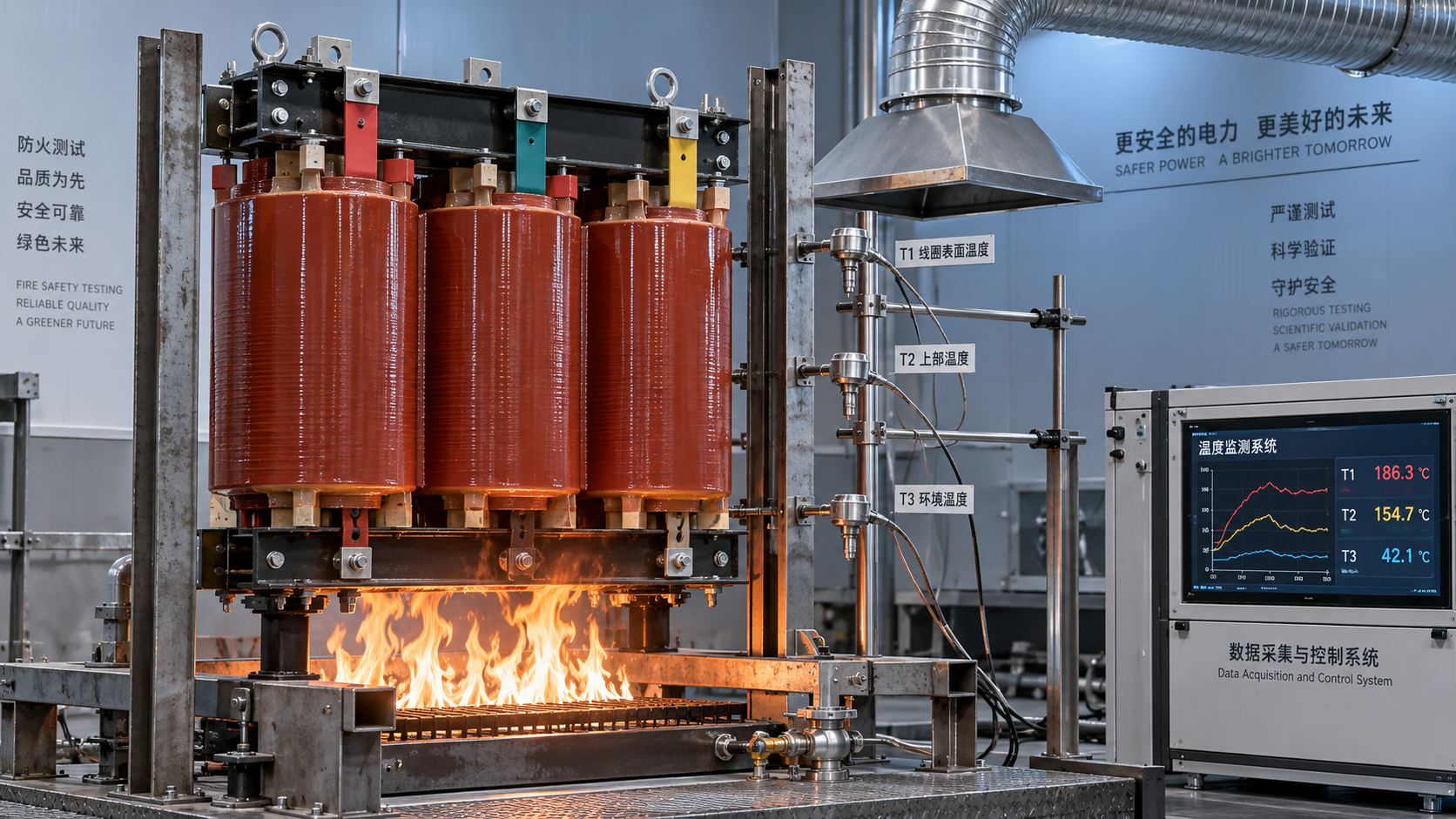
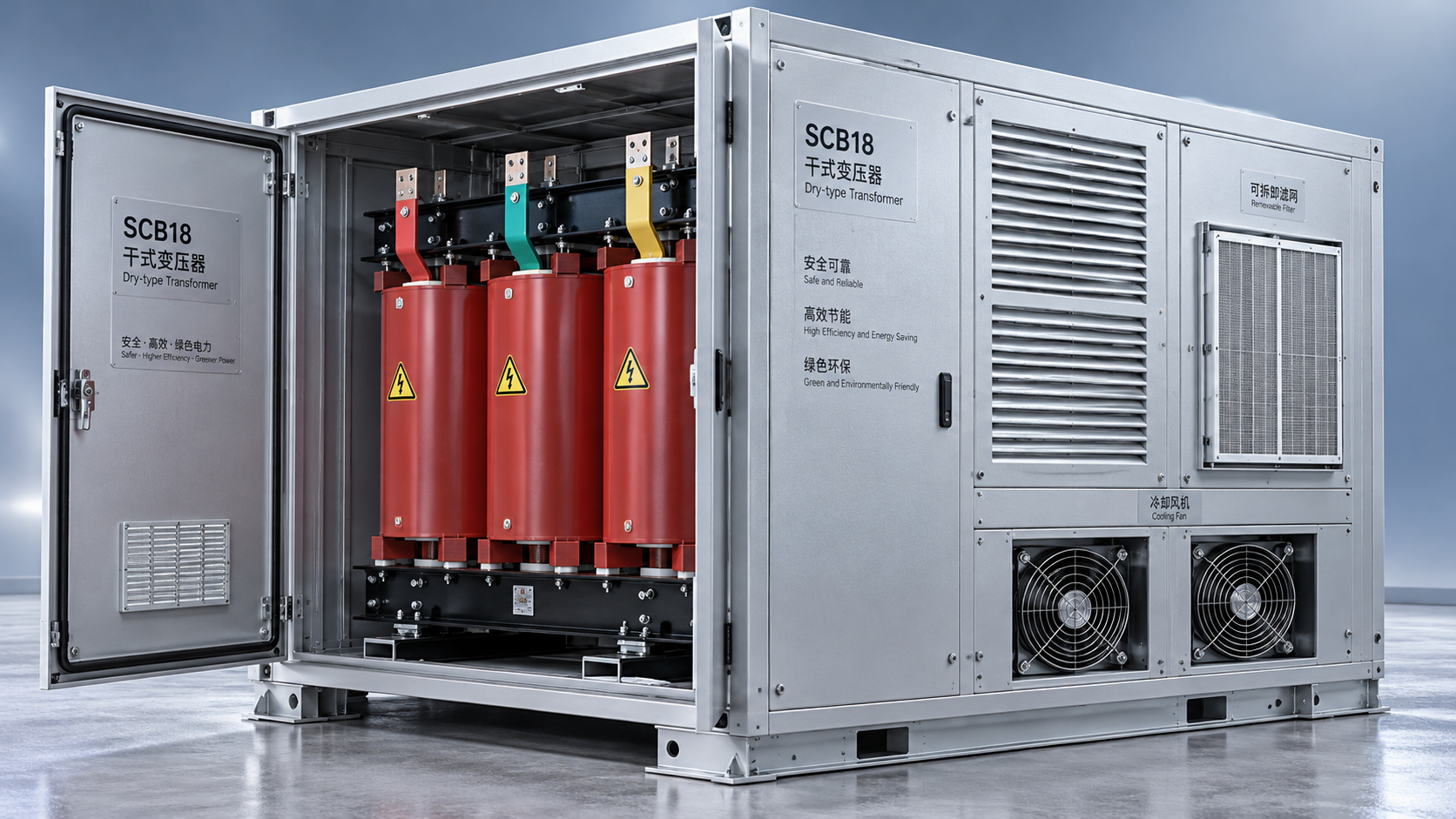
Dry-type transformers are often selected for indoor industrial applications because they improve fire safety and reduce oil-related maintenance concerns. However, their performance still depends heavily on coil design, resin integrity, air circulation, and thermal monitoring. If ventilation paths are blocked or cooling capacity is underestimated, the expected reliability advantage may be lost.
What engineering teams should review before approval
Teams should assess at least 5 environmental variables: ambient temperature, altitude, humidity, dust level, and load fluctuation frequency. They should also confirm insulation coordination for atmospheric and operational overvoltage. In 35kV systems especially, inadequate electric field distribution can accelerate insulation stress and increase failure probability over time.
For projects requiring low loss, low noise, and higher reliability, a product such as SCB11 Type Dry-Type Transformer can be relevant. Its optimized high-voltage coil structure is designed to improve interlayer voltage and capacitance distribution, reduce partial discharge, and enhance resistance to atmospheric and operational overvoltages. With a capacity range of 30–20000KVA and voltage class up to 35KV, it can fit a wide range of industrial power distribution scenarios.
The following checklist can help prevent thermal and insulation mistakes during design review.
- Verify whether the operating environment stays within the expected temperature range during summer peaks and confined-room operation.
- Confirm whether forced air cooling or an automatic temperature control system is required for overload periods.
- Check insulation structure, partial discharge control, and overvoltage resistance based on the voltage level and switching conditions.
- Review enclosure and ventilation design so that dust accumulation does not compromise heat dissipation within 6 to 12 months.
The best design is not the one with the lowest initial specification. It is the one that remains stable under the site’s real thermal, electrical, and mechanical conditions for years of service.
Ignoring Harmonics, Voltage Fluctuation, and System Compatibility
Industrial networks are rarely electrically simple
Modern factories increasingly use variable frequency drives, rectifiers, welding equipment, and automated production lines. These loads introduce harmonics and rapid load variation that standard transformer assumptions may not fully address. A common error in transformer design for industrial use is specifying the unit for nominal voltage and current while overlooking power quality conditions.
Harmonics increase additional losses and heat generation in windings and structural parts. Voltage fluctuation can affect control systems, while repeated transient stress can reduce insulation life. In applications with high non-linear loads, project teams should review harmonic content, load diversity, and expected switching frequency before finalizing the transformer specification.
Compatibility checks that should not be skipped
At a minimum, engineering leaders should check 3 system areas: upstream grid conditions, downstream load type, and protection coordination. The transformer must also be matched with cable sizing, breaker settings, and the plant’s grounding design. If these interfaces are reviewed late, redesign can delay commissioning by 1 to 3 weeks.
The table below summarizes common electrical compatibility issues and practical responses for industrial projects.
A transformer should be treated as part of a power system, not a standalone asset. The more complex the plant load profile, the more important it becomes to validate compatibility before procurement.
Selection Criteria, Compliance, and Delivery Planning
Procurement mistakes often begin with incomplete specifications
Many project delays happen not because the transformer is poorly manufactured, but because the original technical specification is incomplete. A request may list voltage and capacity but omit enclosure needs, cooling mode, noise target, temperature monitoring, installation space, or acceptance requirements. This creates quotation gaps and increases the chance of change orders after production starts.
A robust specification for transformer design for industrial use should include at least 6 items: rated capacity, voltage level, insulation class, cooling method, ambient conditions, and protection or monitoring accessories. For critical projects, it is also wise to define factory test expectations, delivery lead time, and site commissioning responsibilities before issuing the purchase order.
A practical procurement review framework
Jiangsu Shengda Power Equipment Co., Ltd. supplies low-loss power transformers, dry-type transformers, amorphous alloy transformers, compact substations, and on-load tap-changing power transformers across 10kV and 35kV applications. For engineering buyers, this range is useful because different sites may prioritize fire safety, low noise, compact installation, or reduced no-load loss depending on the project type.
When evaluating a dry-type option, teams may consider whether the unit uses high-quality cold-rolled grain-oriented silicon steel sheets to reduce magnetic flux density and magnetostriction, whether resin structure helps prevent cracking, and whether an air-cooling device can be configured for overload conditions. These details affect not only performance, but also maintenance intervals and lifecycle reliability.
- Define the installation environment early: indoor room, compact substation, or dust-prone production area.
- Request confirmation of applicable standards such as GB1094.1-2-1996 and GB/T6451-2008.
- Ask for the expected production and delivery window, which commonly ranges from 2 to 6 weeks depending on capacity and customization level.
- Confirm whether temperature control, cooling fan activation, and inspection access are included in the design scope.
Better specifications reduce communication gaps, shorten approval cycles, and help ensure the delivered transformer is aligned with actual industrial operating needs rather than generic catalog assumptions.
How Project Managers Can Reduce Design Risk Before Ordering
A simple pre-order process for better outcomes
For project managers, preventing mistakes in transformer design for industrial use is less about deep component-level engineering and more about disciplined review. A structured 5-step process can reduce specification errors, avoid site mismatch, and improve delivery certainty. This is especially useful when the project includes multiple stakeholders such as design institutes, EPC contractors, plant engineers, and procurement teams.
- Confirm real load data, including peak demand, duty cycle, and expected future expansion within 3 to 5 years.
- Review environmental conditions and space constraints, including ventilation path, access clearance, and ambient temperature.
- Validate insulation, overvoltage, and power quality requirements for the specific 10kV or 35kV network.
- Align protection, cable, and commissioning plans with the transformer technical data.
- Lock the final specification, inspection points, and delivery milestones before production release.
FAQ for industrial selection teams
How much overload margin is reasonable? In many industrial applications, a 15% to 30% reserve is commonly reviewed, but the right figure depends on duty cycle, cooling method, and whether fan-assisted cooling is available.
When is a dry-type transformer a better fit? It is often preferred for indoor installations, fire-sensitive facilities, public-access buildings, and plants that want cleaner maintenance conditions. For some projects, the second mention of SCB11 Type Dry-Type Transformer is relevant because it can be configured with a temperature control system and air-cooling device that automatically activates the cooling fan under excessive load.
What should be checked at acceptance? At minimum, review nameplate data, appearance, insulation-related test records, accessory completeness, and installation readiness. For high-priority projects, add a documented checklist covering 6 to 10 inspection items to support commissioning efficiency.
The most effective projects are usually the ones that treat transformer selection as a technical coordination task, not just a purchasing task. Early cross-functional review helps avoid redesign, rework, and unnecessary operating risk.
Common mistakes in transformer design for industrial use usually come down to four issues: wrong load assumptions, insufficient thermal and insulation consideration, poor electrical compatibility review, and incomplete procurement specifications. For project managers and engineering leaders, correcting these points early can improve reliability, control lifecycle cost, and reduce commissioning delays.
With strong technical expertise, strict quality inspection, and a broad product portfolio covering low-loss transformers, dry-type transformers, compact substations, and 10kV to 35kV solutions, Jiangsu Shengda Power Equipment Co., Ltd. can support industrial users seeking dependable transformer configurations for demanding operating conditions.
If you are planning a new power distribution project or upgrading an existing industrial system, contact us now to discuss technical details, request a tailored solution, and identify the right transformer configuration for your application.



 What an F1 fire behaviour rating means for a flame-retardant transformer
 How enclosure specifications affect SCB18 dry-type transformer cost
 How to compare loss guarantees for S22 oil-immersed transformers
 When to choose a loop-feed pad-mounted transformer over radial feed
 How much spare capacity should a distribution transformer have?
 Checking S13 oil-immersed transformers for renewable inverter loads
GET A FREE QUOTE
We offer reliable products, competitive prices, and nationwide professional support, committed to providing customers with efficient and energy-saving power equipment solutions.