


A ZGS Combined Substation quotation is useful only when its boundaries are clear. Two offers with the same transformer capacity can cover different high-voltage switching arrangements, low-voltage outgoing circuits, protection devices, tests, and delivery obligations. The lower price is not necessarily the lower project cost.
Before comparing prices, ask suppliers to identify what is included, excluded, optional, or supplied by another party. Unpriced requirements should remain visible in the comparison: an omitted item is not the same as an item included at no charge.
Start with the transformer and system design
Confirm that each offer is based on the same rated capacity, primary and secondary voltages, frequency, phase arrangement, impedance, tap range, and cooling method. Check the specified no-load and load losses as well as the applicable tolerances. Different loss levels affect both the purchase price and operating costs; a lower-priced transformer with higher losses should not be treated as technically equivalent without evaluating the expected loading and electricity cost.
Request a single-line diagram and equipment schedule with each quotation. These documents reveal differences that a model designation alone cannot establish, including the supply arrangement, transformer connection, and number of outgoing circuits. Confirm the available fault level and the required equipment ratings against the project design rather than assuming that a standard configuration is adequate.
ZGS configurations are commonly associated with oil-immersed transformer assemblies, but the exact construction must be confirmed in the supplier’s offer. A dry-type alternative, such as an SCB10 Type Dry-Type Transformer, is a different design choice, not an automatic like-for-like substitute. If an alternative is proposed, ask for its complete enclosure, ventilation, protection, dimensions, and installation requirements, as well as any resulting change to the substation price.
Check the switching and protection package
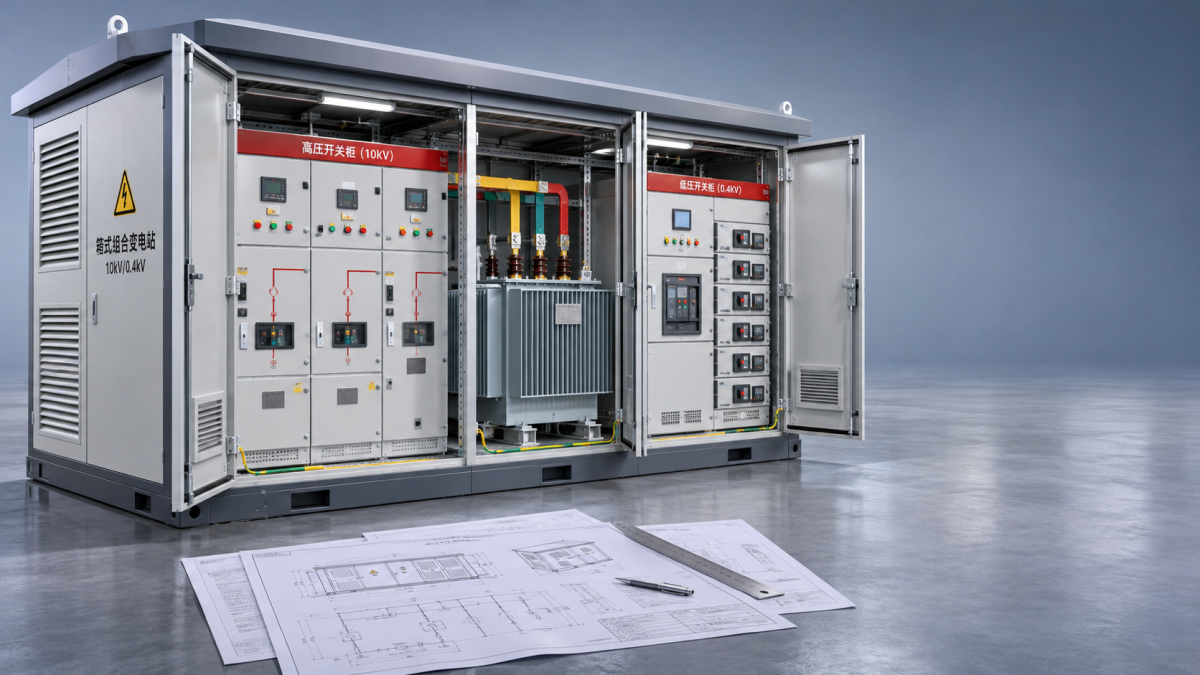
A quotation should identify the high-voltage incoming arrangement and switching devices, including their ratings and whether fuses, surge arresters, and operating mechanisms are included. Where a ring-main or loop supply is required, confirm the number of incoming and outgoing ways and their functions. A single-incoming configuration may cost less but cannot be assumed to provide the same supply arrangement.
On the low-voltage side, compare the main incomer, outgoing breakers, busbar rating, metering, and any power-factor correction equipment. An offer that includes only an incomer is materially different from one with several fully equipped outgoing feeders. Check breaker current and breaking-capacity ratings against the project’s electrical design.
Protection scope deserves a separate line-by-line review. Ask which devices are supplied, which faults they address, and whether current transformers, relays, trip circuits, alarms, and auxiliary power are included. Coordination with upstream and downstream protection should have an assigned party; supplying a relay does not necessarily include selecting settings or carrying out a coordination study.
Make enclosure and site interfaces visible
The enclosure affects both price and site readiness. Compare the stated ingress protection, corrosion protection, ventilation, cable-entry positions, lifting provisions, locking arrangements, and environmental design conditions. If the installation is exposed to coastal air, dust, high temperatures, or altitude, provide those conditions in the request for quotation so that suppliers price against the same requirements.
Clarify where the supplier’s physical scope ends. Cable boxes or termination points may be included while incoming and outgoing cables, glands, lugs, and terminations are excluded. The same distinction applies to earthing: an internal earth bar is not necessarily an external earthing grid. Confirm whether the foundation, plinth, trenches, oil-containment provisions, and civil drawings are included or assigned elsewhere.
Dimensions and transport weight also matter. A compact assembly may arrive as one unit or in separate sections, with different unloading equipment, site-access requirements, and assembly costs. Ask for shipping dimensions and the weight of each package before accepting a delivery plan.
Separate equipment tests from site acceptance
Identify the standards and editions required by the project and destination, then ask each supplier to state the standards used for design and testing. A manufacturer’s quality-management certification is not a substitute for equipment compliance or acceptance by the local utility. Where utility approval is required, establish who obtains it and whether the quoted design is subject to review.
The quotation should list the routine factory tests, reports, inspection access, and any additional tests requested. Distinguish between tests performed on the supplied unit and existing type-test evidence for a representative design. If a witness test is required, specify the notice period, location, retest arrangements, and responsibility for travel costs.
Site testing and commissioning are separate cost items. Confirm whether the supplier will provide a technician, test instruments, energization support, protection settings, and commissioning records. If these services are excluded, identify the party responsible for them and the information needed from the manufacturer.
Compare the delivered and installed cost
The quoted equipment price should be assessed alongside the commercial conditions that determine when extra costs arise. Request the following items as explicit inclusions, exclusions, or separately priced options:
- Delivery: named delivery point, agreed Incoterms rule and edition where applicable, export packing, freight, insurance, customs clearance, duties, and unloading.
- Documentation: approval drawings, single-line diagrams, manuals, test reports, spare-parts lists, language requirements, and document submission dates.
- Installation support: supervision days, travel, accommodation, lifting equipment, on-site assembly, and the rate for additional visits.
- Spares and accessories: fuses, operating handles, keys, touch-up paint, and any commissioning spares required by the specification.
- Warranty: start date, duration, coverage, exclusions, response process, and responsibility for transport, removal, and reinstallation of defective parts.
Delivery dates should state the trigger: purchase order, deposit, approval of drawings, or receipt of complete technical information. Also check payment milestones, quotation validity, currency, and whether changes in scope require a revised price. A short manufacturing lead time does not establish the arrival date if drawing approval, shipping, customs, or site work is outside that period.
Normalize the offers before award
Build a comparison using the same scope for every bidder. Add separately priced options needed to meet the specification, then estimate excluded freight, civil work, installation, commissioning, and other owner-supplied items on a consistent basis. Keep assumptions visible rather than assigning zero to an unknown cost.
For example, if one offer includes four low-voltage outgoing breakers and another includes two, request a price for the missing feeders before ranking the bids. If an exclusion cannot yet be priced, retain it as a commercial risk and obtain a written clarification. Close the comparison by incorporating the agreed drawings, equipment schedule, testing, delivery boundary, and exclusions into the purchase documents; an informal quotation comparison does not itself change the contractual scope.



 Comparing ZGS Substation Quotations: Scope and Exclusions Checklist
 SCB12 Dry-Type Transformer Selection for Commercial Buildings
 Explosion-Proof Transformers: Hazardous-Area Ratings and Selection
 Where Can S22 Oil-Immersed Transformers Fit in Distribution Projects?
 Evaluating S20 Transformer Exporters: Documentation and Delivery Risks
 Protecting SCB14 Dry-Type Transformers From Moisture and Condensation
GET A FREE QUOTE
We offer reliable products, competitive prices, and nationwide professional support, committed to providing customers with efficient and energy-saving power equipment solutions.