


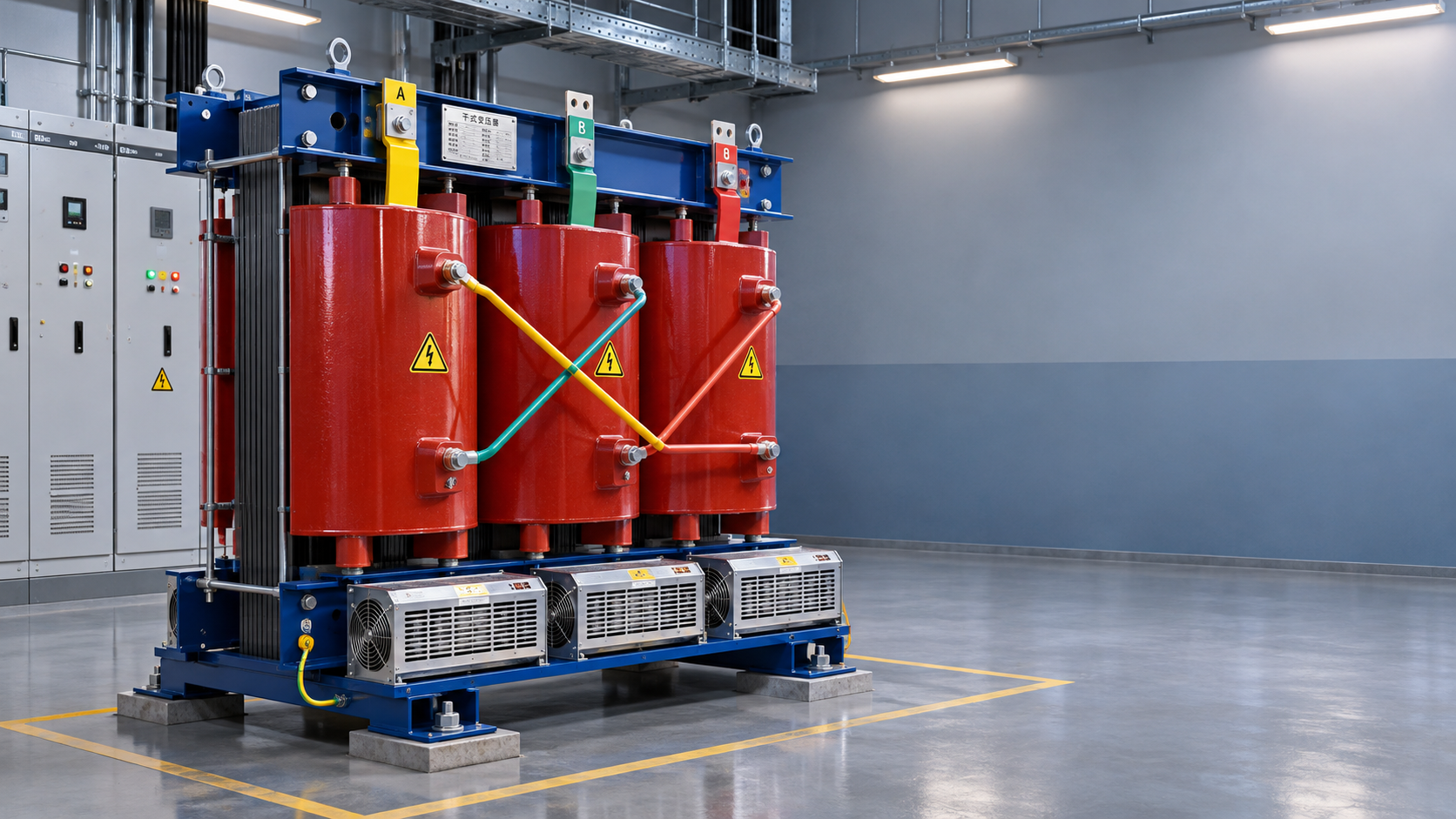
Visible water on an SCB14 transformer is a reason to stop and investigate, but condensation can also develop inside an enclosure before anyone sees droplets on the windings. An effective SCB14 Type Dry-Type Transformer moisture proof strategy begins with controlling the conditions around the unit, especially after a shutdown or a sudden change in ambient temperature.
Keep a wet or suspected wet transformer out of service until qualified personnel have assessed it. The decision to return it to operation depends on the condition of the insulation, the cause of the moisture and the results of appropriate electrical checks—not simply on whether the surface looks dry.
Where condensation starts
Condensation forms when a surface is colder than the dew point of the surrounding air. After a transformer is switched off, its windings and metal parts cool. If warm, humid air then enters the room or enclosure, water can collect on those cooler surfaces. This is particularly relevant after an extended outage, during a humid night or when ventilation brings in outside air after a weather change.
Water can also enter directly through roof leaks, cable openings, damaged seals, washdown, flooding or poorly directed ventilation. These sources need different remedies. A heater may help reduce condensation during standby, for example, but it will not stop water dripping through a cable entry.
Cast-resin insulation offers protection against moisture, but it does not make the complete installation waterproof. Terminals, connections, exposed insulation surfaces and accessories can still be affected. Dust and conductive contamination become more troublesome when damp, increasing the risk of surface leakage and tracking.
What to look for during an inspection
With the equipment isolated, secured against re-energization and proved de-energized under the site’s electrical safety procedure, inspect the enclosure and transformer using the manufacturer’s instructions. Pay attention to the path water could take as well as to obvious wet areas:
- Enclosure and room: Look for droplets, stains, corrosion, standing water, blocked drains and signs of leaks above or beside the unit.
- Air paths: Check whether louvers, filters and ventilation openings are obstructed or exposed to rain, spray or a direct flow of humid outdoor air.
- Windings and terminals: Look for damp deposits, discolored insulation, tracking marks, corrosion and dirt around high- and low-voltage connections.
- Accessories: Inspect heater and thermostat condition, wiring, cable glands and control compartments for moisture or damage.
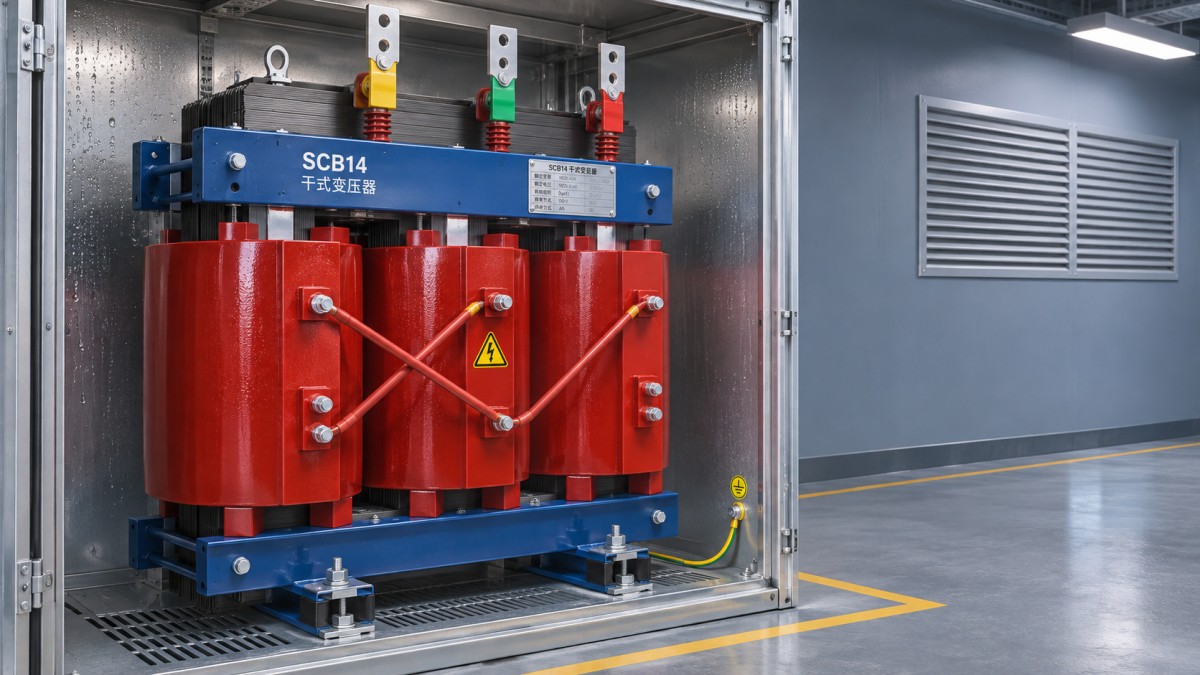
Record where moisture appears and when the transformer was last energized. Water on the enclosure roof points toward a different investigation from dampness concentrated around cool windings after a shutdown. Photographs and previous inspection records help distinguish a new problem from an old stain.
Deciding whether a damp transformer can be returned to service
Do not energize the unit merely to dry it. If there is visible water, flooding, suspected internal wetting, tracking or insulation damage, keep it isolated and involve the manufacturer or a qualified transformer specialist. Floodwater, salt-laden moisture and contaminated deposits can leave residues after the water evaporates; drying alone may not restore a safe insulation surface.
Insulation resistance testing can help assess the condition, but a single reading is not a pass-or-fail answer by itself. Temperature, humidity, contamination and the test setup affect the result. Use the manufacturer’s test procedure and compare readings with suitable previous records taken under comparable conditions. A low or declining result calls for investigation, not an automatic assumption that moisture is the only cause.
Before testing, qualified personnel should identify the correct test voltage and connections, isolate or disconnect sensitive devices as required, and discharge and ground the windings after the test. Do not apply an insulation tester to temperature sensors, electronic controls or surge protection devices unless their instructions permit it.
If drying is required, use a controlled method approved for the transformer and monitor both temperature and insulation condition. Avoid open flames, excessive heat and improvised forced-air arrangements that could damage insulation or drive contamination deeper into the assembly. Return to service only after the source of moisture has been corrected, the unit has been cleaned and dried as necessary, required checks are acceptable, and normal protections are restored.
Preventing moisture during operation and shutdown
Start with the building. Repair leaks, direct water away from ventilation openings, maintain drainage and seal unused cable penetrations with materials suitable for the installation. Keep the room clean and remove dust using methods approved by the manufacturer; aggressive cleaning or wet washing can create a new problem.
Ventilation must remove transformer heat without introducing rain or allowing humid air to settle on cold equipment. More airflow is not always better during an outage: outside air can carry enough moisture to condense on a transformer that has cooled below the outdoor dew point. Review the ventilation controls for both operating and standby conditions.
Where shutdown condensation is a recurring risk, an enclosure anti-condensation heater or room dehumidification may be appropriate. The heater needs a suitable control arrangement, power supply and clearance from adjacent components. Check that it operates when needed, including during planned outages; a heater connected to a supply that is also switched off provides no standby protection. Dehumidification is more useful where the room can be controlled and kept reasonably closed to humid outside air.
For a unit held in storage or awaiting installation, use a dry, sheltered location and follow the manufacturer’s storage requirements. Check protective covers and packaging for trapped moisture, and inspect the unit before commissioning. A cover that keeps rain off can still trap damp air if storage arrangements do not allow the equipment to remain dry.
Match the enclosure to the site
An enclosure reduces exposure to accidental contact and some environmental hazards, but its effectiveness depends on its construction, openings and installation. A unit near a dock, for example, may face salt-laden air as well as humidity; a substation room with a leaking roof has a direct water-entry problem. In both cases, the enclosure and room design must be considered together with ventilation and maintenance access.
For comparison when reviewing another installation, Jiangsu Shengda’s SCB10 Type Dry-Type Transformer is described as moisture-proof and is offered for settings including substations and docks. It is a different series from SCB14, so its description should not be treated as a substitute for the installed unit’s enclosure rating, operating limits or maintenance instructions.
After corrective work, update the maintenance record with the moisture source, cleaning or drying method, test results and condition of heaters and seals. At the next inspection, compare those records with the current condition; recurring dampness usually means the site conditions still need attention.



 Where Can S22 Oil-Immersed Transformers Fit in Distribution Projects?
 Evaluating S20 Transformer Exporters: Documentation and Delivery Risks
 Protecting SCB14 Dry-Type Transformers From Moisture and Condensation
 Requesting an SCB18 Transformer Quote: Specifications to Include
 S20 Transformer Ratings Explained: Capacity, Losses and Impedance
 ZGS Combined Substation Cost: Equipment, Civil Works and Installation
GET A FREE QUOTE
We offer reliable products, competitive prices, and nationwide professional support, committed to providing customers with efficient and energy-saving power equipment solutions.