


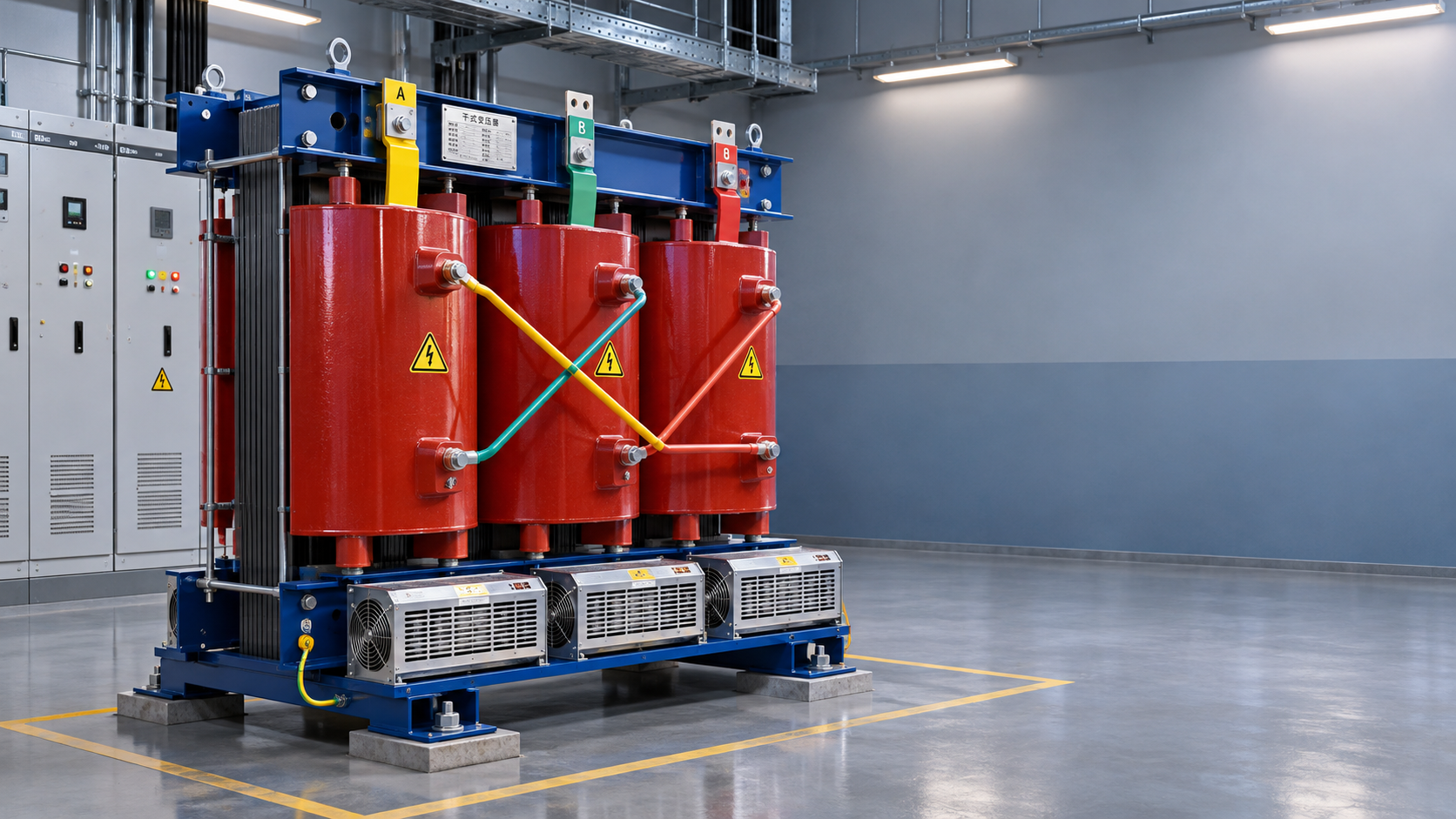
An accurate SCB18 Type Dry-Type Transformer quotation starts with a defined electrical rating, installation environment and scope of supply. A price based only on capacity and voltage can leave out an enclosure, cooling equipment, temperature monitoring or site-specific tests. Those omissions make offers difficult to compare and can lead to revisions after technical approval.
Send the same requirements to each supplier and request a clear record of assumptions. Where project information is still open, identify the missing item and ask for a separately priced option rather than allowing different assumptions to become part of the base price.
Define the electrical rating and operating duty
State the rated capacity in kVA, the number of phases and the system frequency. Give the high-voltage and low-voltage ratings as well as the required vector group. Include the neutral arrangement and whether the neutral needs to be accessible. The voltage ratio alone does not establish winding connections or phase displacement, and a mismatch can prevent the transformer from fitting the planned distribution system.
Specify the required tapping range, tap positions and tap-changing arrangement. Clarify whether voltage adjustment is made with the transformer de-energized or whether another arrangement is required. If the incoming supply varies, provide the expected voltage range so that the tap requirements can be assessed against the actual network.
Describe the load profile where it affects sizing: continuous demand, expected overload duty, large motor starts, harmonic-producing equipment and any planned parallel operation. For parallel operation, provide the ratings, impedance, vector group and tap settings of the existing or proposed units. A matching kVA rating alone does not establish that transformers will share load acceptably.
Include the required short-circuit impedance and any tolerance or coordination requirements. Impedance affects fault current and voltage regulation; accepting a different value can change protection settings or equipment ratings elsewhere in the installation.
Connect cooling and enclosure requirements to the site
State the ambient temperature range, altitude, indoor or outdoor location, ventilation conditions and exposure to dust, moisture or corrosive substances. These details affect thermal design and the usable rating. If the transformer must deliver its full stated capacity under specific site conditions, say so explicitly and request confirmation of any derating assumptions.
Identify the cooling arrangement, including whether fans are required and whether the quoted capacity refers to natural cooling or forced-air operation. Where fans are included, ask for their power supply, controls and the ratings available with fans running and stopped. This distinction matters when comparing an apparently higher-capacity offer with a naturally cooled unit.
For an enclosure, state the required IP protection rating and material, along with cable entry direction and access needs. An enclosure changes the space available for heat to escape, so its rating and ventilation design should be considered together. Ask the supplier to confirm the transformer rating with the specified enclosure fitted, rather than comparing an enclosed unit with an open installation.
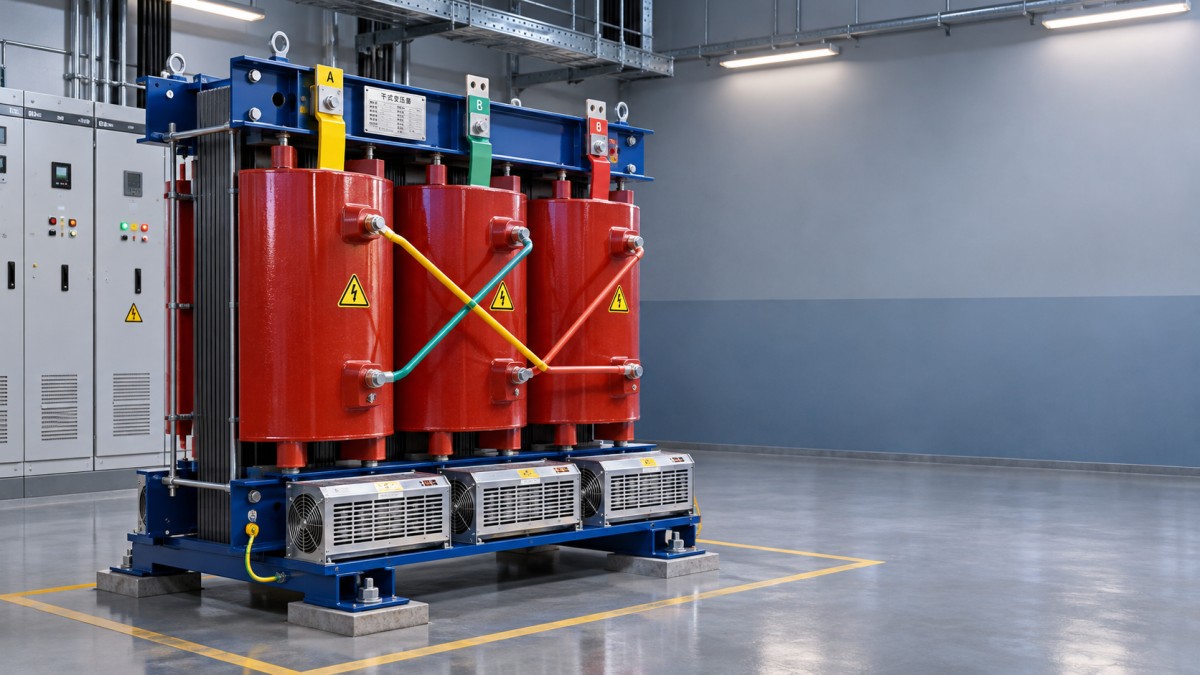
Provide the available installation footprint, height restrictions, door dimensions and delivery route. Request overall dimensions, operating weight, lifting points and minimum clearances in the offer. Cable bending space and access for inspection can be decisive even when the transformer itself fits inside the room.
Specify losses, sound and insulation requirements
Ask for guaranteed no-load loss and load loss at a stated reference temperature and rated tap. These values serve different operating conditions: no-load loss occurs while the unit is energized, whereas load loss varies with loading. A meaningful comparison uses the same rating, tap and temperature basis and considers the expected hours energized and load profile.
Request the applicable SCB18 loss requirements and the standard or specification used to verify them. Do not assume that a model designation alone supplies the guaranteed values. If offers include different tolerances or calculation bases, resolve those differences before evaluating the quoted losses.
Set a sound limit where the installation is near occupied space, and define the measurement conditions and applicable standard. The stated transformer sound level does not necessarily equal the sound experienced in a finished room: enclosure ventilation, fans and reflected sound affect the result. Identify whether the limit applies with cooling fans operating.
Insulation level, temperature rise and partial-discharge requirements should also be stated with their test conditions. Where alternatives are being reviewed, keep their performance claims separate: the SCB12 Type Dry-Type Transformer is described as having low partial discharge and no-load loss more than 20% below SCB11. Those figures do not establish the losses or discharge level of an SCB18 offer.
Make the quoted scope explicit
List required accessories, such as winding temperature sensors, a temperature controller and display, fan controls, alarm contacts, terminal covers and a load recorder. State whether monitoring contacts need to connect to an existing control system, and provide the required supply and interface details. Accessories that appear minor on a quotation can require extra wiring, panels or commissioning work if their interfaces are left undefined.
Identify the applicable standards and project specifications, including the edition where relevant. Separate routine test reports included in the base offer from requested additional or witnessed tests. Ask for the test scope, acceptance criteria, documentation language and any charges for witnessing or third-party inspection. A reference to compliance without a defined test and documentation scope leaves room for different interpretations.
Commercial terms should identify the delivery destination, packing, transport responsibilities, delivery schedule, payment terms and warranty conditions. If unloading, installation, commissioning or spare parts are required, request separate line items. This makes the equipment price comparable while preserving visibility of costs that arise before energization.
Structure the request for comparable offers
Include a specification sheet or single-line diagram with the electrical data, site conditions and physical constraints. Ask each supplier to return guaranteed technical values, a dimensional drawing, a list of included accessories and a schedule of deviations. Request separate prices for unresolved options, such as an alternative enclosure material or additional testing.
Before placing the order, resolve deviations that affect protection, ventilation, cable connections and delivery access. Record the agreed configuration in the final purchase specification so that the approved quotation, drawings and order describe the same transformer.



 Where Can S22 Oil-Immersed Transformers Fit in Distribution Projects?
 Evaluating S20 Transformer Exporters: Documentation and Delivery Risks
 Protecting SCB14 Dry-Type Transformers From Moisture and Condensation
 Requesting an SCB18 Transformer Quote: Specifications to Include
 S20 Transformer Ratings Explained: Capacity, Losses and Impedance
 ZGS Combined Substation Cost: Equipment, Civil Works and Installation
GET A FREE QUOTE
We offer reliable products, competitive prices, and nationwide professional support, committed to providing customers with efficient and energy-saving power equipment solutions.