


Selecting an explosion proof transformer for a hazardous area requires more than matching voltage and power ratings. The installed equipment must be suitable for the site’s classified location, the gases or dusts present, and the maximum permitted surface temperature. Its certification must also cover the actual construction and intended operating conditions.
The central distinction is between a transformer that has suitable electrical and thermal performance and a complete installation that controls ignition risk. A dry-type design, an IP-rated enclosure, or compliance with general transformer standards does not, by itself, establish suitability for a hazardous area.
Start with the classified location
Hazardous-area classification describes where an explosive atmosphere may occur and how frequently or for how long it is expected to be present. The classification is an input to equipment selection, not a rating assigned to the transformer.
Under the IEC system, gas locations are classified as Zone 0, 1, or 2; combustible dust locations are classified as Zone 20, 21, or 22. Lower-numbered zones represent a greater likelihood or duration of an explosive atmosphere. Equipment must have an appropriate Equipment Protection Level (EPL) and protection concept for the zone and installation conditions. For example, EPL Gb equipment is generally suitable for Zone 1 or Zone 2 gas locations, while EPL Gc is generally intended for Zone 2.
In North America, hazardous locations may be classified using the Class and Division system or an applicable Zone system. Class I addresses flammable gases and vapors, while Class II addresses combustible dusts; Division 1 and Division 2 distinguish different conditions under which a hazard can exist. Do not assume that a Zone marking can be substituted for a Division approval without checking the applicable installation code and equipment listing.
The area classification drawing and supporting assessment should identify the boundaries of the hazardous location. A transformer placed outside that boundary may avoid the need for hazardous-location equipment, but only if its position, cable entries, ventilation arrangements, and other interfaces are consistent with the site assessment and local installation rules.
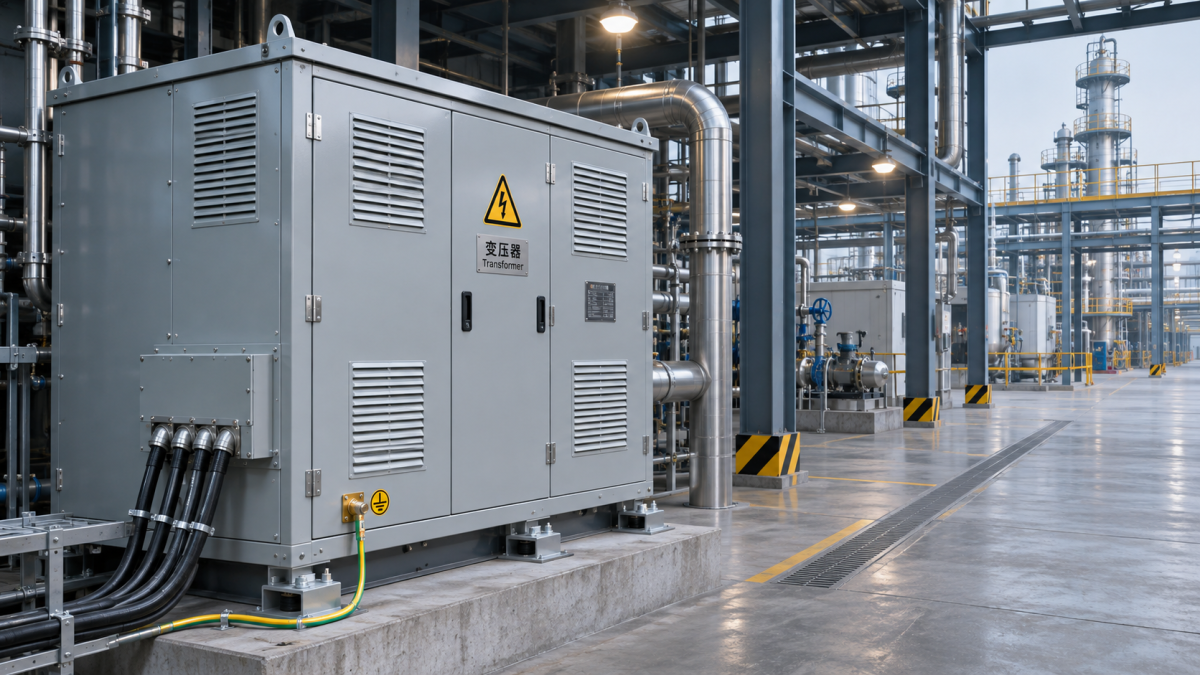
Read the complete hazardous-area marking
An Ex marking contains several separate pieces of information. Each must match the intended location; a suitable zone rating alone is not enough.
- Protection concept: The marking identifies how ignition is prevented, such as flameproof enclosure, increased safety, pressurization, or encapsulation. The certified design and its installation instructions determine the permitted application.
- Gas or dust group: Gas groups IIA, IIB, and IIC reflect different ignition-related properties. IIC equipment is suitable for substances in the less demanding IIB and IIA groups, provided its other ratings are also suitable. Dust groups IIIA, IIIB, and IIIC address different types of combustible particulate material.
- Temperature rating: For gases, the equipment’s temperature class must be compatible with the ignition temperature of the relevant substance. T1 through T6 represent progressively lower maximum surface temperatures; T6 corresponds to 85°C under the applicable rating conditions.
- EPL: Markings such as Gb or Gc for gas, and Db or Dc for dust, indicate the protection level. Check them against the area classification and any additional site requirements.
For dust, surface temperature is often marked as a numerical maximum rather than a gas temperature class. Selection must consider both dust-cloud and dust-layer ignition characteristics, including the effect of a layer insulating a hot surface. The applicable installation standard and site assessment determine the required safety margins and any layer-thickness limitations.
Ambient temperature is equally important. A temperature classification assessed for one ambient range cannot automatically be applied in a hotter enclosure room or under direct solar exposure. Confirm the marked range, loading assumptions, ventilation clearances, and any derating instructions.
Certification applies to a defined assembly
IEC 60079 standards provide the technical framework for Ex equipment, including general requirements in IEC 60079-0 and requirements for individual protection concepts. IEC 60079-14 addresses selection and installation; IEC 60079-17 addresses inspection and maintenance. The applicable editions depend on the certification and installation jurisdiction.
IECEx certification provides a route for demonstrating conformity with relevant IEC standards, but acceptance depends on local law and the project’s requirements. In the European Union, ATEX equipment requirements arise under Directive 2014/34/EU. An IECEx certificate and an ATEX declaration or certificate serve different regulatory purposes and should not be treated as interchangeable documents.
For a U.S. installation, check the applicable National Electrical Code requirements and the equipment’s listing or approval for the classified location. Canadian installations must meet the applicable Canadian Electrical Code and certification requirements. In every jurisdiction, the certificate or listing should be checked against the nameplate, model designation, enclosure configuration, voltage, and accessories supplied.
A certificate for an enclosure component does not automatically certify a transformer assembled inside it. Openings, terminals, cable entries, cooling arrangements, and internal heat sources can affect the protection concept. Likewise, adding a fan, temperature controller, or load recorder inside the hazardous boundary requires confirmation that the resulting assembly remains within its certified scope.
Electrical and enclosure specifications still matter
The transformer must meet the duty as well as the hazardous-area requirements: primary and secondary voltage, frequency, rated power, impedance, insulation level, cooling, and expected load profile all affect safe operation. Overloading or obstructed ventilation can raise surface temperatures beyond those assumed during certification. Protective devices and temperature monitoring should therefore be selected and set in accordance with the manufacturer’s instructions and the installation design.
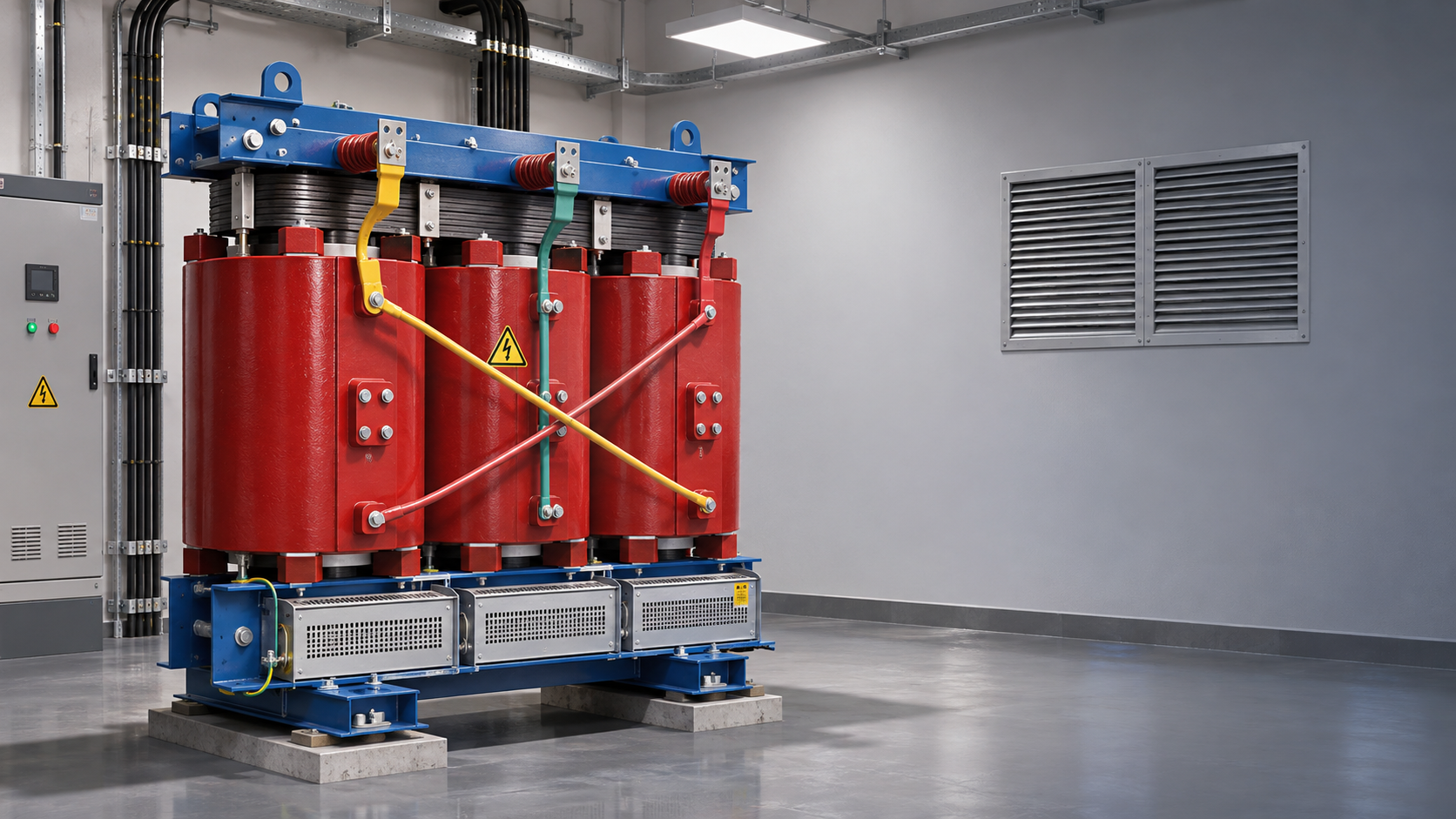
IP protection addresses ingress of solid objects and water; it is not an explosion-protection rating. An IP20 or IP23 enclosure cannot be accepted for a hazardous location on that basis alone. For example, the SCB12 Type Dry-Type Transformer illustrates why the distinction matters: dry-type construction and enclosure options are relevant to electrical and environmental selection, but hazardous-area use would require separate evidence covering the complete intended assembly.
Control changes through inspection and maintenance
Before energization, compare the installed unit with the approved documentation: verify the nameplate, certificate number, protection concept, temperature rating, ambient limits, cable glands, stopping plugs, earthing, and any special conditions of use. Record discrepancies and resolve them before acceptance.
Preserving the rating also depends on maintenance. Damaged flameproof joints, incorrect replacement fasteners, unauthorized drilled openings, accumulated dust, blocked cooling paths, or unsuitable cable-entry devices can undermine the original protection. Repairs and modifications should follow the applicable Ex requirements and manufacturer instructions; a conventional transformer repair procedure alone may not preserve hazardous-area compliance.
The strongest selection decision is therefore supported by a traceable chain: site classification, substance and temperature requirements, equipment marking, certificate scope, installation details, and inspection records. If any link does not match, electrical suitability alone is not a sufficient basis for use.



 Comparing ZGS Substation Quotations: Scope and Exclusions Checklist
 SCB12 Dry-Type Transformer Selection for Commercial Buildings
 Explosion-Proof Transformers: Hazardous-Area Ratings and Selection
 Where Can S22 Oil-Immersed Transformers Fit in Distribution Projects?
 Evaluating S20 Transformer Exporters: Documentation and Delivery Risks
 Protecting SCB14 Dry-Type Transformers From Moisture and Condensation
GET A FREE QUOTE
We offer reliable products, competitive prices, and nationwide professional support, committed to providing customers with efficient and energy-saving power equipment solutions.