


Why “Dry-Type Transformer Price per kVA” Is the Wrong First Question for Hospital Emergency Power
When procurement teams begin sourcing transformers for hospital emergency power systems, one number often dominates early discussions: dry-type transformer price per kVA. It’s intuitive—standardized, comparable, and easy to line up in a spreadsheet. But in life-critical infrastructure, reducing a transformer to a single cost-per-unit metric is like judging a surgeon by scalpel price alone.
Hospitals don’t run on kVA. They run on uptime, predictability, and silent reliability—especially during grid failure, fire alarms, or surge events. A transformer that saves $300/kVA upfront but draws 25% more no-load loss over 20 years? That’s not savings—it’s deferred cost buried in utility bills and thermal stress. A unit priced low but built to minimal noise or partial discharge thresholds? It may pass factory test, then hum at 72 dB inside a neonatal ICU corridor—or fail insulation integrity during a voltage dip.
The Hidden Line Items in “Low-Bid” Quotes
Procurement professionals know the pressure: budget cycles tighten, stakeholders demand justification, and vendor comparisons default to tabular pricing. But hospital emergency power isn’t a commodity procurement exercise. It’s a layered risk assessment—and low-bid quotes rarely disclose what’s omitted:
- Downtime exposure: Dry-type units installed in generator switchgear rooms or rooftop penthouses face tight clearances, ambient heat, and limited airflow. Under-spec’d cooling or marginal dielectric design increases failure probability—not just during commissioning, but year five, when resin aging accelerates under repeated thermal cycling.
- Energy penalty compounding: No-load loss (iron loss) runs 24/7—even when the transformer sits idle. A 1,600 kVA SCB11 unit might draw 2.8 kW at no load. An equivalent SCB13 reduces that by >20%, cutting ~2,400 kWh/year. Over 20 years, that’s not abstract efficiency—it’s real kilowatt-hours billed to the facility, plus avoided CO₂ and cooling load.
- Maintenance friction: Low-cost cast-resin designs sometimes compromise vacuum degassing or resin mixing uniformity. Result? Microvoids that become partial discharge sites. Once initiated, partial discharge degrades insulation faster than thermal aging—and diagnosing it onsite requires specialized equipment, downtime, and engineering time most hospitals can’t spare.
- Safety compliance gaps: “Flame-retardant” isn’t binary. Some resins meet basic UL94 V-0 but release hydrogen cyanide above 400°C. Others—like those used in advanced SCB series—produce zero toxic gases under fault conditions and self-extinguish without oxygen feed. In enclosed mechanical rooms or MRI suites, that distinction isn’t regulatory nuance—it’s code enforcement and staff safety.
What Real Hospital-Specific Engineering Looks Like
True specification starts with context—not catalog numbers. A dry-type transformer in a hospital emergency system isn’t just stepping down 13.8 kV to 480 V. It’s interfacing with automatic transfer switches rated for 10-cycle fault clearing, feeding critical branch panels with harmonic-sensitive imaging equipment, and co-located beside HVAC units generating vibration and moisture.
That’s why standards like JB/T1008B-2016 (Sound Level of 6–220 kV Transformers) matter—not as checkboxes, but as proxies for build discipline. Units meeting that standard by 10–15 dB aren’t just quieter; they reflect tighter winding tension control, optimized core clamping, and acoustic damping integrated into the casting process. Those same controls reduce mechanical resonance during short-circuit events—critical when fault current must be cleared before backup breakers trip.
Similarly, “low partial discharge” isn’t a marketing tagline. It’s the outcome of vacuum thin-film degassing, precision resin dosing, and post-cure thermal profiling—processes that eliminate air entrapment at the molecular level. Without them, even minor voltage transients from nearby MRI ramp-up can initiate corona, accelerating insulation decay.
A Practical Benchmark: When “Better Than SCB11” Becomes Measurable Value
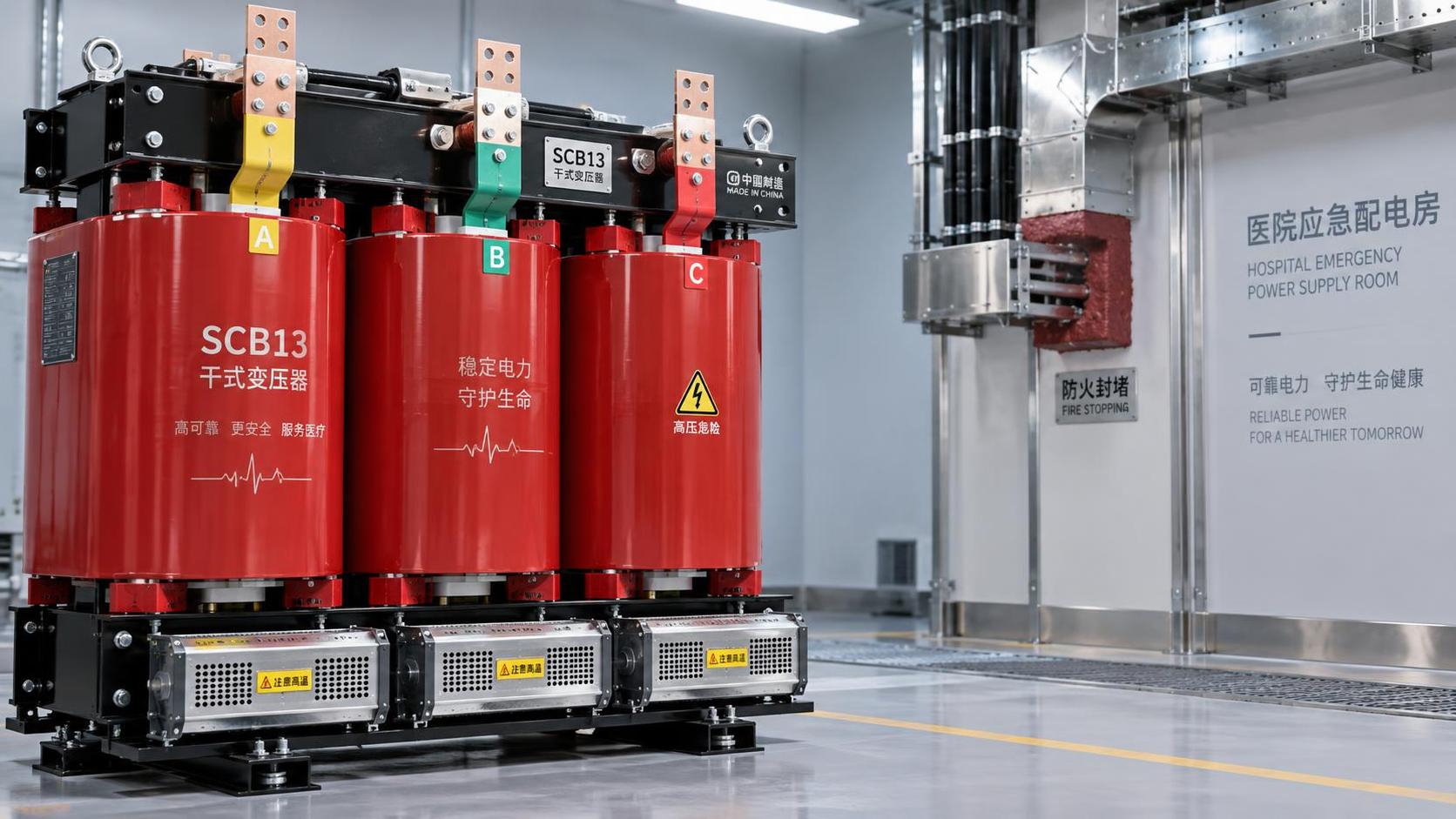
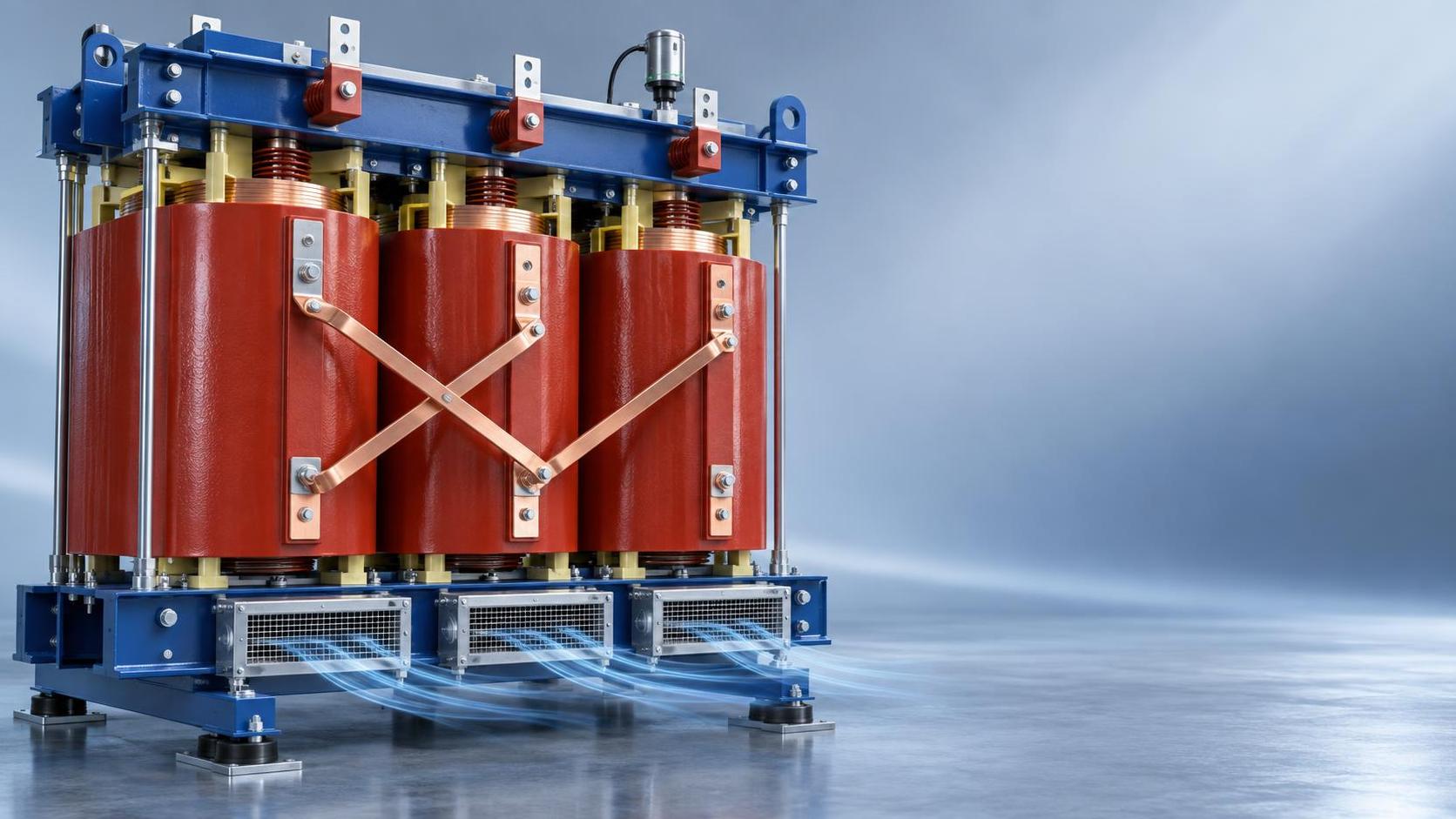
Jiangsu Shengda Power Equipment Co., Ltd. develops dry-type transformers—including the SCB13 Type Dry-Type Transformer—with these hospital-specific stressors in mind. Its no-load loss is reduced by more than 20% compared to the SCB11 model. Its noise level falls 10–15 dB below JB/T1008B-2016 limits. And its partial discharge performance stems not from material substitution alone, but from internationally sourced vacuum mixing technology and strict adherence to GB1094.1-2-1996 and GB/T6451-2008.
None of this appears in a per-kVA quote. But all of it shows up—in annual energy statements, in maintenance logs, in commissioning reports, and in the confidence of clinical engineering staff who’ve seen transformers survive 15 years of hurricane season, generator load testing, and daily thermal cycling without intervention.
What to Ask Next—Beyond the Spreadsheet
If your current evaluation stops at dry-type transformer price per kVA, here are three concrete next steps:
- Request loss breakdowns: Not just total losses, but separate no-load and load-loss values at 50%, 75%, and 100% loading—calculated per IEC 60076-1, not vendor estimates.
- Verify noise testing methodology: Ask for third-party sound level reports, measured per IEC 60076-10, at 1 m distance, with background noise subtracted—not just “meets standard” claims.
- Clarify partial discharge limits: Confirm the maximum allowable pC level at 1.1×Uₘ/√3, per IEC 60270, and whether testing was performed on fully assembled units—not just coils.
These aren’t nitpicks. They’re the difference between a transformer that operates silently in a basement substation for two decades—and one that triggers vibration complaints, fails insulation resistance tests at year seven, or requires unplanned replacement during flu season.
Total cost of ownership in hospital emergency power isn’t calculated in spreadsheets. It’s written in kilowatt-hours saved, in avoided downtime hours, in staff confidence during drills—and in the quiet reliability no one notices… until it’s missing.


 Dry-Type Transformer Price per kVA: Why Low-Bid Quotes Fail on Total Cost of Ownership in Hospital Emergency Power Systems
 Industrial Control Transformer Sizing Rules: Preventing Relay Chatter & PLC Input Dropout in 24V DC Systems
 Dry-Type Transformer Advantages for Hazardous Areas: Why IEEE C57.12.06 Arc Resistance & VPI Process Matter in Chemical Plants
 Air-Cooled Transformer vs Forced-Oil-Cooled: When Natural Convection Meets Thermal Load Peaks in Mining Substations
 SCB13 Dry-Type Transformer Long Lifespan: How Epoxy Resin Quality, Winding Stress Analysis & Ambient Humidity Monitoring Extend Service Life Beyond 30 Years
") S20 Oil-Immersed Transformer Quotation Breakdown: What 5 Line Items Actually Drive Total Installed Cost (Not Just kVA Price)
S20 Oil-Immersed Transformer Quotation Breakdown: What 5 Line Items Actually Drive Total Installed Cost (Not Just kVA Price)
GET A FREE QUOTE
We offer reliable products, competitive prices, and nationwide professional support, committed to providing customers with efficient and energy-saving power equipment solutions.