


How do you compare an SCB18 Type Dry-Type Transformer supplier without relying on brochures?
Choosing an SCB18 Type Dry-Type Transformer supplier is rarely about one catalog page or one quoted price.
The real decision usually sits between technical consistency, compliance evidence, delivery control, and lifetime operating cost.
That matters even more when several suppliers claim similar ratings, insulation classes, and performance targets.
A practical comparison should answer one question: which supplier can deliver stable quality with lower procurement risk?
In actual projects, the strongest SCB18 Type Dry-Type Transformer supplier is often the one with disciplined manufacturing and traceable testing.
For that reason, buyers usually look beyond model names and focus on process capability, standards, documentation, and after-sales response.
What should be checked first when shortlisting suppliers?
Start with the basics, but do not stop at them.
An SCB18 Type Dry-Type Transformer supplier should show a clear product scope, stable production capacity, and relevant dry-type transformer experience.
It is also worth checking whether the company works across related transformer categories.
A broader technical base often indicates stronger engineering support, especially for custom voltage, enclosure, or installation conditions.
Jiangsu Shengda Power Equipment Co., Ltd., for example, covers SCB10, SCB11, SCB13, SCB14, SCB18, SGB series, 10KV and 35KV models, compact substations, and on-load tap-changing transformers.
That kind of range does not prove suitability by itself, but it usually suggests deeper production know-how.
- Check whether the supplier handles both standard and customized transformer configurations.
- Ask for factory test routines, not just sample reports.
- Confirm whether quality inspection is in-house and documented.
- Review how they manage raw material traceability and production records.
This early screening removes many risks before price comparison begins.
Which certifications and standards actually matter in supplier comparison?
Certificates matter when they connect to product control, not when they are used as decoration.
A reliable SCB18 Type Dry-Type Transformer supplier should be able to explain which standards govern design, testing, and quality management.
ISO9001 is useful because it indicates a structured quality system, but it should be supported by actual inspection discipline.
Compliance with standards such as GB1094.1-2-1996 and GB/T6451-2008 is also important because it anchors technical consistency.
The more useful question is whether the supplier can provide routine test records, material certificates, and acceptance documents for the exact ordered unit.
That is where many suppliers begin to separate.
A supplier with solid documentation will usually answer these questions clearly and quickly.
When specifications look similar, what differences reveal real manufacturing strength?
This is where comparison becomes more interesting.
Two SCB18 Type Dry-Type Transformer suppliers may list similar capacity, voltage, and insulation data, yet product stability can differ a lot.
The gap usually comes from core material selection, coil processing, resin casting consistency, temperature rise control, and final testing accuracy.
It helps to ask how the supplier controls noise, partial discharge, heat dissipation, and dimensional tolerances.
A technically mature factory tends to describe these points in process terms, not marketing phrases.
Looking at related products can also reveal engineering depth.
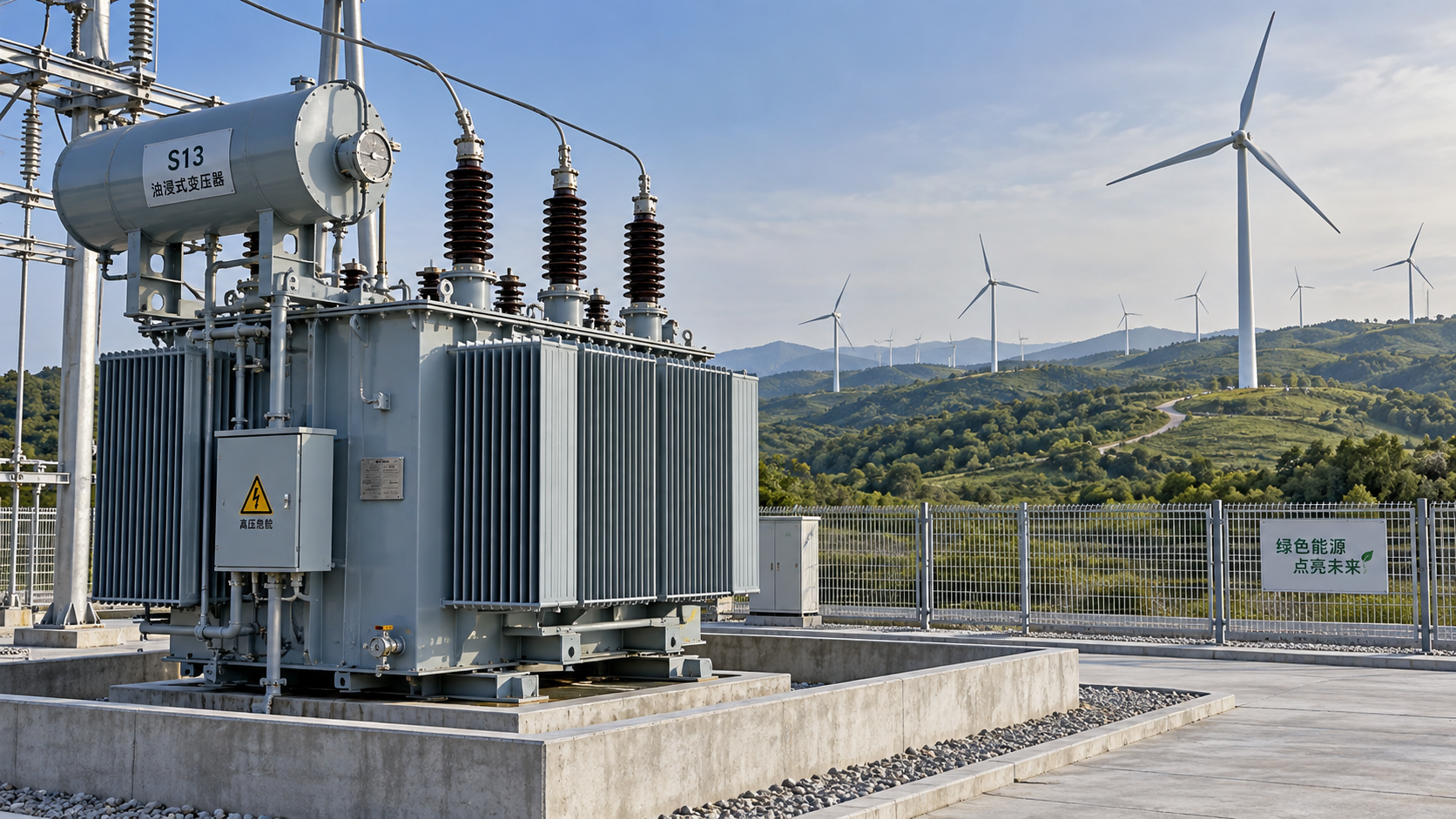
For instance, some manufacturers also develop energy-saving oil-immersed models such as S13 Series Oil-Immersed Power Transformer.
That product line emphasizes optimized core and coil structure, with average no-load loss and noise reductions of about 20% under JB/T10088-2016 expectations.
While it is a different transformer type, it signals whether the supplier invests in efficiency-oriented design rather than simple assembly.
Useful comparison questions during technical review
- What routine tests are performed on every unit before shipment?
- How are winding quality and insulation consistency controlled?
- Can the supplier share past project cases with similar load or environment conditions?
- How are nonconforming materials or failed test results handled?
Is the lowest quoted price ever the right choice?
Sometimes, but less often than expected.
An inexpensive SCB18 Type Dry-Type Transformer supplier may still be competitive if materials, testing, and delivery control are reliable.
The risk appears when price is reduced by cutting validation, using weaker components, or stretching lead times after order confirmation.
A better method is to compare total procurement cost over the expected service period.
That includes not only unit price, but also transport, installation fit, energy loss, maintenance risk, spare parts support, and downtime exposure.
In more demanding applications, a lower loss design can offset a higher initial quotation over time.
This is one reason many buyers compare a supplier’s full transformer portfolio, including low-loss series, before making a final decision.
A quick way to read price differences
What mistakes are common when evaluating an SCB18 Type Dry-Type Transformer supplier?
A common mistake is comparing only nameplate data.
That misses service responsiveness, packaging quality, site adaptation, and exception handling after delivery.
Another mistake is accepting generic certificates without checking whether they match the supplied model and testing scope.
Lead time assumptions can also cause trouble.
Some suppliers quote aggressively, then revise schedules once production slots tighten.
It is smarter to ask about production planning, inspection timing, and shipping preparation before issuing the purchase order.
There is also value in checking how the supplier performs across adjacent transformer products.
A company with proven control in dry-type units and efficient lines such as the S13 Series Oil-Immersed Power Transformer is often easier to evaluate on engineering maturity.
What should the final decision checklist look like?
By the final stage, the comparison should be simple enough to defend internally and detailed enough to prevent surprises later.
A useful shortlist for any SCB18 Type Dry-Type Transformer supplier includes the following points.
- Verified compliance with applicable standards and traceable quality records.
- Stable manufacturing capability for the required voltage and capacity range.
- Clear test procedures, inspection reports, and acceptance criteria.
- Reasonable total cost, not only the lowest initial quote.
- Credible delivery schedule with packaging and logistics planning.
- After-sales communication path for installation or operating issues.
When a supplier performs well across these areas, the purchasing decision becomes much less risky.
The practical next step is to align the required SCB18 configuration, request evidence for each checkpoint, and compare responses side by side.
That approach gives a clearer result than relying on price alone, and it usually leads to better long-term value.



 How to verify the temperature-rise test of an SCB12 dry-type transformer
 Distribution transformer maintenance tips for spotting oil leaks
 What dissolved gas analysis reveals about an oil-immersed transformer
 Why an oil-cooled transformer overheats despite a normal oil level
 How the amorphous core affects SCBH15 dry-type transformer losses
 Sizing S13 oil-immersed transformers for variable wind farm output
GET A FREE QUOTE
We offer reliable products, competitive prices, and nationwide professional support, committed to providing customers with efficient and energy-saving power equipment solutions.