


How to assess a custom transformer manufacturer's design capability
Choosing a custom transformer manufacturer requires more than comparing prices and delivery schedules. The real challenge is determining whether a supplier can translate voltage, load, installation, and efficiency requirements into a reliable, compliant design. Engineering calculations, relevant project experience, thermal and insulation analysis, and documented testing carry more weight than a thick catalog.
For procurement, the practical question is simple: can the manufacturer explain its design choices, demonstrate their suitability, and commit to measurable acceptance criteria? That evidence helps separate a genuinely engineered solution from a standard transformer with a few changed accessories.
Start with the questions the supplier asks
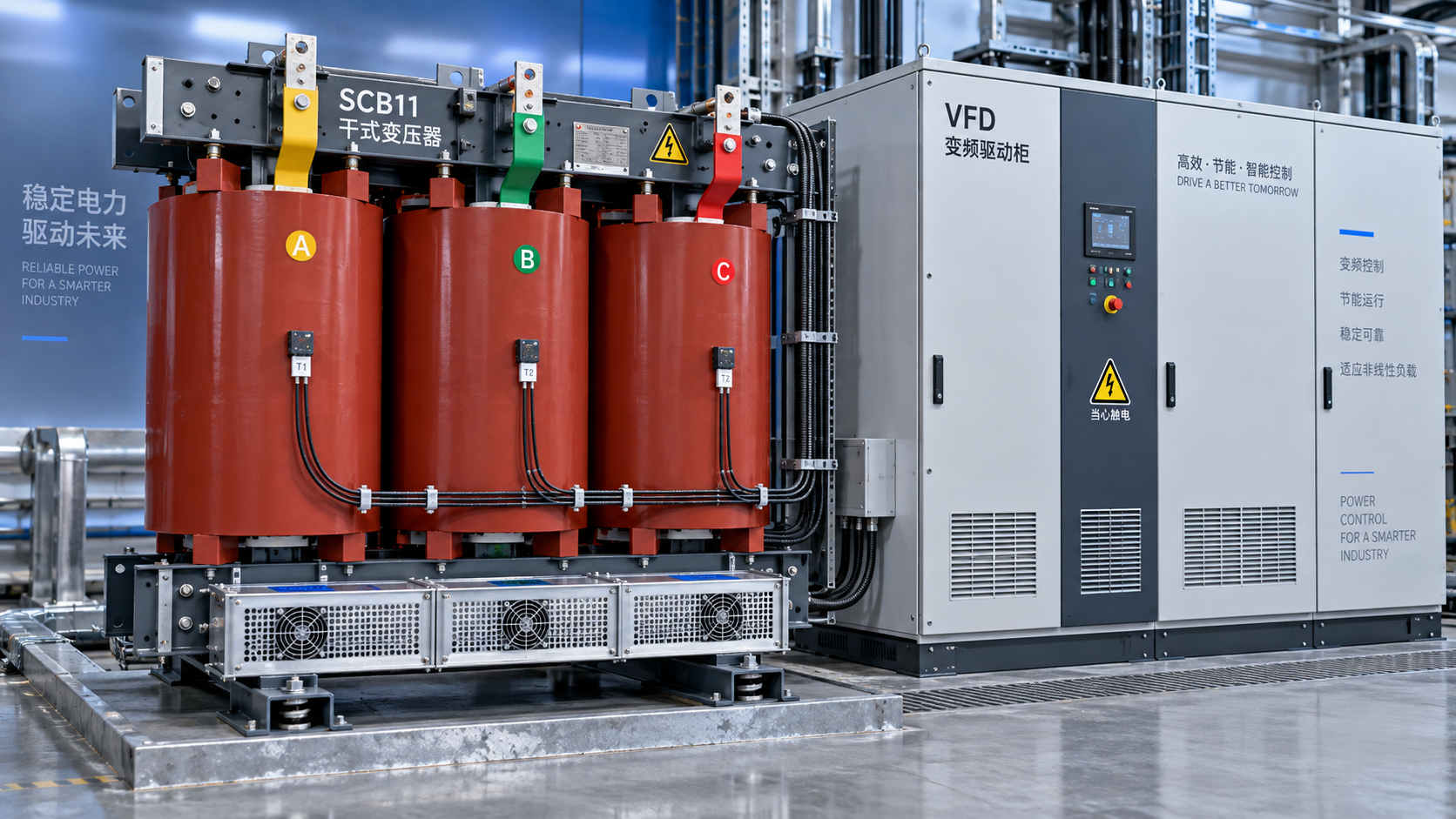
A capable engineering team should challenge an incomplete specification before issuing a firm quotation. Rated capacity and voltage ratio are only the starting point. A transformer serving variable-frequency drives, for example, may need a different thermal assessment from one supplying a mainly linear load, even when both have the same nameplate rating.
Give shortlisted suppliers the same operating brief so their proposals can be compared fairly:
- Primary and secondary voltages, frequency, vector group, grounding arrangement, and tap requirements.
- Expected load profile, harmonic content where relevant, overload duty, and future capacity needs.
- Ambient temperature, altitude, indoor or outdoor installation, ventilation, and space restrictions.
- Required impedance, available fault level, protection interfaces, loss limits, and noise requirements.
- Destination-market standards, inspection requirements, and installation or transport constraints.
Watch how the supplier handles missing information. Recording assumptions and explaining their consequences is a good sign. Agreeing to every requirement without discussing conflicting constraints is not. Lower losses, smaller dimensions, lower noise, and the lowest price cannot always be achieved together.
Ask for design evidence, not unrestricted intellectual property
You do not need proprietary winding drawings to assess competence. Request a project-specific design summary showing the calculation basis, predicted performance, margins, and proposed verification. The supplier should distinguish between results supported by a proven design family and features requiring new validation.
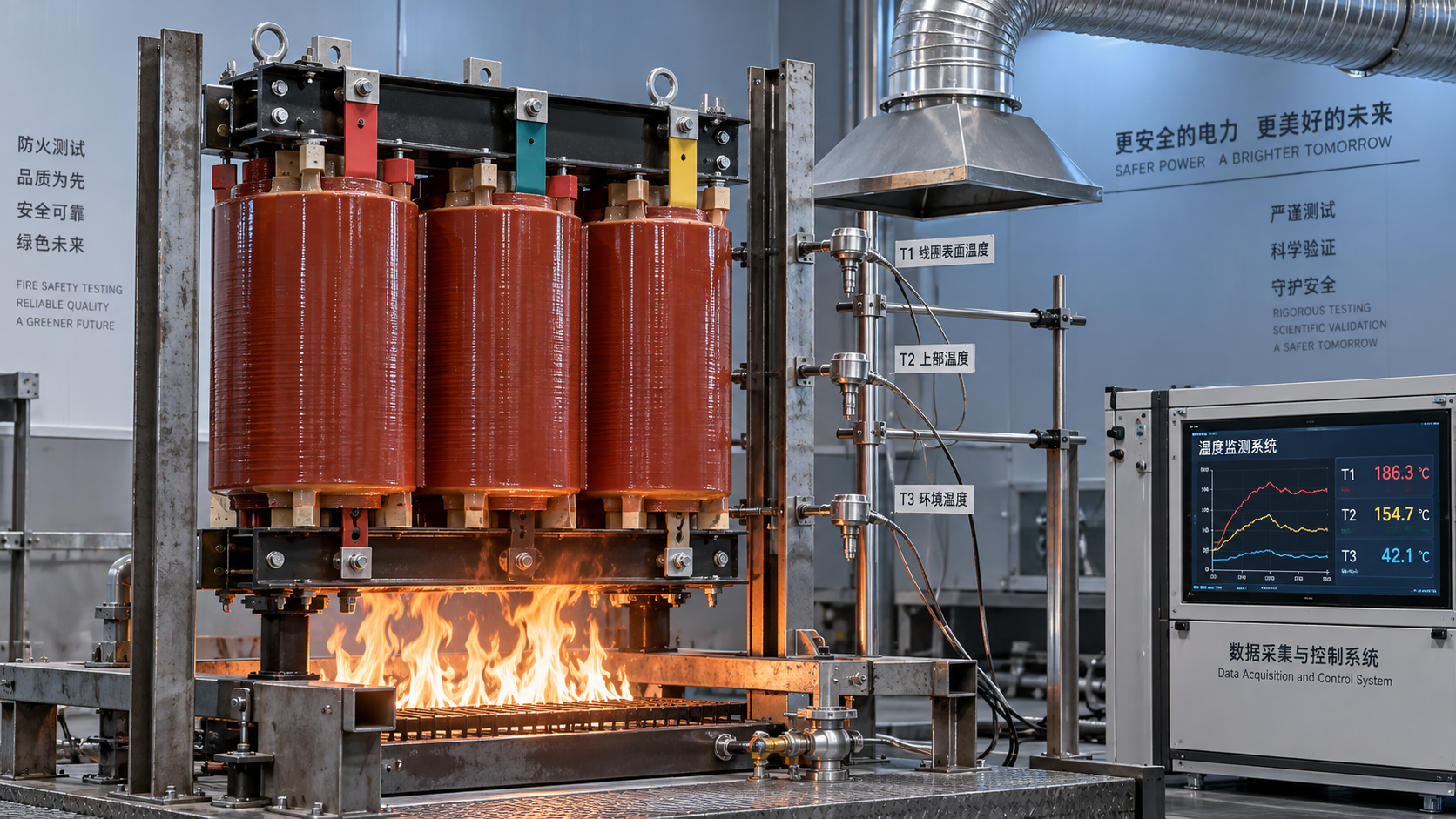
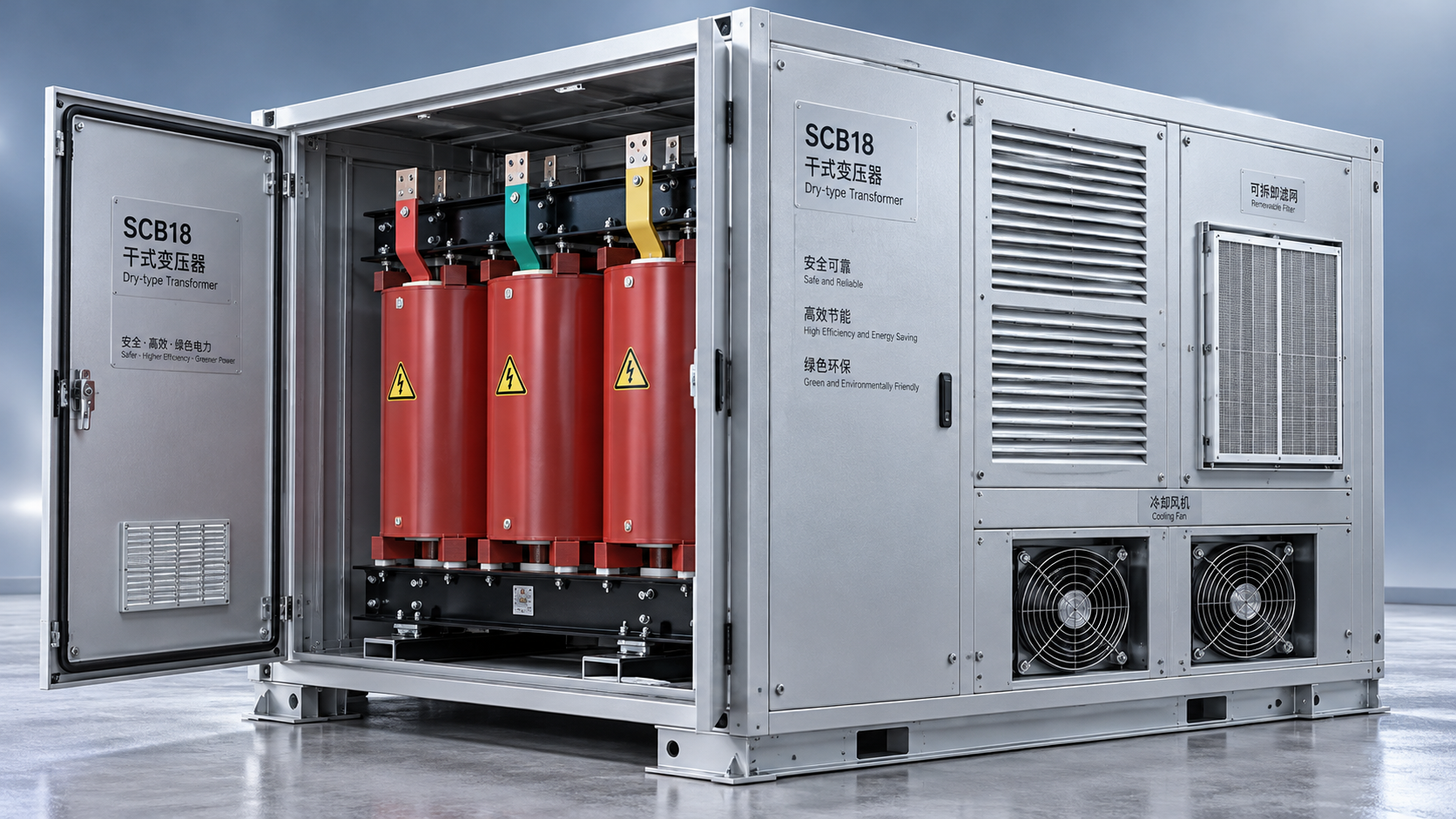
Thermal evidence should connect winding and core losses to the intended cooling arrangement and site conditions. For oil-immersed equipment, ask how oil circulation, cooling surfaces, and winding hot spots are assessed. For dry-type equipment, examine ventilation assumptions, enclosure effects, insulation temperature limits, and any dependence on forced-air cooling.
Insulation design deserves equal attention. Request the specified insulation levels, dielectric test plan, and treatment of clearances and environmental conditions. Where partial-discharge testing is applicable, establish the method and acceptance limit rather than accepting “tested” as a complete answer.
Short-circuit withstand is another useful discriminator. Ask how winding forces, conductor support, and clamping are evaluated. A historical test report is relevant only if the manufacturer can explain how the tested construction relates to the proposed unit.
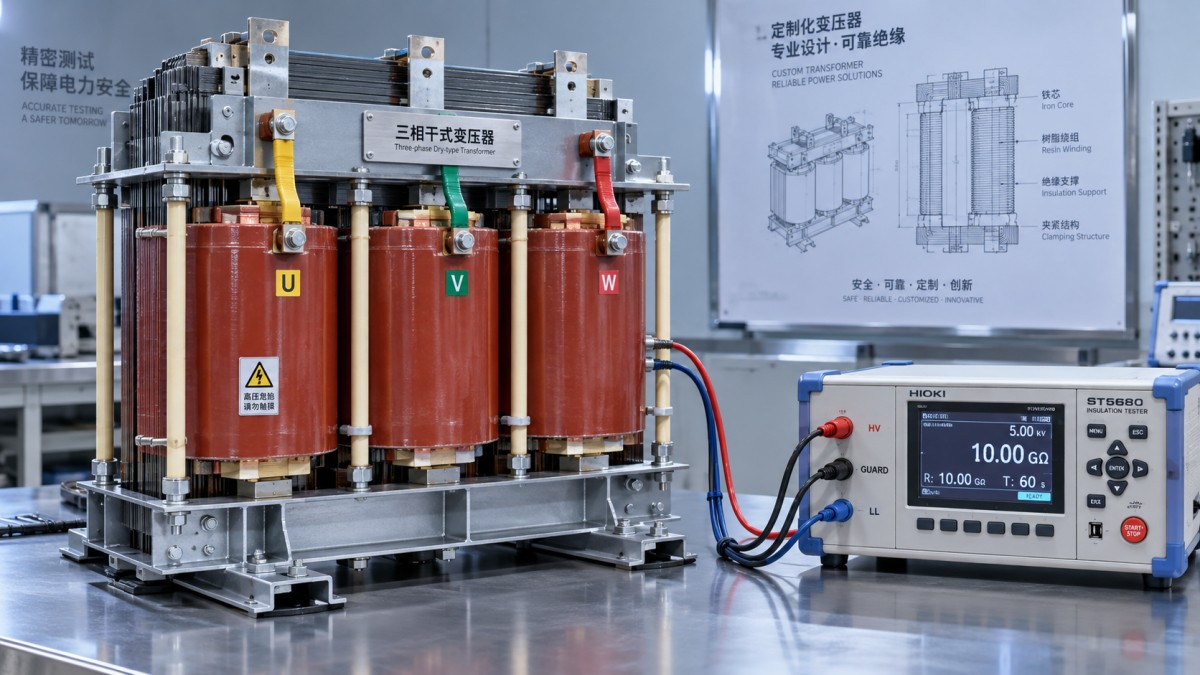
A general arrangement drawing can expose practical weaknesses early: inaccessible terminals, inadequate cable-bending space, unsuitable lifting provisions, or maintenance clearances that do not fit the installation. These are design issues, not details to resolve after delivery.
Use catalog parameters to test engineering judgment
A standard product range provides a useful reference point for customization. Jiangsu Shengda Power Equipment Co., Ltd. specializes in transformer R&D, production, and sales, with a portfolio covering low-loss oil-immersed transformers, 10 kV dry-type units, 10 kV and 35 kV models, compact substations, amorphous alloy transformers, and on-load tap-changing equipment. That breadth helps identify relevant starting designs, but does not by itself prove suitability for a particular project.
For example, its S20 Series Oil-Immersed Power Transformers lists capacities from 30 to 2,500 kVA and Yyn0 or Dyn11 connections. The published 1,000 kVA entry gives a no-load loss of 745 W and load loss of 8,240 W. These values create concrete questions: will the customized unit retain them, under which reference conditions, and with what contractual tolerances?
The product information references GB20052-2020 and JB/T10088-2016. Ask the supplier to identify the applicable efficiency requirements and noise measurement basis for the selected configuration. A noise-reduction claim needs particular care: sound-pressure and sound-power measurements are not interchangeable, and percentage claims cannot be interpreted casually on a logarithmic decibel scale.
Compare lifetime cost on a common basis
A lower purchase price can be offset by higher losses, additional ventilation work, difficult maintenance access, or installation changes. Compare quotations using identical operating assumptions rather than each supplier’s preferred efficiency scenario.
For a simplified estimate, annual loss energy equals energized hours multiplied by no-load loss plus load loss multiplied by the squared load fraction, with losses expressed in kW. Under an illustrative constant 50% load for 8,760 energized hours, the published 1,000 kVA values above give approximately 24,572 kWh of annual loss energy. This is a calculation, not a guaranteed operating result.
Actual loading varies, so use time intervals and squared load fractions rather than simply squaring the annual average load. Temperature and harmonics may also affect the estimate. Apply the site’s electricity tariff and a consistent evaluation period, then include installation, maintenance, spares, and any cooling auxiliaries. The supplier’s ability to explain these assumptions is part of its design capability.
Check standards, testing, and production control separately
ISO9001 certification supports confidence in a quality management system; it does not certify a particular custom design’s performance. Shengda identifies ISO9001 certification and references GB1094.1-2-1996 and GB/T6451-2008 in its company information. These are Chinese national-standard references. Confirm the precise parts, editions, current applicability, and destination-market requirements before incorporating them into a contract.
Request a compliance matrix and an inspection and test plan. These should identify routine tests, any required type or special tests, acceptance limits, witness points, and the reports supplied at handover. Loss, impedance, ratio, insulation, and temperature-rise evidence should relate to the agreed specification, not just appear in a generic brochure.
Then check how engineering changes reach production. Approved drawings, material traceability, controlled substitutions, and final inspection records matter because a sound calculation cannot compensate for an undocumented change in conductor, insulation, or core material.
Make technical approval a purchasing milestone
Before releasing an order, require a signed technical schedule, approved arrangement drawing, guaranteed performance values, and an agreed test plan. Separate engineering approval time from manufacturing and shipping time, and define which changes trigger revised pricing, delivery, or validation.
A credible custom transformer manufacturer will make the limits of its proposal visible. Shortlist suppliers that explain trade-offs, close specification gaps, and connect their calculations to verifiable tests. The next step is a technical review of your actual load profile, installation conditions, and acceptance criteria—not another round of price comparison against unmatched quotations.



 How to assess a custom transformer manufacturer's design capability
 When is an aluminum-wound transformer suitable for heavy loads?
 Choosing a medium-voltage transformer for high-altitude operation
 How harmonic loads affect the temperature rise of an SCB11 transformer
 What an F1 fire behaviour rating means for a flame-retardant transformer
 How enclosure specifications affect SCB18 dry-type transformer cost
GET A FREE QUOTE
We offer reliable products, competitive prices, and nationwide professional support, committed to providing customers with efficient and energy-saving power equipment solutions.