


An aluminum wound transformer is suitable for heavy loads when its rated output, winding temperature rise, cooling arrangement, and connections are verified for the actual operating conditions. Sustained high demand is a valid application for aluminum windings, provided the design accommodates aluminum’s higher electrical resistivity and the installation can remove the resulting heat. Suitability becomes uncertain when selection relies only on nameplate kVA, an insulation-class label, or an unsupported overload claim.
The decisive evidence is a thermal assessment tied to the load profile, supported by applicable test results. That assessment must include ambient temperature, harmonics, phase imbalance, and the cooling equipment available during operation.
Define the heavy load before comparing winding materials
A transformer supplying steady process equipment faces a different thermal duty from one supplying intermittent motor starts. Continuous loading allows winding temperatures to approach their steady operating level. A short peak starts from the temperature established by the preceding load, so the same peak current can have different consequences at different times of day.
Record apparent power, current on each phase, peak duration, and recovery intervals. Real power alone is insufficient: poor power factor increases current for the same useful output. An average demand figure can also conceal a heavily loaded phase or repeated peaks that leave little time for cooling.
Motor starting adds a separate requirement. The transformer must support acceptable voltage during acceleration, considering its impedance and the upstream supply. Increasing thermal capacity alone does not establish that a motor will start successfully. Repeated starts also contribute heating that a simple daily kVA average misses.
A useful duty specification therefore describes the highest sustained load, recurring transient loads, and the ambient conditions occurring at the same time. Future demand should be stated explicitly rather than absorbed into an undefined “heavy-duty” requirement.
Aluminum needs an appropriate conductor and winding design
Aluminum has higher electrical resistivity than copper. For equal conductor length and resistance at a comparable temperature, an aluminum conductor needs a larger cross-sectional area. A transformer designed around that requirement can achieve the specified load loss and temperature rise. Substituting aluminum into dimensions established for copper would change those results.
The larger conductor affects winding geometry, insulation spacing, cooling passages, and the space available inside the core window. These features interact: adding conductor area while restricting airflow can undermine the intended thermal improvement. Compare completed transformer designs using guaranteed performance, rather than assuming that conductor material determines efficiency.
At heavy continuous load, load loss deserves particular attention because the resistive component increases approximately with the square of current at a given resistance. Resistance itself rises as the winding heats. Compare declared losses at the same reference temperature and rating; figures reported under different conditions are not directly comparable.
No-load loss remains relevant during energized periods with little demand, but a low no-load figure cannot compensate for excessive winding heating during sustained high current. The balance between these losses should reflect the actual operating schedule.
Thermal capability must match the installation
Temperature-rise evidence should correspond to the proposed winding construction, enclosure, and cooling mode. A test performed with unobstructed ventilation does not establish identical performance inside a restricted electrical room. Cooling air must reach the transformer and carry heat away without repeatedly recirculating through the windings.
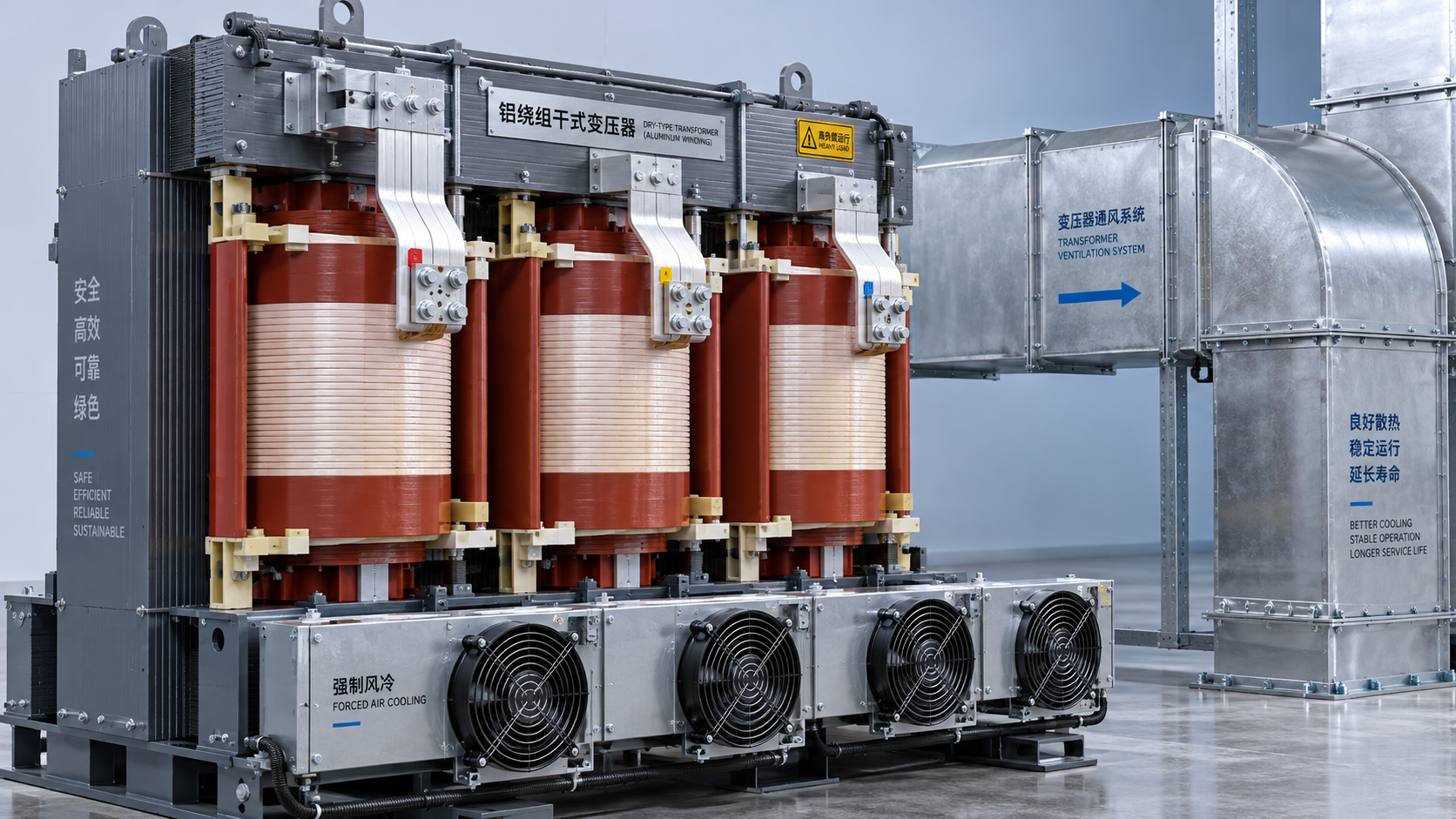
For a dry-type transformer, room ventilation, enclosure openings, clearances, and dust accumulation all influence cooling. High altitude reduces air density and requires assessment against the applicable design conditions. Ambient temperature should be evaluated where cooling air enters the equipment, especially when nearby machinery raises the local temperature.
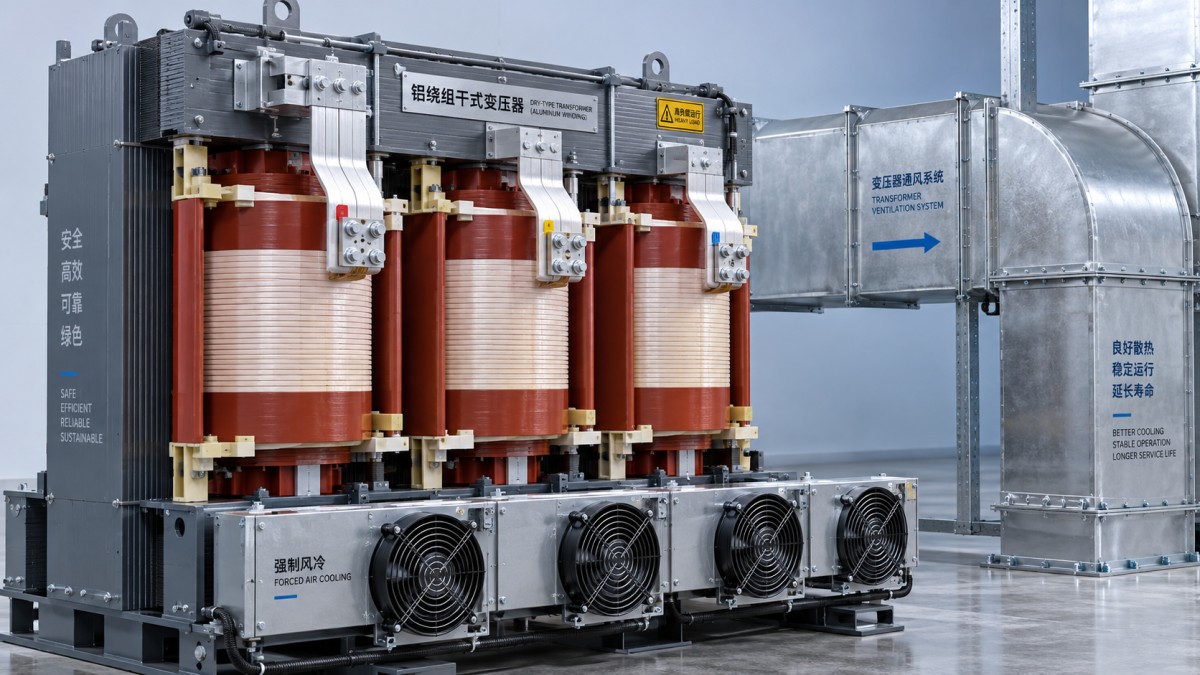
Natural-air and forced-air ratings must remain distinct. If the required output relies on fans, fan failure changes the available capacity. The specification should define the permissible load without forced cooling and the response to loss of ventilation. Temperature alarms and trips need coordination with that operating limit.
An insulation designation such as Class H identifies a thermal class; it does not establish permissible continuous overload or guarantee service life at every winding temperature. Average winding temperature rise also does not fully describe the hottest location. Local heating near a lead exit, restricted cooling passage, or connection can limit performance before the average value becomes excessive.
The Non-Encapsulated Dry-Type Transformer describes a vacuum-impregnated, unencased coil construction with continuous high-voltage windings and foil-wound low-voltage windings. Those features are relevant to winding construction and cooling assessment, but they do not establish conductor material. An aluminum-winding selection still requires confirmation of the offered conductor and model-specific thermal evidence. Any stated overload capability needs defined ambient temperature, initial loading, cooling mode, duration, and permitted temperature limits.
Harmonics and connections can set the practical limit
Rectifiers, variable-speed drives, and other nonlinear loads introduce harmonic currents. These increase RMS current and produce additional eddy-current and stray losses. Consequently, two loads with similar apparent power can produce different winding temperatures. A rating established for sinusoidal current needs a separate assessment against the expected harmonic spectrum.
Foil dimensions and winding arrangement affect additional losses, so a generic harmonic allowance is insufficient evidence for a particular design. Provide the expected current spectrum or a defensible load model, then obtain the applicable loading limit. Where single-phase nonlinear loads are present, include neutral-current requirements and phase imbalance.
Aluminum terminations require equal attention. Oxide formation, thermal expansion, and time-dependent deformation under clamping pressure affect joint design. Suitable interfaces, controlled surface preparation, specified joint compounds where required, and approved tightening procedures help maintain low contact resistance. Connections between aluminum and copper need an interface designed for those materials and the surrounding environment.
A hot terminal with otherwise acceptable winding temperatures points toward a connection problem; broadly elevated winding temperatures suggest a loading or cooling issue. Thermal imaging under a documented load helps distinguish these conditions. Inspection results should be compared at similar current and ambient conditions, because a lightly loaded joint can conceal resistance that becomes significant during peak operation.
Evidence that supports acceptance
The technical submission should connect the proposed transformer to its intended duty. The following evidence answers different parts of the suitability question:
- Guaranteed losses and temperature rise: stated reference temperatures, cooling conditions, and acceptance limits allow meaningful comparison between aluminum and copper designs.
- A temperature-rise test report for the offered design, or a documented technical basis explaining how the tested design represents it. Differences in enclosure, winding arrangement, and cooling need an engineering explanation.
- Short-circuit withstand substantiation. Heavy loading and fault withstand are separate requirements. Winding supports, conductor geometry, and clamping must resist the specified fault duty.
- Connection details, temperature-sensor locations, and the loading response following fan failure. These establish whether the thermal capability remains usable after installation.
Routine winding-resistance measurements are useful for identifying discrepancies between phases or connections, but they do not replace thermal testing. Likewise, dielectric tests establish insulation performance under their test conditions; they do not prove continuous heavy-load capability.
When the selection is justified
Aluminum windings are a sound choice when the complete design meets the required losses, temperatures, voltage performance, and fault duty within the available installation space. Copper deserves comparison where space restrictions make a larger winding difficult to accommodate, or where the offered aluminum design cannot meet the required loss or thermal limits.
Acceptance should remain conditional if the conductor material is unconfirmed, the quoted capacity assumes unavailable forced cooling, or an overload claim lacks a defined starting temperature and duration. Resolving those gaps before specification approval prevents a nominally adequate transformer from becoming a restricted-capacity installation.


 When is an aluminum-wound transformer suitable for heavy loads?
 Choosing a medium-voltage transformer for high-altitude operation
 How harmonic loads affect the temperature rise of an SCB11 transformer
 What an F1 fire behaviour rating means for a flame-retardant transformer
 How enclosure specifications affect SCB18 dry-type transformer cost
 How to compare loss guarantees for S22 oil-immersed transformers
GET A FREE QUOTE
We offer reliable products, competitive prices, and nationwide professional support, committed to providing customers with efficient and energy-saving power equipment solutions.