


Copper windings can increase the purchase price of an SCB11 dry-type transformer, but they do not automatically produce the lowest lifetime cost. Aluminum windings can reduce upfront expenditure, yet the saving is meaningful only if the transformer meets the same loss limits, temperature-rise requirements, installation constraints, and reliability obligations. The correct comparison is between complete, compliant designs—not equal-sized conductors made from different metals.
Winding material affects SCB11 Type Dry-Type Transformer cost through conductor quantity, coil dimensions, manufacturing processes, and electrical losses. Budget approval should therefore separate the material-price difference from any difference in guaranteed performance. Paying more for copper without a measurable benefit can be as difficult to justify as accepting a cheaper aluminum design with unspecified losses.
Why a lower conductor price does not translate directly into the same percentage saving
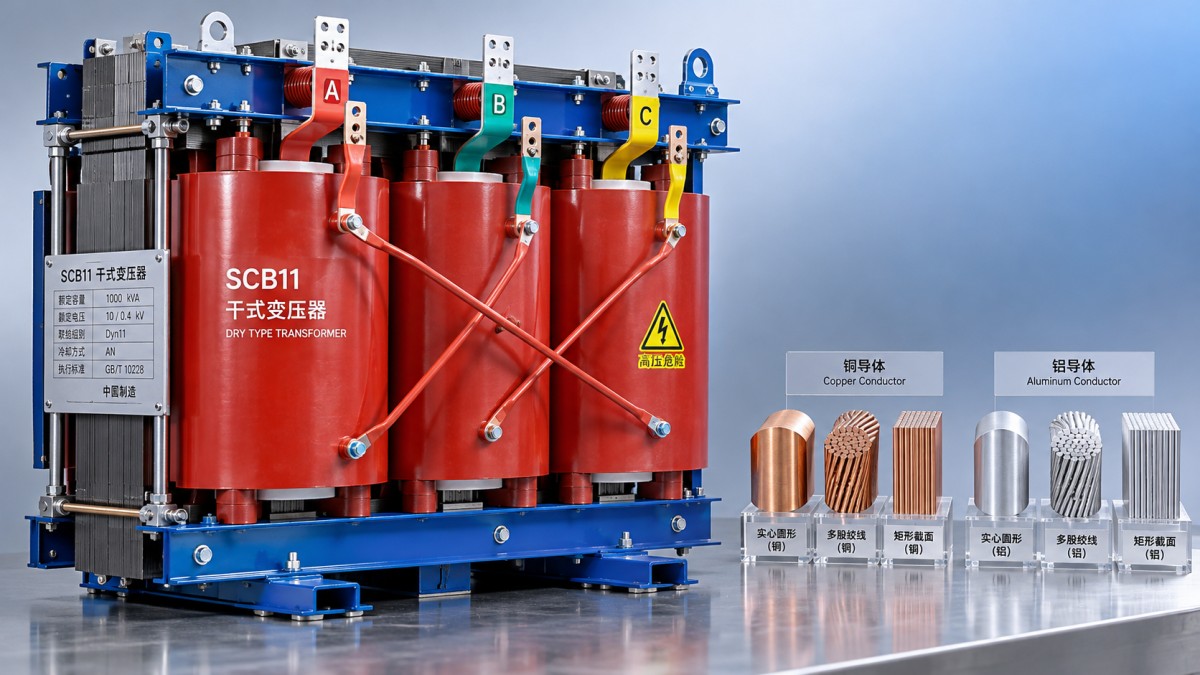
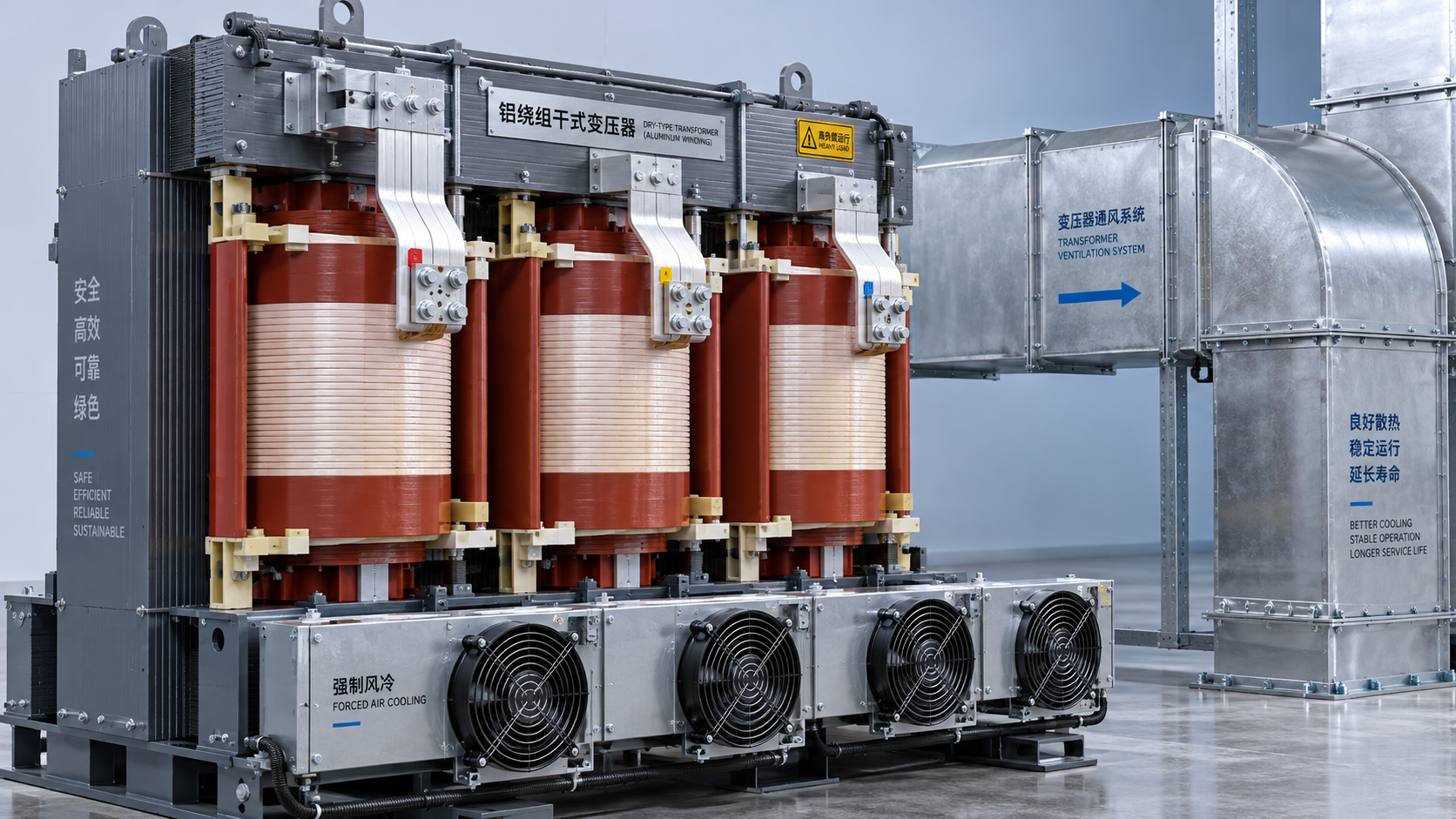
Copper has lower electrical resistivity than aluminum. For the same conductor length and resistance, aluminum requires a larger cross-sectional area—approximately 1.6 times that of copper at comparable temperatures. Because aluminum is much less dense, the resulting conductor can still weigh substantially less. These physical differences help explain why aluminum can offer a lower winding-material cost despite requiring more conductor volume.
However, a transformer is not priced by conductor weight alone. Larger conductors can affect coil geometry, insulation spacing, resin consumption, cooling passages, and the space needed within the core window. Depending on how the manufacturer redesigns the transformer, some of the conductor saving may be offset elsewhere.
Copper also does not guarantee a smaller finished transformer. Enclosures, electrical clearances, cooling arrangements, and standardized manufacturing dimensions can limit the difference. If space or transport weight has financial value, compare the quoted dimensions and total shipping mass rather than estimating them from winding material.
The price premium is consequently design-specific. A fixed claim that copper costs a particular percentage more is not a dependable budgeting rule. Conductor market prices, purchased quantities, winding construction, and the supplier’s production capabilities all affect the final quotation.
Establish what each quotation actually includes
The designation “SCB11” is not enough to establish a like-for-like comparison. It does not replace a technical schedule identifying winding material, guaranteed losses, operating conditions, and supplied accessories. A quotation should state the conductor material separately for the high-voltage and low-voltage windings; a general description such as “copper connections” does not establish that both windings are copper.
Before assigning a price difference to winding material, align these commercial and technical conditions:
- Electrical duty: rated capacity, voltage ratio, frequency, vector group, tapping arrangement, and impedance.
- Guaranteed performance: no-load loss, load loss at a stated reference temperature, temperature rise, and the cooling mode under which rated capacity applies.
- Installation conditions: ambient temperature, altitude, enclosure protection, ventilation, and dimensional limits.
- Supply scope: enclosure, fans, temperature monitoring, terminals, testing, packaging, freight, and commissioning responsibilities.
A lower price may reflect excluded equipment or different operating assumptions rather than aluminum windings. Conversely, a copper quotation may include additional accessories or a tighter loss guarantee. These differences need separate pricing before the winding premium becomes visible.
Quotation validity also matters. If conductor prices change between competing offers, an apparent material premium can partly be a timing effect. Compare offers issued on a consistent commercial basis and clarify whether prices are fixed through delivery.
Operating losses determine whether a premium earns its return
No-load loss is principally associated with the core and occurs while the transformer is energized, even when the connected load is small. Load loss includes winding resistance losses and additional losses associated with current. Winding material influences the design, but the manufacturer can alter conductor area and geometry to achieve different loss levels with either copper or aluminum.
It is therefore incorrect to assume that every copper-wound transformer consumes less electricity than every aluminum-wound transformer. A larger aluminum conductor can compensate for its higher resistivity. Guaranteed losses for the actual offered units provide a stronger basis for valuation than material labels.
For a preliminary comparison, annual loss energy can be estimated as:
Annual loss energy ≈ (no-load loss × energized hours) + (rated load loss × Σ(load fraction² × hours at that load)).
Losses should be expressed in kilowatts, and load fraction means actual load divided by rated load. For a varying load profile, calculate the squared fraction for each operating period rather than simply squaring the average load. This distinction matters because heavily loaded periods contribute disproportionately to winding losses.
This calculation is a screening tool. Temperature-dependent resistance, harmonics, cooling power, and the applicable electricity tariff can require a more detailed assessment. Most importantly, both quotations must report load losses on the same temperature basis.
A purchase premium needs a project-specific calculation
Consider an illustrative comparison—not supplier performance data—in which two compliant transformers have identical no-load losses, but the higher-priced unit has rated load loss that is 1.0 kW lower. Assume operation at a constant 60% load for 8,760 hours per year and an electricity energy price of $0.12/kWh.
At a constant 30% load, the same rated loss difference would save only about $95 annually under those assumptions. The premium would then take roughly 21 years to recover through energy savings alone. Loading can therefore change the approval decision more than the winding material itself.
For a final investment comparison, discount future savings over the expected ownership period. Add installation differences and any documented maintenance or cooling costs. Include residual value only where recovery arrangements and valuation assumptions are credible; copper content alone does not establish a realizable end-of-life return.
Manufacturing quality is a separate cost risk
Aluminum connections require appropriate methods to address oxide formation, material compatibility, and thermal expansion. Copper connections also require controlled manufacturing and correct installation. Neither material substitutes for sound joint design, adequate mechanical support, or verified thermal performance.
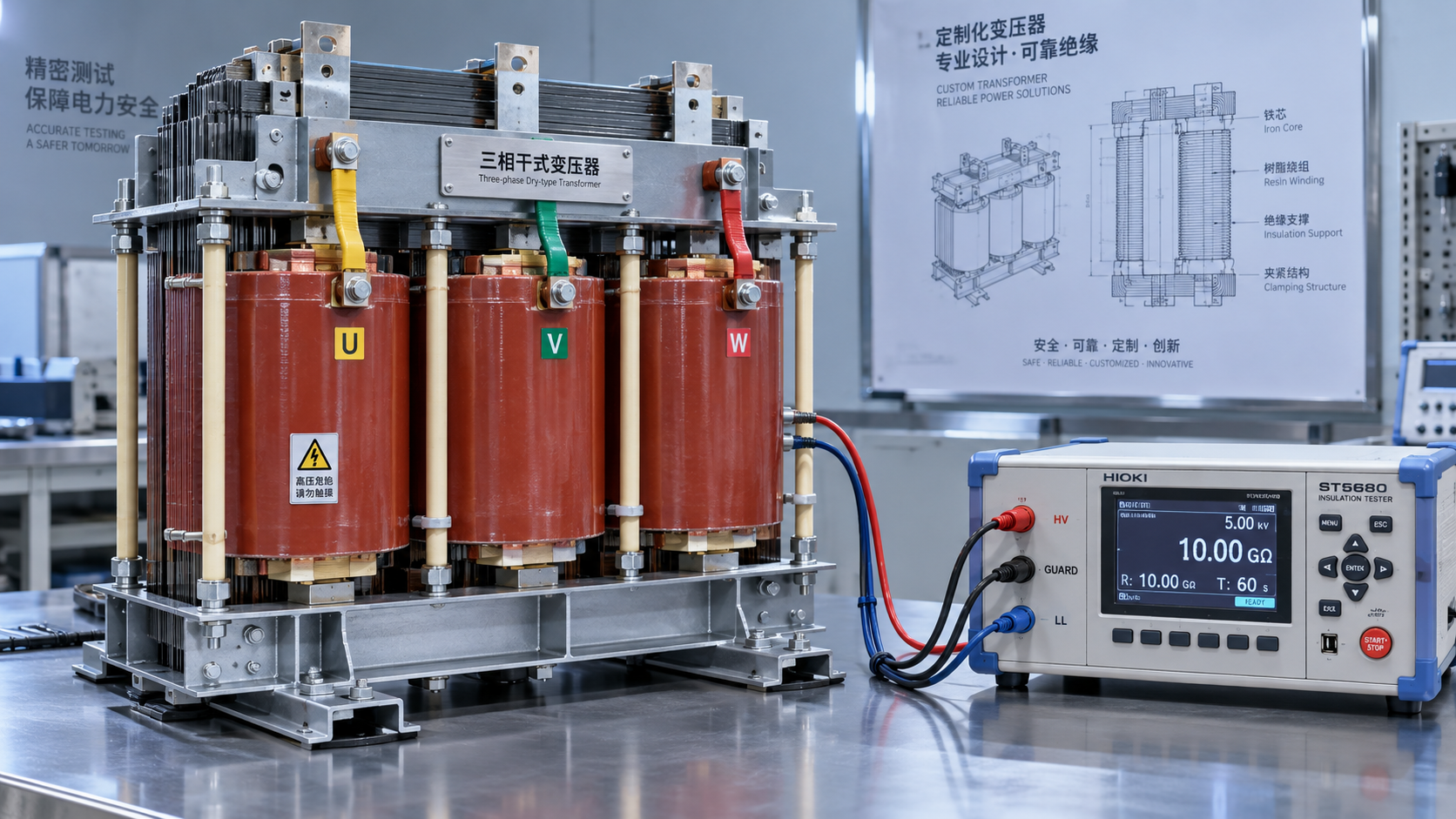
Request drawings identifying terminal interfaces, applicable test documentation, warranty conditions, and installation requirements. The contract should identify the applicable standards and editions rather than relying on a generic statement of compliance. Where short-circuit withstand capability is critical, establish what design or test evidence supports the offered construction.
Avoid assigning an arbitrary maintenance or failure penalty to aluminum. For cast-resin transformers, inspection needs also depend on dust, ventilation, loading, connections, and environmental conditions. Any financial allowance for additional maintenance should follow a documented difference in requirements, not a general preference for one metal.
Keep the approval tied to the offered design
If a supplier proposes a different series, such as an SCB18 Type Dry-Type Transformer, assess it as a separate design alternative. Its epoxy-resin cast construction and stated low-loss characteristics may be relevant, but any quoted saving must be supported by guaranteed loss figures. A cross-series price comparison cannot isolate the effect of copper versus aluminum.
A defensible approval records the winding material in each winding, the matched technical requirements, the installed-price difference, and the value of verified operating savings. Copper earns a premium when the offered design delivers benefits worth paying for. Aluminum offers genuine value when it meets the required duty at a lower total cost without shifting unresolved performance or installation risks into the project.



 How winding material affects SCB11 dry-type transformer cost
 What fire safety requirements apply to hospital dry-type transformers?
 How to compare dry-type transformer manufacturers by test evidence
 How to assess a custom transformer manufacturer's design capability
 When is an aluminum-wound transformer suitable for heavy loads?
 Choosing a medium-voltage transformer for high-altitude operation
GET A FREE QUOTE
We offer reliable products, competitive prices, and nationwide professional support, committed to providing customers with efficient and energy-saving power equipment solutions.