A safe dry-type transformer for hospital installations requires verified fire performance, suitable room construction, coordinated electrical protection, and documented compliance with locally adopted codes.
Removing insulating oil reduces one fire hazard, but solid insulation, electrical faults, overheating, and nearby combustible materials can still create serious risks requiring specific controls.
Quality control and safety teams should assess the complete installation: transformer construction, enclosure protection, ventilation, clearances, fire compartmentation, monitoring, and interfaces with essential electrical systems.
The central purchasing question is whether the supplier and designer can demonstrate compliance for the proposed hospital location, rating, operating conditions, and required service continuity.
Which fire safety rules govern the hospital installation?
There is no universal hospital transformer fire certificate. Requirements depend on the jurisdiction, adopted code editions, transformer voltage and capacity, and the proposed installation location.
In United States projects, NFPA 70, the National Electrical Code, addresses transformer installations through Article 450 and healthcare electrical installations through Article 517.
NFPA 99 and NFPA 101 may also apply, depending on local adoption. Together with building regulations, these documents influence healthcare electrical systems and fire protection.
Dry-type transformer room requirements can change with voltage, capacity, insulation characteristics, and applicable exceptions. A dry-type design does not automatically remove requirements for fire-resistant construction.
For IEC-based specifications, IEC 60076-11 addresses applicable dry-type transformer requirements, including fire-behavior classifications. National electrical installation rules and healthcare premises requirements must also be checked.
Ask the designer to prepare a compliance schedule identifying applicable clauses, installation conditions, and supporting evidence. Obtain acceptance from the authority having jurisdiction where required.
What does a fire-performance classification actually prove?
Where IEC 60076-11 applies, an F1 classification provides evidence of defined fire behavior under the standard’s prescribed test conditions, including limits on specified combustion effects.
F1 does not mean the transformer cannot burn, release smoke, or suffer an electrical fault. It also does not establish the required room fire rating.
Request the fire-test report, its standard edition, the tested construction, and the basis connecting that evidence to the offered transformer. Check any limitations on applicability.
A report covering another insulation system or materially different construction needs technical justification. A brochure stating “flame-retardant” is insufficient evidence that the specified classification is met.
Environmental and climatic classifications address separate service conditions. They can support suitability for humidity, condensation, or temperature exposure, but should not substitute for fire-performance evidence.
Treat “explosion-proof,” “arc-proof,” and “no toxic gases” as claims requiring specific evidence. Cast-resin construction alone does not establish explosion containment or eliminate hazardous decomposition products.
For hospital procurement, distinguish equipment certification from installation approval. A compliant transformer can still become unsafe when installed with restricted cooling, inadequate protection, or combustible storage.
Does the transformer room provide adequate fire protection?
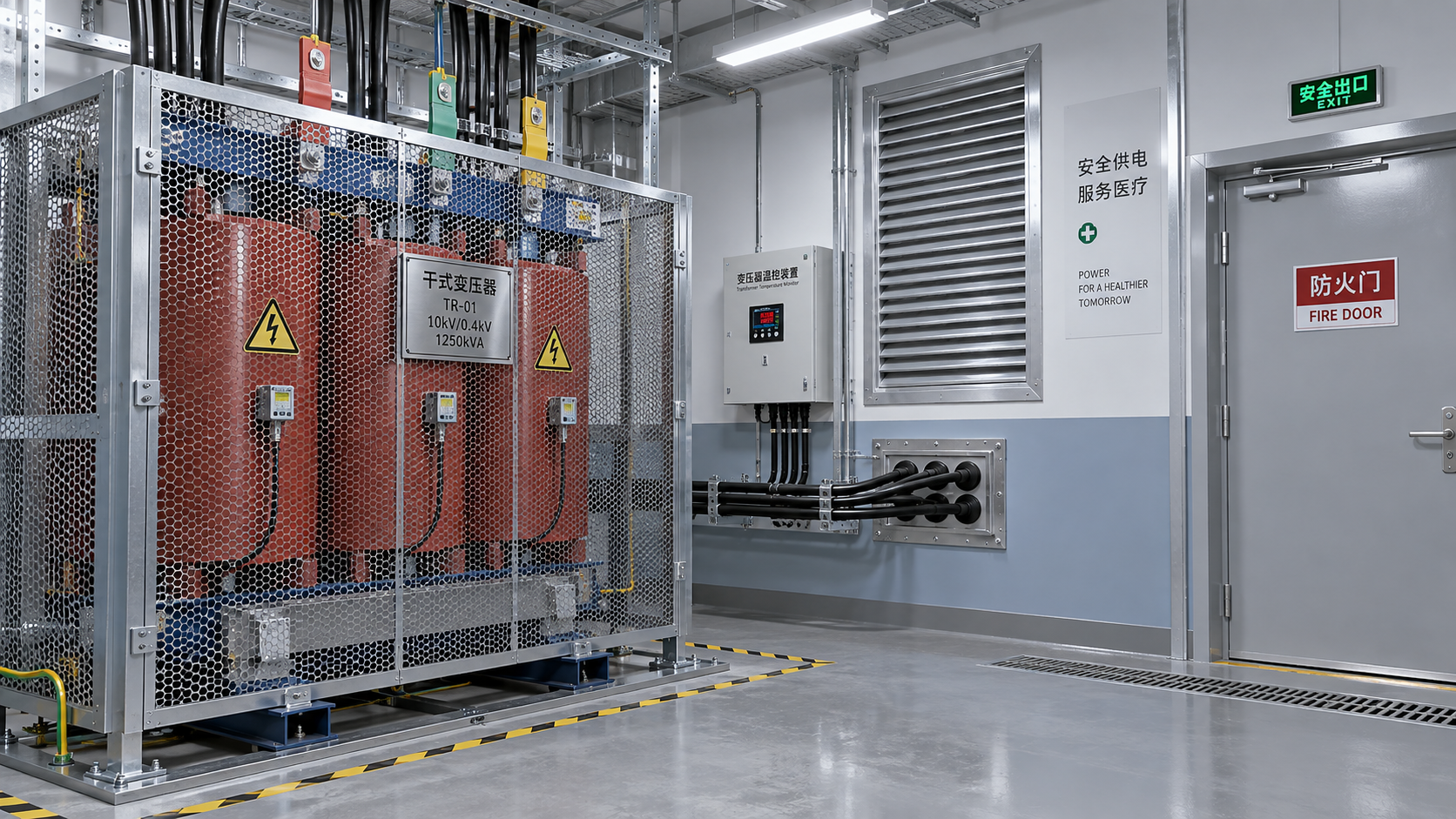
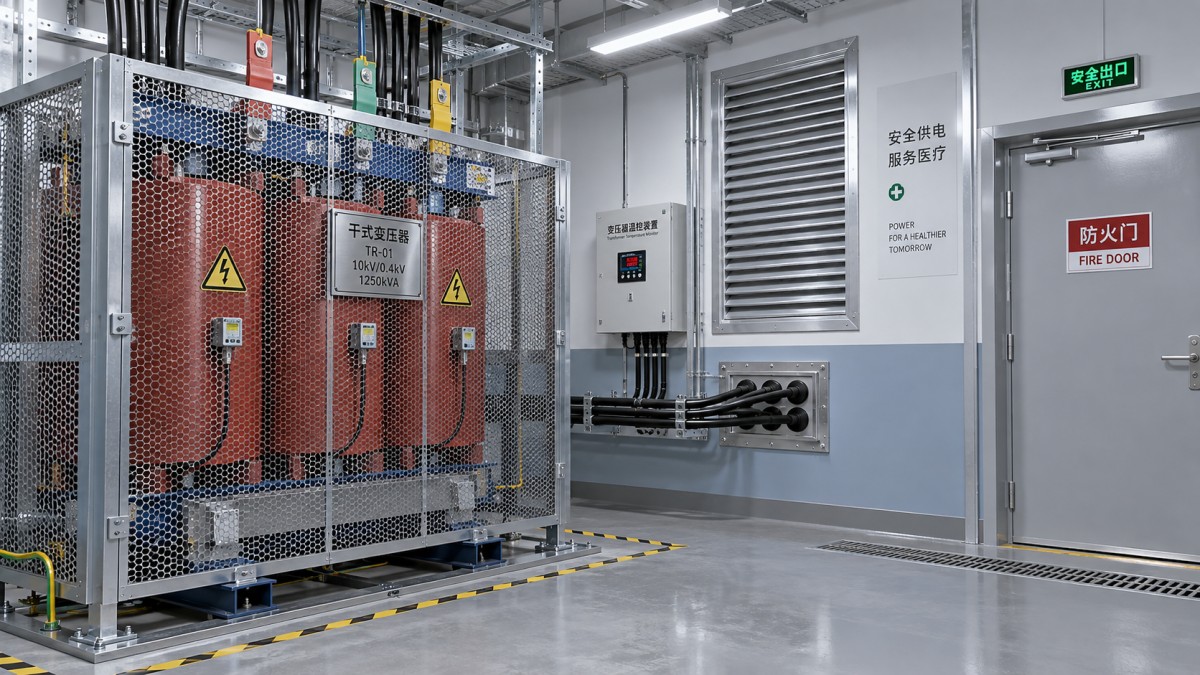
Determine whether the proposed transformer requires a dedicated room, fire-resistant separation, or other protective construction under the adopted rules. Document the design basis before ordering.
Review walls, floors, doors, and service penetrations together. Cable openings and ventilation routes can compromise compartmentation unless their protection matches the approved fire strategy.
Maintain manufacturer-specified cooling clearances alongside electrical working-space requirements. These serve different purposes, so satisfying one does not automatically demonstrate compliance with the other requirement.
Keep packaging, cleaning supplies, linen, and other combustible storage out of the electrical room. Establish access controls that preserve inspection access and emergency response routes.
Select enclosure protection for the actual environment, including access risks, dust, and possible water exposure. Higher ingress protection can restrict cooling unless the design compensates.
Coordinate detection and any suppression system with the hospital fire strategy and electrical design. Dry-type construction alone does not determine whether sprinklers or other protection are required.
How should ventilation and thermal protection be verified?
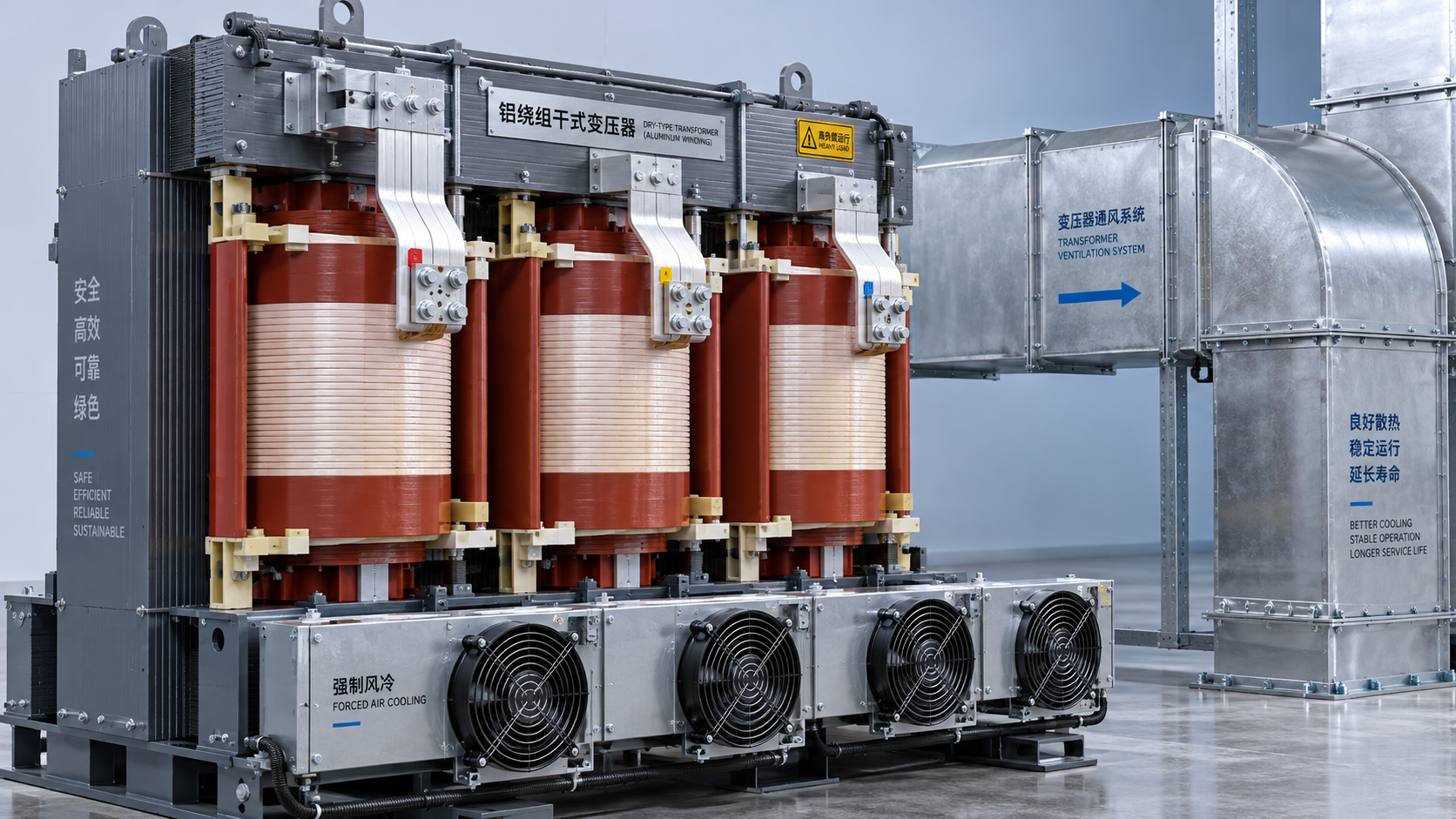
Size room ventilation using documented transformer losses at the expected loading, together with other room heat sources. Transformer nameplate capacity alone is insufficient for this calculation.
Confirm the design ambient temperature, installation altitude, airflow path, and enclosure derating. Check that hot exhaust air cannot recirculate into the transformer’s cooling inlet.
Where forced cooling supports additional loading, define what happens when fans fail. The allowable load may fall, requiring an alarm, load reduction, or protective disconnection.
Specify winding temperature monitoring and appropriate alarm and trip settings using manufacturer guidance and the protection study. Avoid adopting generic thresholds without checking insulation-system limits.
Route actionable alarms to the hospital’s monitored system. Assign response responsibilities so overheating, failed fans, and sensor faults receive attention before equipment condition deteriorates further.
During commissioning, verify sensor operation, alarm transmission, fan controls, and trip functions through an approved procedure. Record results and confirm the response to auxiliary-power loss.
Can electrical protection limit damage without disrupting critical care?
Fire safety depends on clearing faults promptly. Check transformer impedance, available fault current, short-circuit withstand capability, and the interrupting ratings of associated switchgear and protective devices.
Coordinate primary and secondary protection with transformer inrush, overload capability, and downstream devices. Poorly selected settings can permit damage or cause unnecessary hospital power interruptions.
The protection study should address applicable selective-coordination requirements for essential electrical systems. Patient safety requires both effective fault clearance and a clearly understood outage consequence.
Identify whether the transformer supplies normal power, essential loads, or both through the approved distribution arrangement. This determines which failure scenarios need particular design attention.
Review transfer arrangements, generator capacity, and any UPS-supported loads. A standby source offers limited protection when its distribution path depends on the same failed equipment.
Where continuity requirements justify redundancy, assess common fire compartments, shared ventilation, and common controls. Two transformers can remain vulnerable to one incident if dependencies are shared.
How should the SCB13 option be assessed?
Jiangsu Shengda Power Equipment Co., Ltd.’s SCB13 Type Dry-Type Transformer is a cast-resin option to assess against the hospital’s documented electrical and fire requirements.
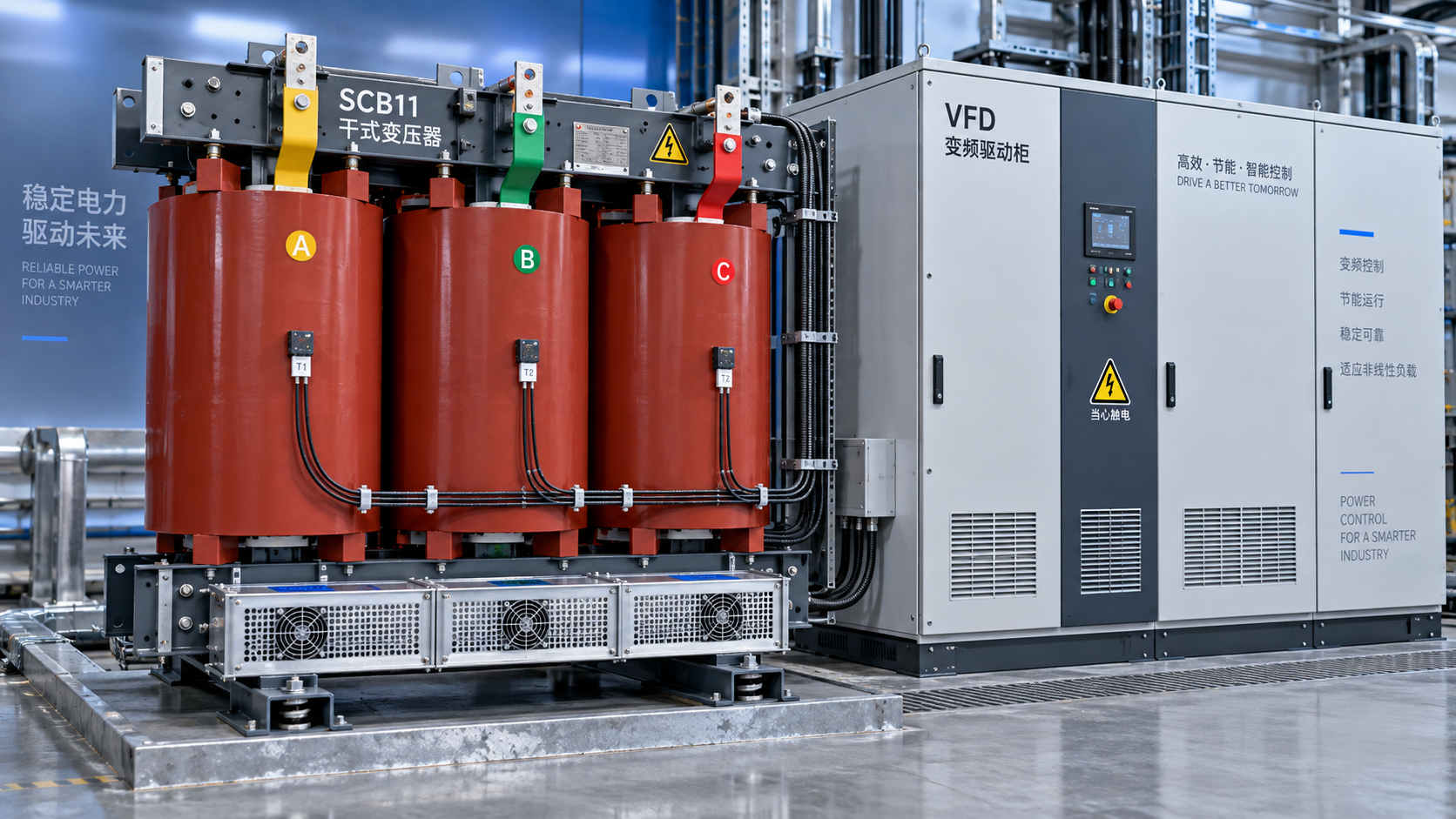
The supplier reports more than 20% lower no-load losses compared with its SCB11 model. Verify equivalent ratings and conditions before using that comparison in calculations.
Reduced losses may lower energy consumption and room heat load, but ventilation design must use guaranteed no-load and load losses for the selected unit.
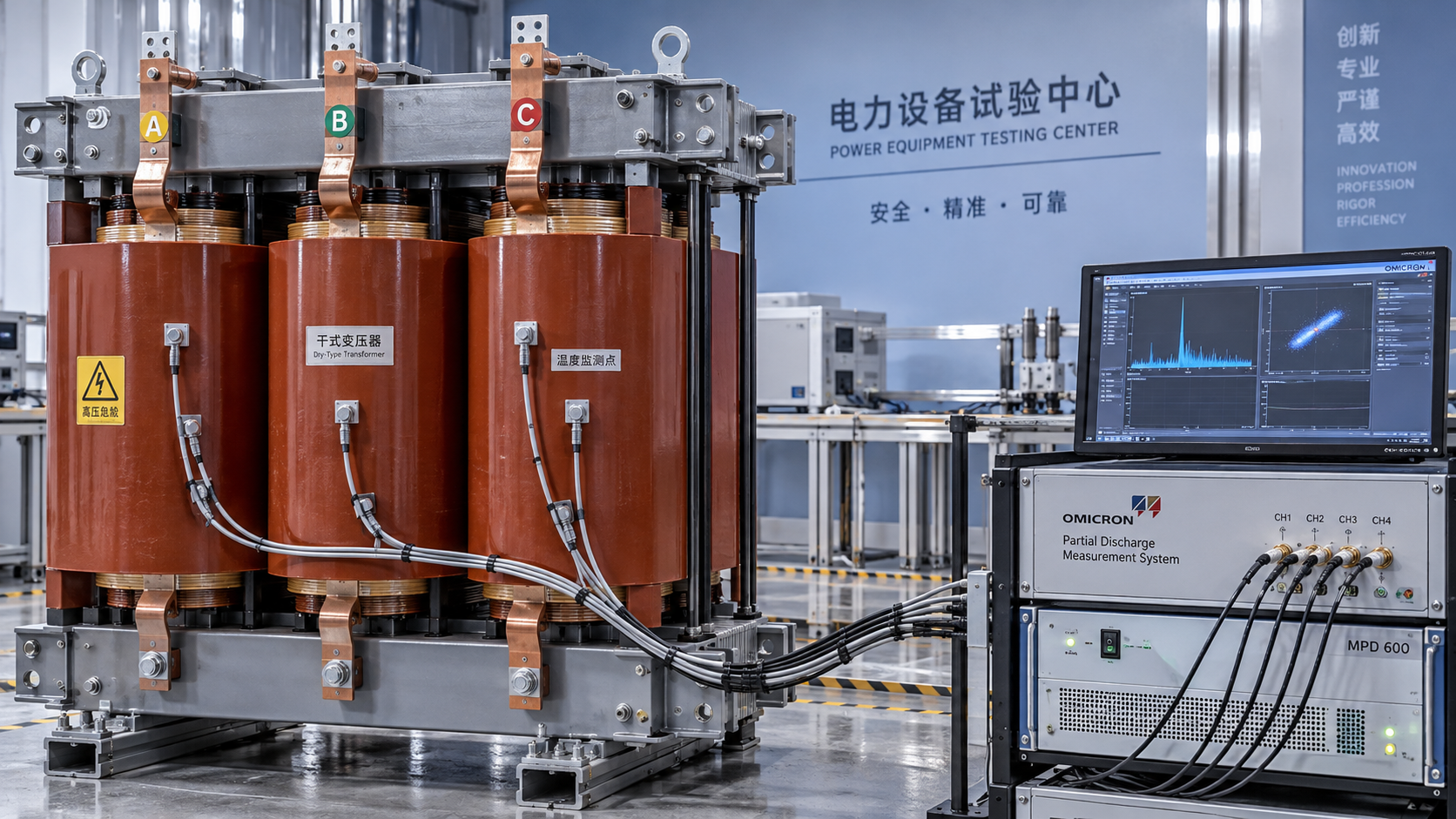
Reported low partial discharge and self-extinguishing insulation characteristics warrant supporting test documentation. Neither feature independently demonstrates compliance with the hospital’s required fire classification or installation rules.
Request measured sound levels and the correct applicable acoustic standard when evaluating noise claims. ISO 9001 certification supports quality-system assessment, but does not certify product fire performance.
What evidence should quality and safety teams sign off?
Before purchase, obtain a coordinated document package covering guaranteed ratings, losses, insulation system, applicable fire classification, enclosure details, installation instructions, and relevant type-test evidence.
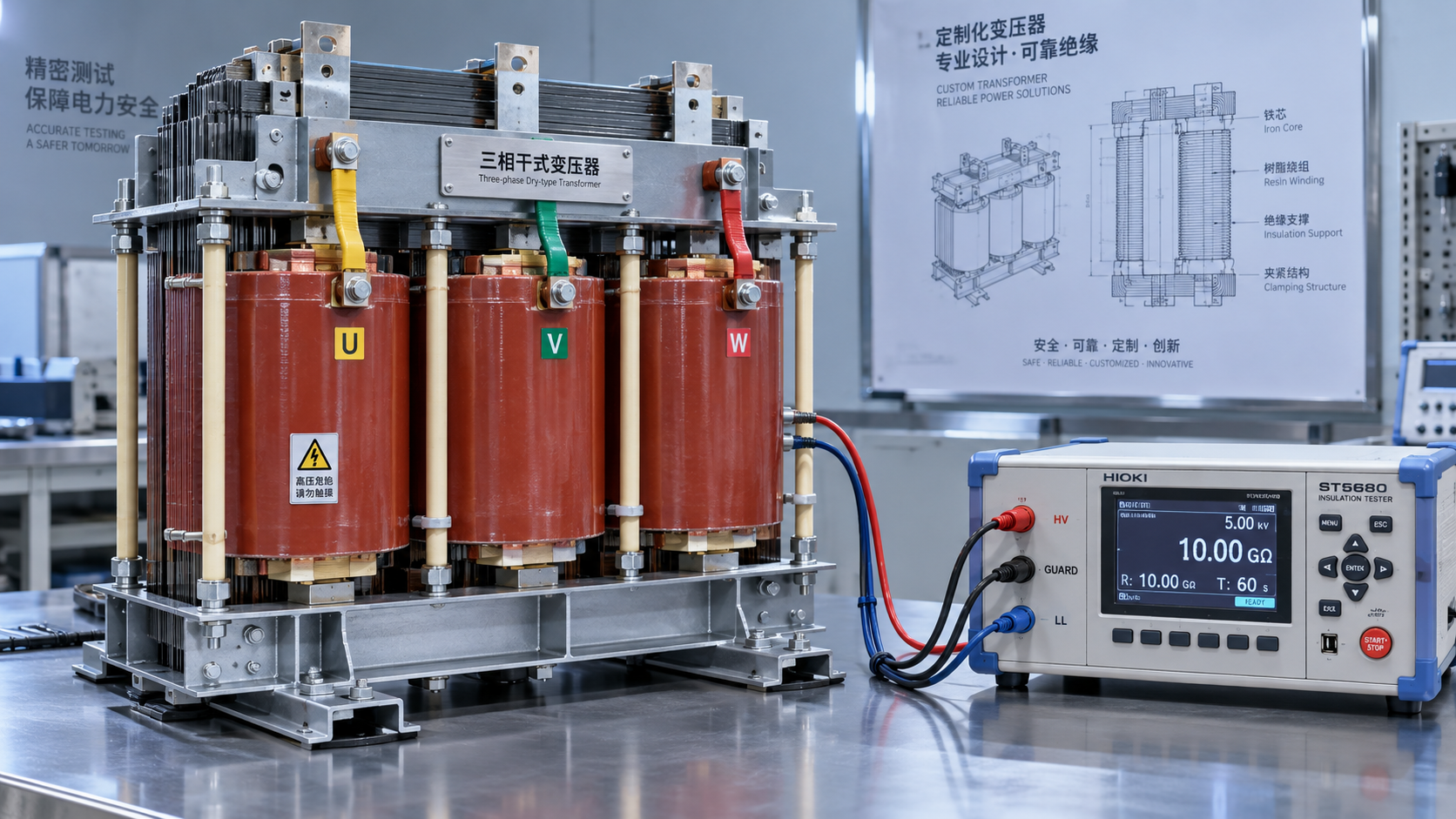
For the delivered unit, check identification and routine-test records against the purchase specification. Review dielectric and partial-discharge results where applicable, together with recorded manufacturing deviations.
Before energization, verify installation clearances, earthing, protection settings, ventilation, penetration sealing, monitoring functions, and the approved emergency response arrangements. Resolve discrepancies through the responsible design team.
After handover, establish inspection intervals based on operating conditions and manufacturer guidance. Track contamination, ventilation obstruction, abnormal temperatures, loose connections, and recurring alarms over time.
A safe dry-type transformer for hospital use combines substantiated equipment performance with a compliant installation and effective fault management. Approve the complete evidence, not isolated marketing claims.