


SCB11 Type Dry-Type Transformer Overload Capacity: Key Limits to Know
For technical evaluators, understanding SCB11 Type Dry-Type Transformer overload capacity is essential for balancing safety, thermal performance, and service life.
This article outlines key overload limits, influencing factors, and practical assessment points for demanding power distribution applications.
What SCB11 Type Dry-Type Transformer Overload Capacity Really Means
SCB11 Type Dry-Type Transformer overload capacity describes how much extra load the unit can carry above rated current for a limited time.
It is never just a nameplate question.
The real limit depends on insulation temperature rise, hotspot behavior, ventilation conditions, and load duration.
In practice, short-term overload may be acceptable.
Repeated or poorly managed overload is a different case.
That is where accelerated insulation aging, higher partial discharge risk, and thermal stress start to matter.
Core Limits That Shape Overload Decisions
When reviewing SCB11 Type Dry-Type Transformer overload capacity, four limits usually determine the safe operating window.
1. Temperature rise limit
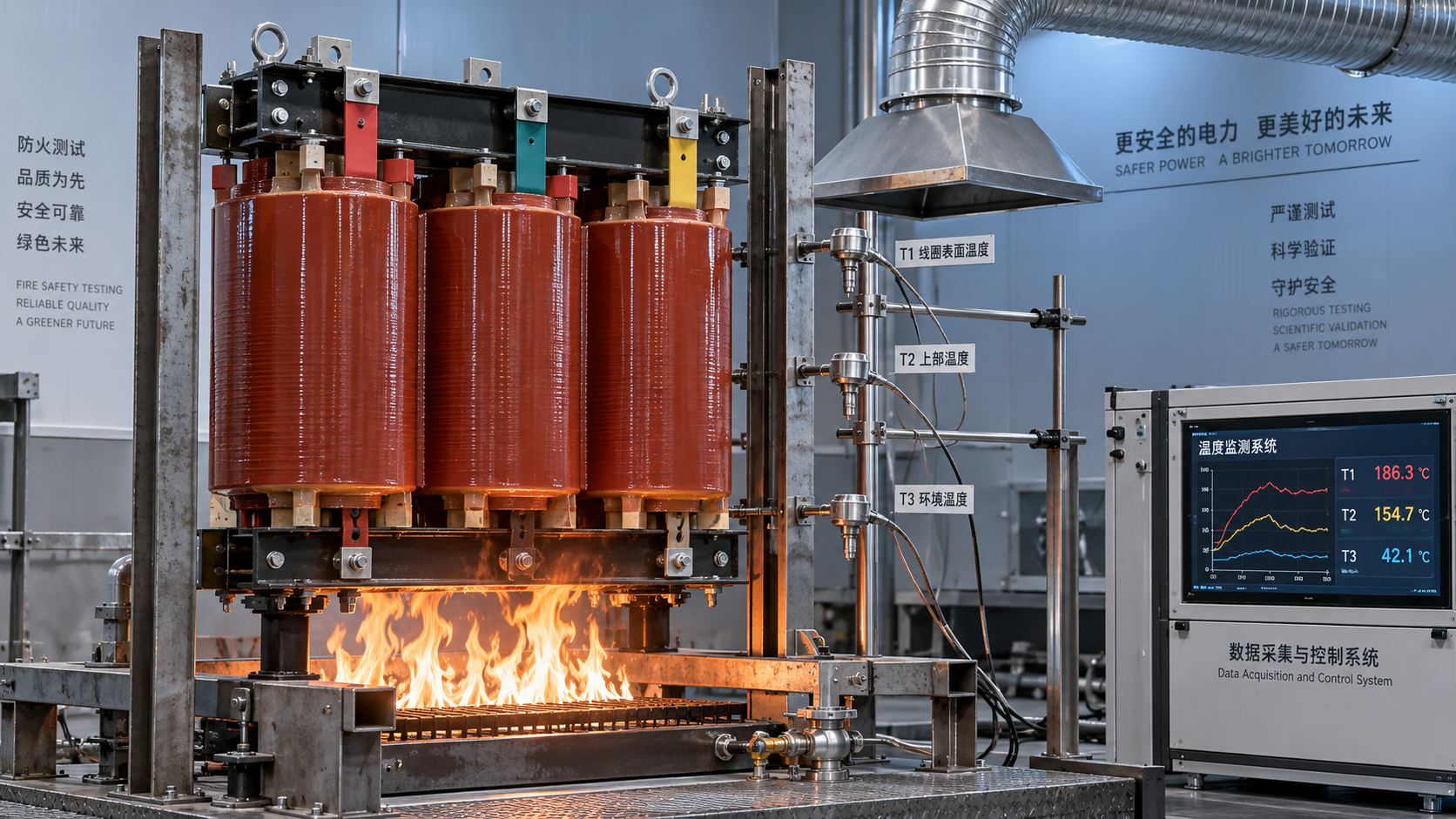
Dry-type transformers rely on air cooling, so winding temperature rises quickly when current increases.
If the thermal class limit is exceeded, insulation life drops sharply.
2. Hotspot temperature limit
Average winding temperature is useful, but hotspot temperature is more critical.
Localized overheating often appears before a general temperature alarm.
3. Time duration limit
A transformer may tolerate 20% to 30% overload for a short period under favorable ambient conditions.
The same load level becomes risky if it continues for hours.
4. Ventilation and enclosure limit
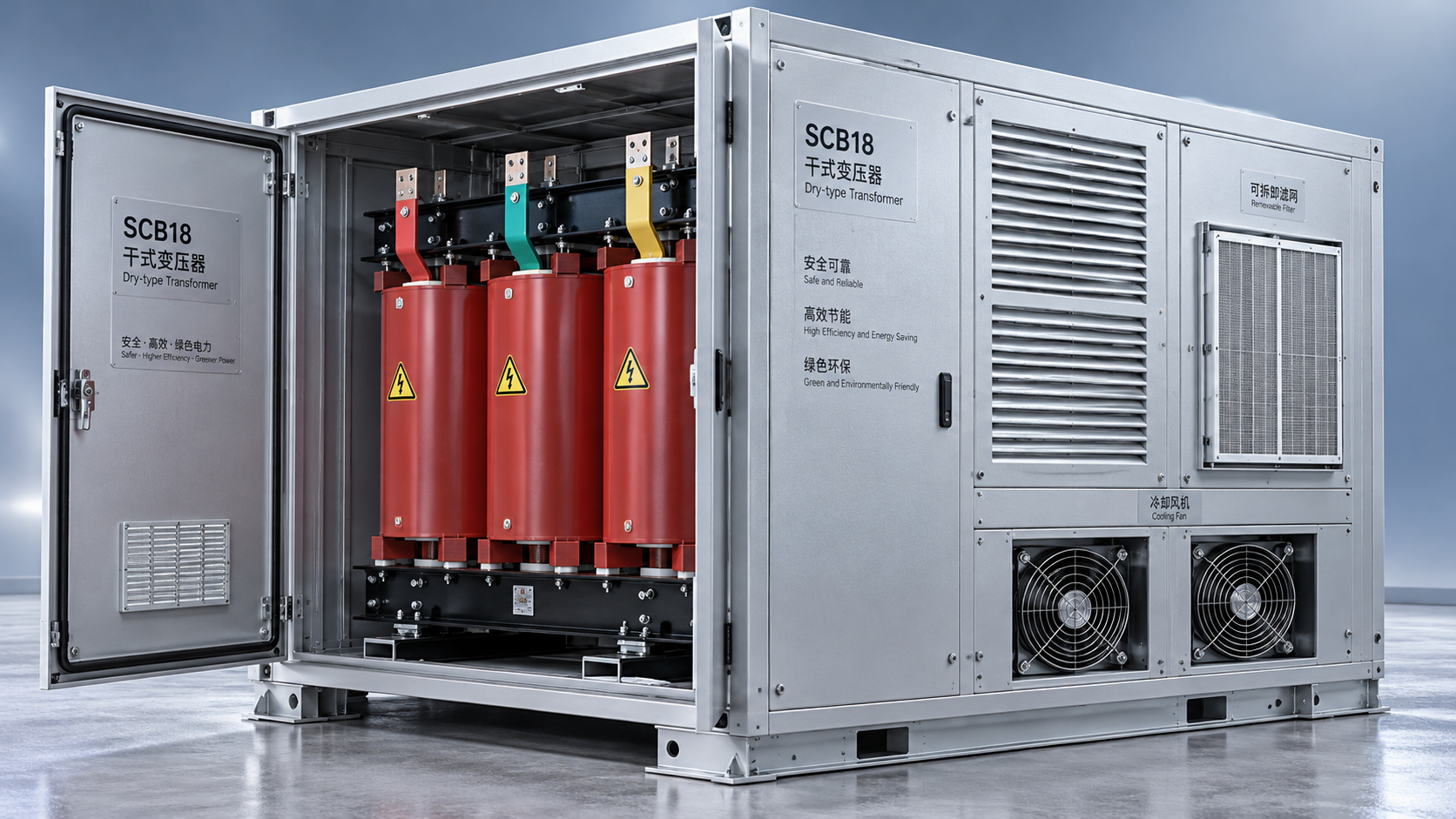
Enclosure type changes cooling performance directly.
An IP00 unit in a well-ventilated room behaves differently from IP20 or IP23 units in tighter spaces.
Main Factors That Affect SCB11 Type Dry-Type Transformer Overload Capacity
From recent project reviews, overload assessment is becoming more site-specific.
The same rating can perform very differently across installations.
- Ambient temperature: high room temperature cuts available thermal margin.
- Load profile: cyclic peaks are easier to manage than continuous overload.
- Harmonics: nonlinear loads increase eddy losses and winding heating.
- Altitude: thinner air reduces cooling effectiveness.
- Dust and airflow blockage: these quietly reduce heat dissipation over time.
- Temperature control accuracy: poor sensing can hide actual thermal stress.
This also means overload capacity should never be judged from rated kVA alone.
A stronger technical review combines operating records, enclosure details, and expected duty cycles.
How Standards and Manufacturing Quality Change the Result
SCB11 Type Dry-Type Transformer overload capacity is closely tied to design quality and compliance discipline.
Jiangsu Shengda Power Equipment Co., Ltd. develops and manufactures transformers under strict quality systems and international standards.
Its products comply with GB1094.1-2-1996 and GB/T6451-2008, supported by ISO9001 certification.
That matters because overload performance depends on more than nominal design.
It depends on conductor arrangement, resin casting quality, partial discharge control, and inspection consistency.
A relevant reference point is the SCB12 Type Dry-Type Transformer.
Compared with SCB11, its no-load loss is reduced by more than 20%.
Its noise level is also 10 to 15 dB below JB/T10088-2016.
Low partial discharge performance further supports long-term thermal reliability under variable operating conditions.
Practical Evaluation Checklist for Overload Review
In real projects, a practical checklist gives a clearer answer than generic overload claims.
- Confirm rated capacity, insulation class, and cooling method.
- Review the highest ambient temperature across the installation year.
- Check whether overload is occasional, seasonal, or daily.
- Measure harmonic distortion from VFDs, rectifiers, or data center loads.
- Verify enclosure type, airflow path, and room ventilation capacity.
- Check temperature control display, alarm settings, and load recorder data.
- Estimate insulation life impact if overload becomes a repeated condition.
This approach keeps SCB11 Type Dry-Type Transformer overload capacity tied to measurable risk.
It also helps separate manageable peak loading from a hidden undersizing problem.
When to Accept Overload and When to Redesign
Short-term overload can be acceptable when thermal data is clear and recovery time is available.
Examples include startup peaks, backup supply switching, and limited seasonal demand spikes.
Redesign is usually the better choice when overload is frequent, ventilation is weak, or harmonic content is high.
A more efficient transformer platform can also improve the margin.
Some projects move from SCB11 to newer dry-type solutions with lower loss, lower noise, and stronger monitoring options.
That decision is often more economical than accepting continuous thermal stress.
Final Assessment Points
SCB11 Type Dry-Type Transformer overload capacity should be judged as a thermal and lifecycle question, not just a loading number.
The key limits are temperature rise, hotspot control, overload duration, and cooling conditions.
When these factors are reviewed together, technical decisions become more defensible and more cost-effective.
For current or planned distribution systems, use operating data, standards compliance, and product design quality to decide whether overload is acceptable or whether an upgraded dry-type transformer solution is the smarter path.



 What an F1 fire behaviour rating means for a flame-retardant transformer
 How enclosure specifications affect SCB18 dry-type transformer cost
 How to compare loss guarantees for S22 oil-immersed transformers
 When to choose a loop-feed pad-mounted transformer over radial feed
 How much spare capacity should a distribution transformer have?
 Checking S13 oil-immersed transformers for renewable inverter loads
GET A FREE QUOTE
We offer reliable products, competitive prices, and nationwide professional support, committed to providing customers with efficient and energy-saving power equipment solutions.