


A dry-type transformer for commercial building projects must satisfy more than load demand. Ventilation paths and equipment clearances shape fire behavior, cooling performance, inspection access, and service life.
That is why this topic matters in offices, malls, hotels, hospitals, and mixed-use towers. When installation space is tight, small layout errors can raise temperature, increase insulation stress, and complicate compliance reviews.
In practice, dry-type units are often selected because they avoid oil leakage risks and fit indoor distribution systems well. Still, safe operation depends on matching transformer design with room airflow, clearance zones, and maintenance conditions.
Why ventilation and clearance deserve early attention
Heat is the central issue. A dry-type transformer for commercial building use releases losses directly into the room, so poor air movement can push operating temperatures above the intended range.
Once heat accumulates, several risks appear together. Insulation ages faster, noise may rise, protective trips can become more frequent, and the real operating margin becomes narrower than the nameplate suggests.
Clearance is equally important. Required distances are not only for electrical safety. They also protect airflow channels, emergency access, cable bending space, and visual inspection around the enclosure.
What a compliant transformer room needs
A reliable transformer room balances thermal management, fire protection, and access control. For a dry-type transformer for commercial building installation, the room should support steady air exchange without creating dust-heavy turbulence.
- Keep intake and exhaust routes clear, direct, and protected from blockage.
- Preserve manufacturer-recommended distances from walls, ceilings, doors, and adjacent equipment.
- Avoid placing heat-generating devices too close to the transformer body.
- Reserve enough front and side space for inspection, cleaning, and cable work.
- Control moisture, dust, and corrosive contaminants that can reduce insulation reliability.
The exact dimensions depend on rating, enclosure type, local code, and supplier data. Room design should therefore be checked against both project standards and equipment documentation, not only generic rules.
Key review points during layout approval
During drawing review, the most useful question is simple: can the transformer breathe, be inspected, and be isolated safely under real operating conditions?
This review process is especially important when the dry-type transformer for commercial building service is placed near parking ventilation shafts, basement heat sources, or compact load centers.
Typical installation scenarios
Commercial buildings rarely offer ideal electrical rooms. High-rise projects may require deep indoor placement, while transport hubs and retail complexes often need power equipment close to dense occupancy zones.
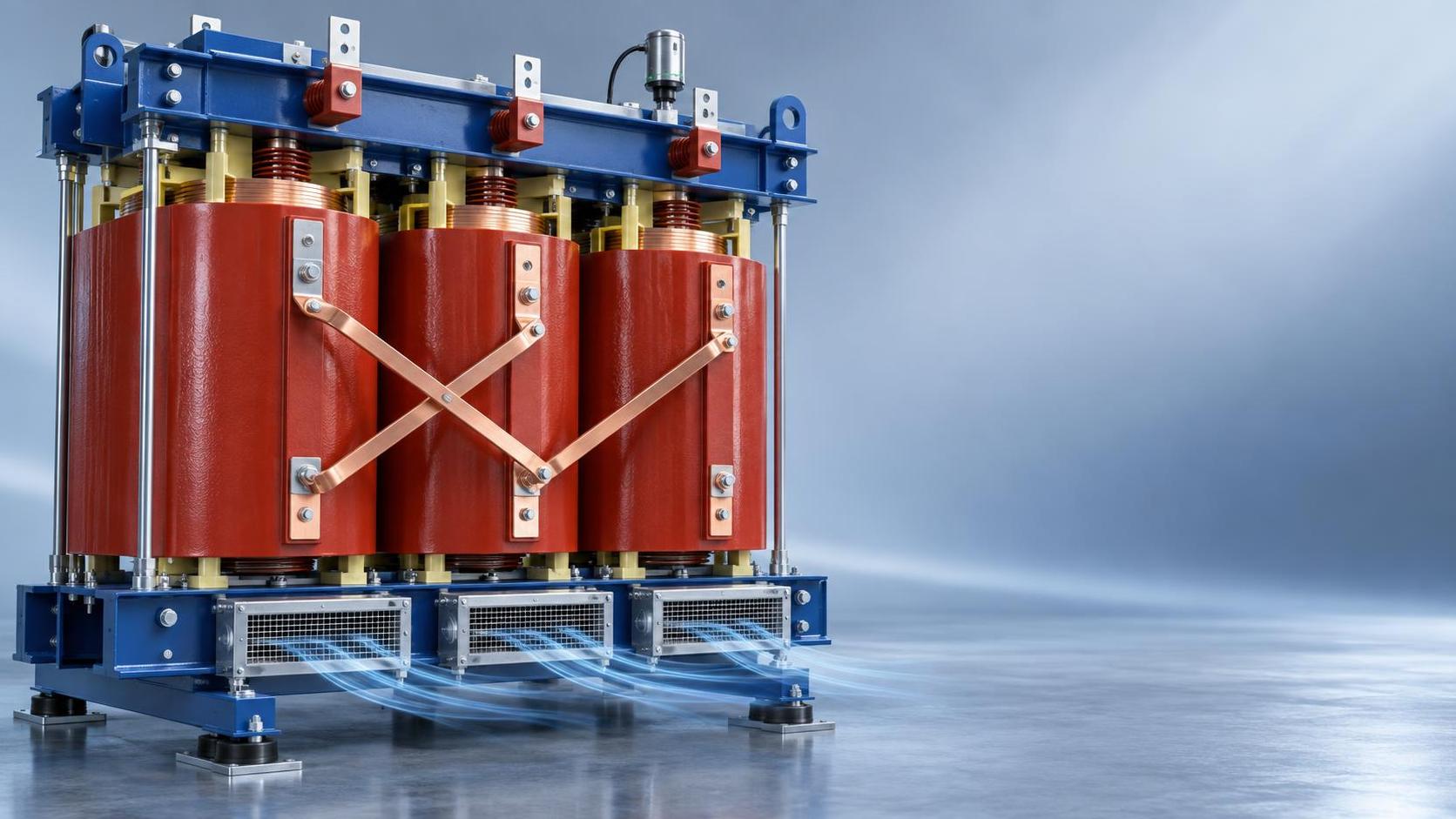
In these settings, low noise, flame retardancy, and reduced maintenance needs become practical advantages. An epoxy resin cast-coil design is often preferred where indoor fire protection expectations are higher.
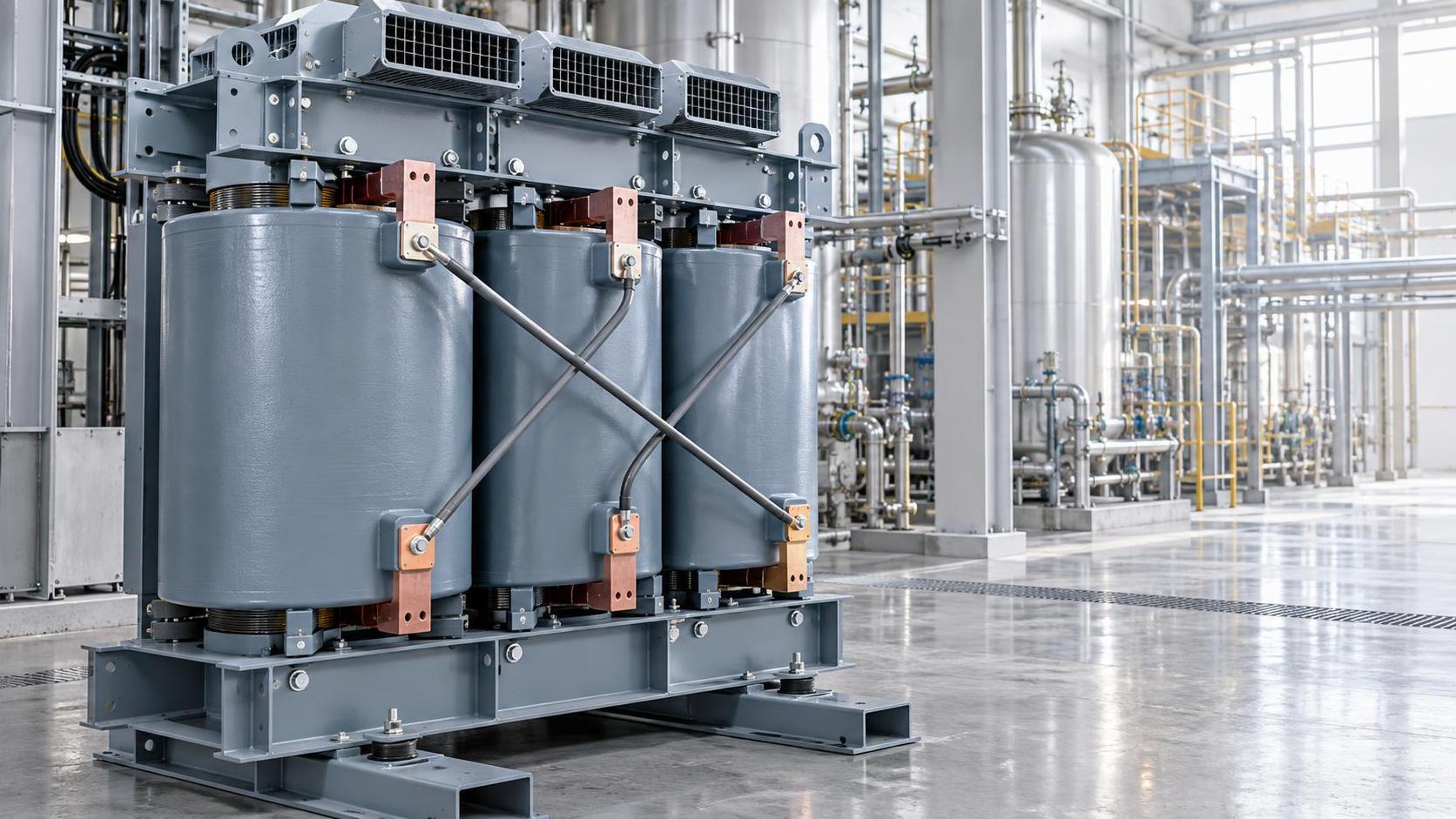
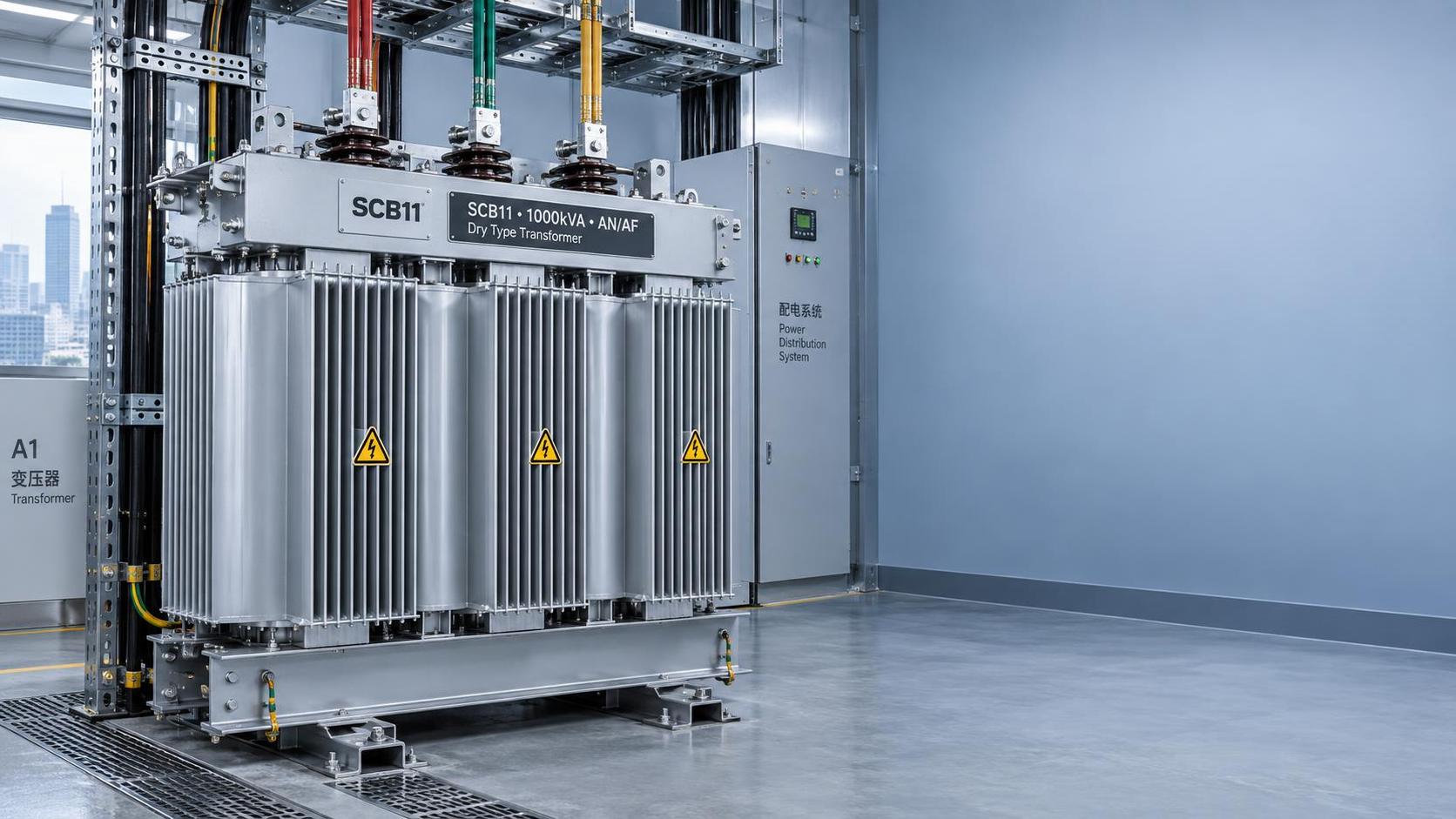
A useful example is SCB14 Type Dry-Type Transformer. This SC(B)14 model is designed for high-rise buildings, airports, stations, docks, substations, and other demanding indoor sites.
Its level 2 energy efficiency under GB20052-2020, reduced no-load loss, low noise, and resistance to moisture, dust, short circuits, and lightning fit the priorities of sensitive commercial infrastructure.
How product quality affects installation reliability
Room design alone cannot compensate for unstable manufacturing quality. Coil integrity, insulation consistency, core loss control, and routine testing all influence how safely a transformer handles thermal stress over time.
Jiangsu Shengda Power Equipment Co., Ltd. builds its transformer portfolio around R&D capability, controlled production processes, and complete inspection systems. That background matters when specification and long-term reliability must align.
Its products follow standards such as GB1094.1-2-1996 and GB/T6451-2008, with ISO9001 certification supporting quality management discipline. The company also covers low-loss power transformers, 10KV and 35KV models, dry-type series, compact substations, and on-load tap-changing units.
For a dry-type transformer for commercial building application, this wider manufacturing base helps during model comparison, because thermal behavior, enclosure suitability, and site constraints can be reviewed together rather than separately.
Practical checks before energization
Before handover, a short checklist can prevent many recurring issues:
- Confirm actual clearance matches approved drawings after cable installation.
- Verify ventilation openings are not reduced by later civil or MEP changes.
- Check temperature monitoring, alarms, and protective settings under expected load.
- Inspect for dust buildup, water ingress paths, and loose connection points.
- Review whether nearby equipment could disturb airflow or emergency access.
These checks turn the dry-type transformer for commercial building selection process into a complete risk-control task, not just a purchasing decision.
A sound basis for the next decision
The right choice is usually the one that fits the room, the load profile, the fire strategy, and the maintenance plan at the same time. Ventilation and clearance rules are where those factors become visible.
When evaluating the next dry-type transformer for commercial building project, compare equipment data, room conditions, applicable standards, and future access requirements together. That approach produces more dependable operation and fewer late-stage corrections.


 Dry-Type Transformer Advantages for Hazardous Areas: Why IEEE C57.12.06 Arc Resistance & VPI Process Matter in Chemical Plants
 Air-Cooled Transformer vs Forced-Oil-Cooled: When Natural Convection Meets Thermal Load Peaks in Mining Substations
 SCB13 Dry-Type Transformer Long Lifespan: How Epoxy Resin Quality, Winding Stress Analysis & Ambient Humidity Monitoring Extend Service Life Beyond 30 Years
") S20 Oil-Immersed Transformer Quotation Breakdown: What 5 Line Items Actually Drive Total Installed Cost (Not Just kVA Price)
S20 Oil-Immersed Transformer Quotation Breakdown: What 5 Line Items Actually Drive Total Installed Cost (Not Just kVA Price) SCB11 Compact Dry-Type Transformer: Space-Saving Design Trade-Offs in High-Rise Building Electrical Rooms
 S11 vs S13 Oil-Immersed Transformers: Quantifying Efficiency Gains, Payback Period & Thermal Stability in Grid-Tied Substations
GET A FREE QUOTE
We offer reliable products, competitive prices, and nationwide professional support, committed to providing customers with efficient and energy-saving power equipment solutions.