


Why does SCB12 Type Dry-Type Transformer fireproof performance matter so much?
When fire risk is part of the site profile, transformer selection becomes a safety decision, not only an electrical one.
That is why SCB12 Type Dry-Type Transformer fireproof performance gets close attention in buildings, plants, hospitals, and data-heavy facilities.
In real use, buyers are not only asking whether a transformer can survive heat.
They are asking whether it can limit flame spread, reduce smoke hazards, and keep a local fault from becoming a wider shutdown.
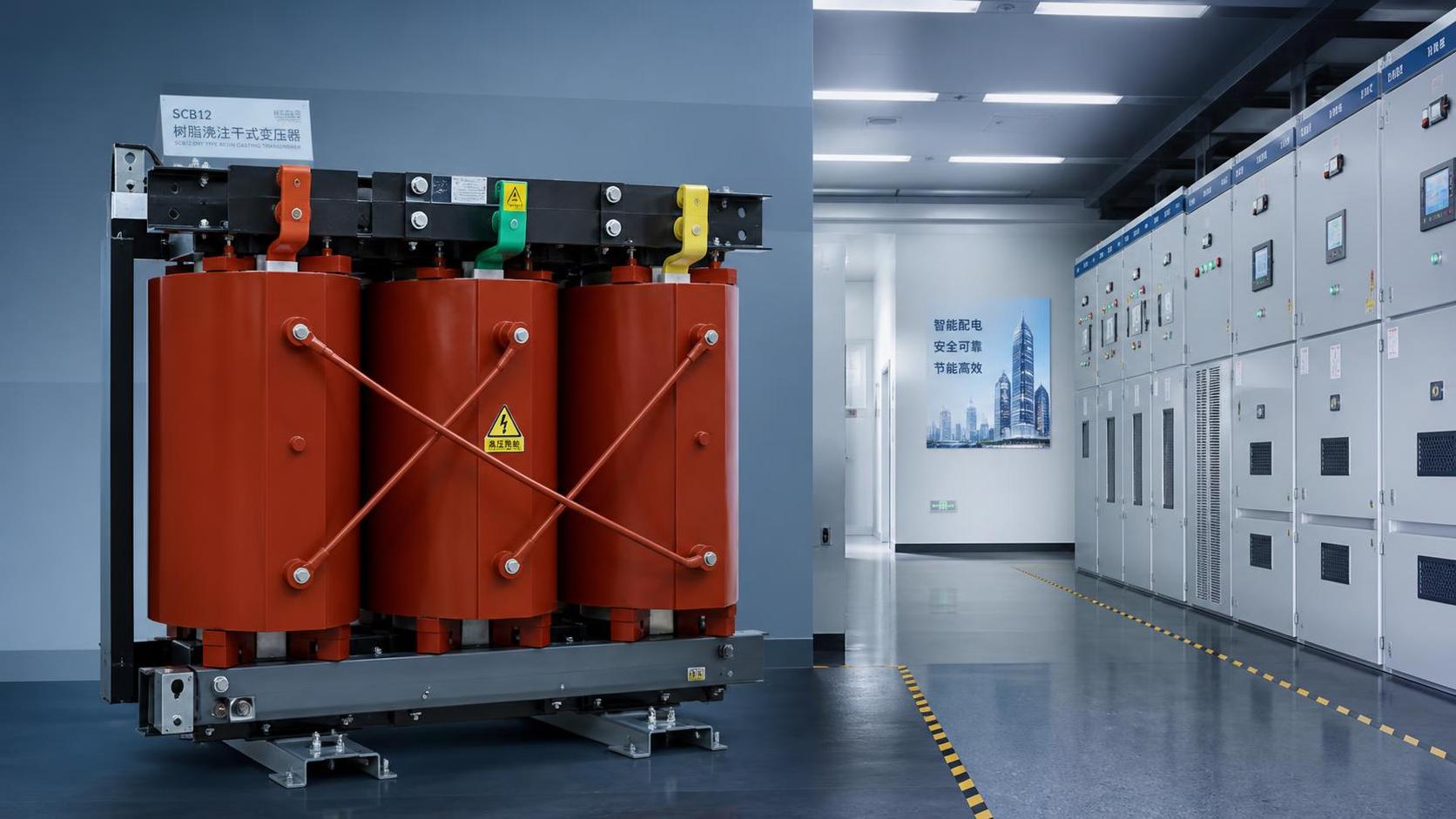
Dry-type units are often preferred indoors because they do not rely on insulating oil.
That removes one major source of secondary fire danger compared with oil-immersed designs.
Manufacturers with stable process control also matter.
Jiangsu Shengda Power Equipment Co., Ltd. builds dry-type and power transformer lines under ISO9001 quality management and relevant national standards, which supports consistency in practical fire safety performance.
Is “fireproof” the same as “will never burn”?
Not quite. This is one of the most common misunderstandings around SCB12 Type Dry-Type Transformer fireproof claims.
In practice, fireproof usually means the transformer is designed to resist ignition, slow flame propagation, and avoid feeding a larger fire.
It does not mean the unit is immune to all thermal damage under extreme abuse.
The resin insulation system, winding structure, ventilation design, and temperature protection all influence the result.
A well-designed dry-type transformer usually performs better in enclosed environments because there is no oil leakage, pool fire, or combustion chain linked to liquid insulation.
A more useful question is this: under overload, fault, or heat buildup, how well does the unit contain risk?
That is the real meaning of SCB12 Type Dry-Type Transformer fireproof value in operation.
What should you check beyond the fireproof label?
The label alone is not enough. Real safety comes from a combination of thermal, electrical, and mechanical behavior.
A practical review usually includes the points below.
- Insulation material stability under long-term temperature stress.
- Short-circuit withstand capability, because fault energy can trigger dangerous heat concentration.
- Partial discharge control, which affects insulation aging and local overheating.
- Heat dissipation design and airflow path around the installation area.
- Temperature monitoring and protection response.
- Compliance with relevant manufacturing and test standards.
This is also where comparison across models becomes useful.
For example, some dry-type designs using amorphous alloy technology focus not only on energy savings, but also on lower temperature rise and improved operating stability.
A reference point is SCBH15 Type Dry-Type Transformer, which combines low partial discharge, strong heat dissipation, and 150% rated load operation under air-cooled conditions.
Those characteristics do not replace fire testing, but they do support safer thermal behavior in demanding service conditions.
Where does SCB12 Type Dry-Type Transformer fireproof performance make the biggest difference?
The benefit is strongest where people, equipment, and continuity risk are concentrated.
Indoor substations are the obvious case, but not the only one.
In these settings, SCB12 Type Dry-Type Transformer fireproof capability is closely tied to continuity planning and insurance risk control.
How can you judge real-world reliability, not just brochure language?
The better approach is to test the claim against operating evidence.
Ask how the transformer behaves under heat accumulation, ventilation limits, and temporary overload.
Check whether the supplier can explain winding quality control, insulation consistency, and inspection procedures clearly.
This is especially relevant when comparing SCB10, SCB12, and SCB13 level options.
Some advanced dry-type solutions also improve fire-related resilience indirectly through lower loss and lower heat generation.
For instance, the linked SCBH15 Type Dry-Type Transformer uses amorphous alloy material, with no-load loss reported at 75% below GB/T10228 reference values.
It also offers lower noise, strong corrosion resistance, and maintenance-free operation, which helps in long-cycle indoor use.
That does not mean it is a substitute for SCB12 selection.
It means thermal management and fire risk are often connected to broader design quality.
What mistakes reduce the fire safety advantage after installation?
Several avoidable decisions can weaken SCB12 Type Dry-Type Transformer fireproof performance in the field.
- Placing the transformer in a cramped room with poor airflow.
- Ignoring dust, moisture, or corrosive contaminants that affect insulation surfaces.
- Running close to peak load for long periods without thermal review.
- Using weak cable terminations that create local hot spots.
- Treating protection systems as optional rather than essential.
More often than not, field problems start around installation detail, not the basic transformer concept.
That is why a sound procurement review should include layout, ambient temperature, load profile, and maintenance access together.
So, how should you evaluate an SCB12 unit before making a decision?
A useful final check is to bring safety, energy, and operating reality into one decision frame.
SCB12 Type Dry-Type Transformer fireproof performance should be reviewed alongside insulation quality, temperature rise, overload expectations, room conditions, and compliance documentation.
It also helps to compare whether a standard dry-type model is enough, or whether a lower-loss and lower-noise option better fits the project lifecycle.
The strongest decisions usually come from a simple process.
- Define the installation risk level and room conditions.
- Confirm required standards, alarms, and protection functions.
- Compare thermal behavior, loss data, and service expectations.
- Review supplier quality control and inspection depth.
In short, fireproof performance is real, but only meaningful when matched with proper design, installation, and verification.
The next step is to map your site conditions, compare candidate models carefully, and confirm which technical parameters truly control risk in daily operation.


 How to Compare ZGS Combined Substation Suppliers on Lead Time and Support
 How Low Noise Improves Indoor Use of SCB13 Dry-Type Transformers
 Where an Explosion Proof Transformer Is Required by Safety Conditions
 Distribution Transformer Installation Guide: Common Site Errors to Avoid
 What Affects SCB14 Type Dry-Type Transformer Price Besides Rated Capacity
 SCB12 Type Dry-Type Transformer Applications That Benefit from Resin Insulation
GET A FREE QUOTE
We offer reliable products, competitive prices, and nationwide professional support, committed to providing customers with efficient and energy-saving power equipment solutions.