


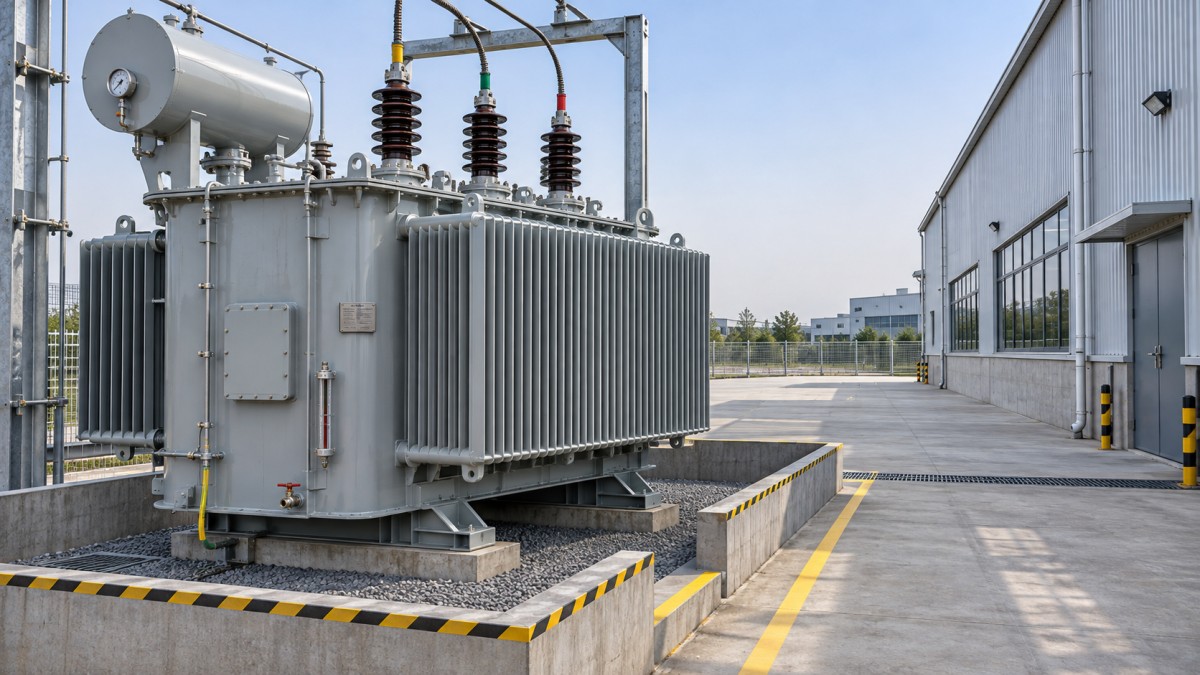
A liquid filled transformer is often a strong fit for an outdoor site with sufficient space for fire separation and liquid containment. A dry-type transformer may be easier to accommodate inside a building where liquid handling is difficult or where the fire strategy favors that construction. Neither choice is automatic: enclosure design, ventilation, ambient temperature, loading and local requirements can change the outcome.
For a technical evaluator, the useful comparison starts with the complete installation. A lower equipment price can be outweighed by a containment system, a larger transformer room, ventilation work or higher operating losses. The right choice is the one that meets the site’s electrical and safety requirements at an acceptable installed and operating cost.
Start with the installation space
Outdoor installations often give liquid-filled units room for cooling surfaces, access and any required separation from buildings or other equipment. The site still needs a plan for leaks and for managing insulating liquid during maintenance or replacement. Drainage routes matter: a pad that appears spacious on a layout may sit close to a storm drain or an area where a spill would be difficult to contain.
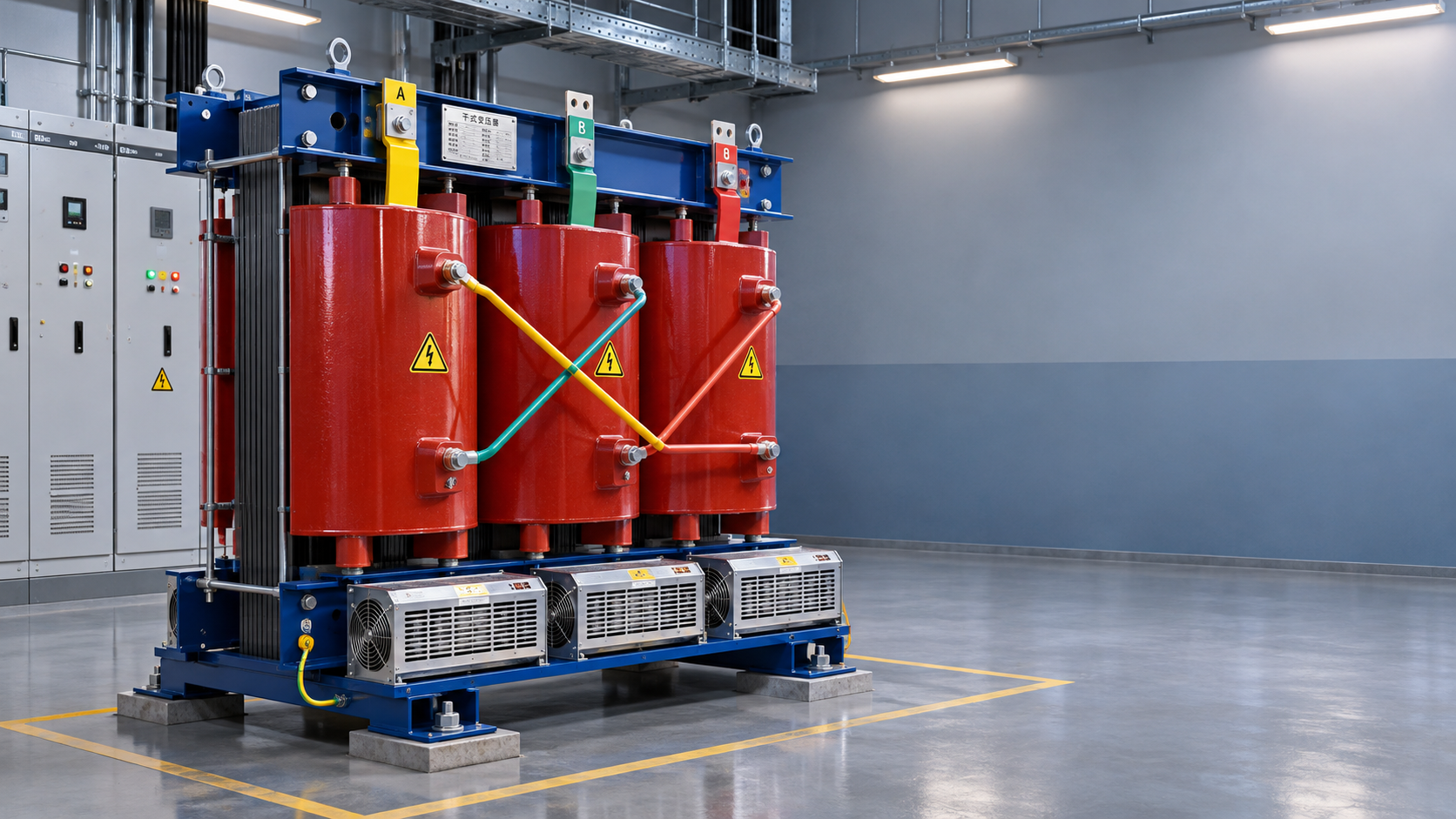
Dry-type units can be attractive in indoor electrical rooms because they do not contain the bulk insulating liquid found in liquid-filled designs. That does not eliminate fire engineering or ventilation requirements. The room must dissipate transformer losses, and its enclosure, clearances and access routes must suit the selected equipment. An enclosed dry-type unit in a poorly ventilated room can face temperature limits even when its nameplate capacity appears sufficient.
For either type, check delivery and replacement routes early. Door dimensions, floor loading, lifting access and the space needed to remove components can rule out an otherwise suitable arrangement. Outdoor exposure also deserves attention: a dry-type transformer needs an enclosure appropriate to the environment, while a liquid-filled unit still needs protection against corrosion, flooding and other site hazards.
Fire safety and containment can decide the layout
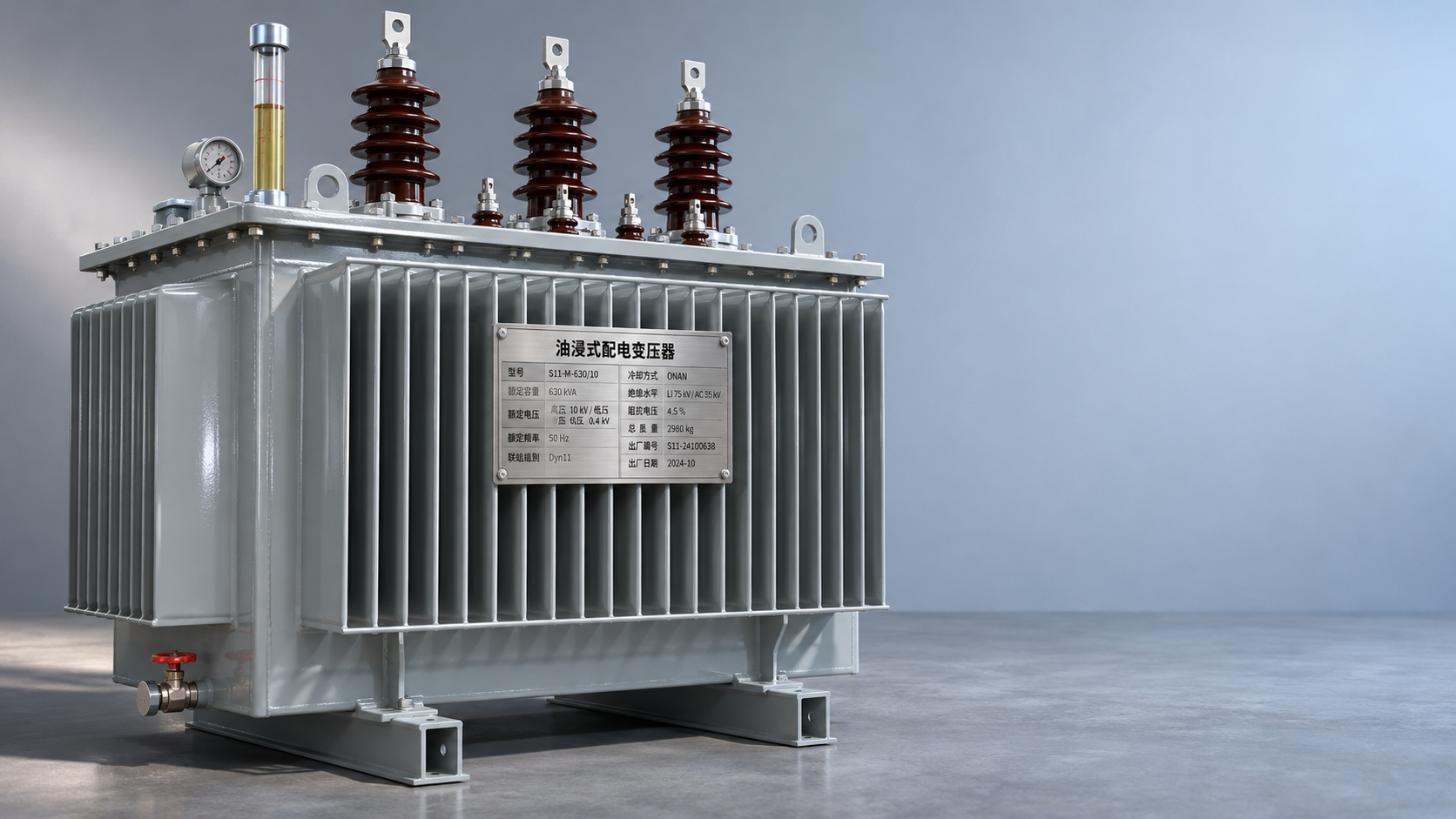
Liquid-filled transformers use an insulating fluid that affects both cooling and fire planning. Mineral oil and alternative insulating liquids do not have identical fire or environmental characteristics, so the liquid must be identified before the installation is assessed. Depending on the site and applicable rules, the design may need separation distances, barriers, fire protection or a containment system sized for a credible release.
Dry-type construction removes the need to contain a large volume of transformer insulating liquid, but it is not a guarantee that no fire protection measures are required. Insulation materials, enclosure construction, adjacent equipment and the building’s occupancy all affect the assessment. Dust and other contamination can also influence safe operation and maintenance.
Ask the project’s fire and environmental specialists to review the proposed location and fluid choice alongside the electrical design. Comparing a bare dry-type unit with a liquid-filled unit before those requirements are known can produce a misleading cost estimate. The reverse is also possible: an indoor dry-type option may require substantial room ventilation or building work.
Compare thermal performance against the actual load
Liquid transfers heat away from the windings and core to the tank and cooling surfaces. Dry-type designs rely on air cooling, sometimes with fans. Both can perform reliably when correctly specified; the important question is whether the proposed cooling arrangement can handle the site’s load profile and ambient conditions.
Provide suppliers with the expected maximum and minimum ambient temperatures, altitude, ventilation conditions and the anticipated loading pattern. A transformer serving a steady process load faces a different thermal duty from one with short peaks and long periods at low load. Harmonic-producing equipment can add losses and heating, so identify significant nonlinear loads rather than selecting on rated kVA alone.
Also distinguish continuous rating from any proposed overload or fan-assisted rating. If fans are needed to carry a normal operating load, assess the consequences of fan failure, control failure and maintenance downtime. For an indoor unit, confirm that heat rejected into the room can be removed under the same operating conditions used to rate the transformer.
Look beyond the purchase price
A useful comparison includes equipment, foundations or room construction, ventilation, fire measures, containment, commissioning and expected maintenance. It should also account for electrical losses over the intended evaluation period. No-load losses occur whenever the transformer is energized; load losses vary with loading. A unit that spends most of its life lightly loaded may therefore favor a different loss profile from one operating near capacity for long periods.
Request guaranteed loss figures at the specified rating and reference conditions. Estimate annual energy use from no-load losses and the expected load profile, then apply the site’s electricity cost. Use the same assumptions for both designs and include any fan or ventilation energy attributable to the installation. Future loading is uncertain, so comparing a low-load and a higher-load scenario can reveal whether the result depends heavily on one forecast.
As one liquid-filled option for a 10 kV-class application, the S13 Series Oil-Immersed Power Transformer is offered in rated capacities from 30 to 2,500 kVA, with Yyn0 or Dyn11 connection options. Those choices make it a candidate for further evaluation where an oil-immersed installation is acceptable. The applicable loss figures, voltage combination, impedance and dimensions should be established for the specific rating before comparing it with a dry-type alternative.
Plan for inspection and service access
Maintenance differs in kind as well as frequency. A liquid-filled unit requires attention to the condition of the liquid and tank, including leak checks and any fluid testing or servicing appropriate to the design and operating conditions. Access for sampling, handling and spill response should be possible without obstructing adjacent equipment.
A dry-type unit avoids liquid servicing, but its cooling passages, insulation surfaces, connections and any fans still require inspection. Dust, moisture or corrosive contaminants can make cleaning and condition assessment more demanding. In both cases, the maintenance plan should reflect the manufacturer’s instructions, the installation environment and the consequences of taking the unit out of service.
Before making the final selection, compare two complete proposals against the same electrical duty and site layout. Confirm the installed footprint, heat rejection, losses, protection interfaces and maintenance access for each. If one option only works after assuming a future room expansion, revised fire separation or a reduced load, make that dependency visible in the decision.



 Where Can S22 Oil-Immersed Transformers Fit in Distribution Projects?
 Evaluating S20 Transformer Exporters: Documentation and Delivery Risks
 Protecting SCB14 Dry-Type Transformers From Moisture and Condensation
 Requesting an SCB18 Transformer Quote: Specifications to Include
 S20 Transformer Ratings Explained: Capacity, Losses and Impedance
 ZGS Combined Substation Cost: Equipment, Civil Works and Installation
GET A FREE QUOTE
We offer reliable products, competitive prices, and nationwide professional support, committed to providing customers with efficient and energy-saving power equipment solutions.