


An SCB12 Type Dry-Type Transformer compact design is suitable for a restricted plant room only when the complete installation—not just the transformer body—fits within the available space. The decisive checks are cooling airflow, manufacturer-specified clearances, electrical safety distances, and access for inspection. A smaller footprint that traps heat can undermine the capacity the equipment was selected to deliver.
In a compact substation or indoor electrical room, cable terminations, walls, louvers, and adjacent equipment all compete for the same volume. Start with the expected load and worst credible room conditions, then assess the proposed layout against the transformer’s documented cooling and installation requirements.
Start with the installed envelope, not the outline drawing
A dimensional drawing is a starting point, not proof that a unit will fit. It may show the transformer, enclosure, or both, but the installation also needs space for incoming and outgoing cables, bending radii, support brackets, grounding connections, and protective devices. Doors or removable panels must open far enough to permit the intended work without obstruction.
Ask the supplier to identify the dimensions that apply to the proposed configuration, including any enclosure, cooling fans, sensors, and terminal arrangements. On the room drawing, mark the equipment outline separately from required ventilation and working spaces. Check the route used to deliver and position the unit: a transformer that fits its final location may still be too large for a doorway or lifting route.
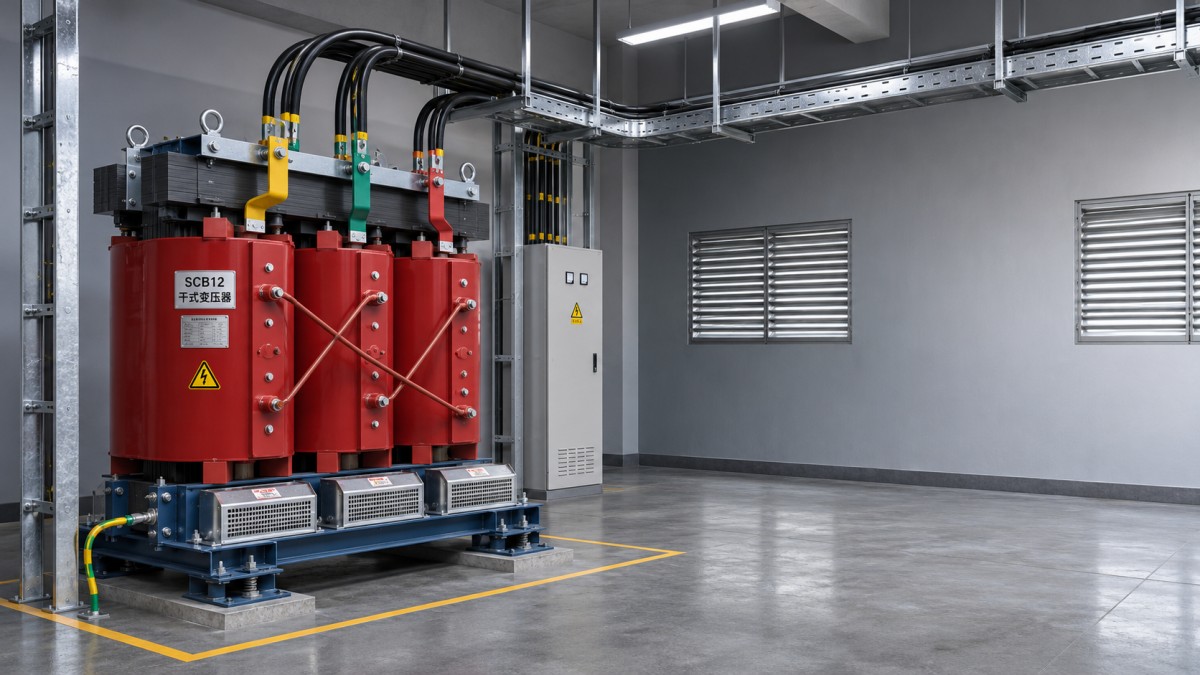
Clearances should come from the applicable equipment instructions and site requirements rather than a generic distance copied from another transformer. A bare unit and an enclosed unit can have different airflow paths and access needs. Electrical clearances must also be checked for the actual voltage, termination arrangement, and enclosure design.
Trace the heat out of the room
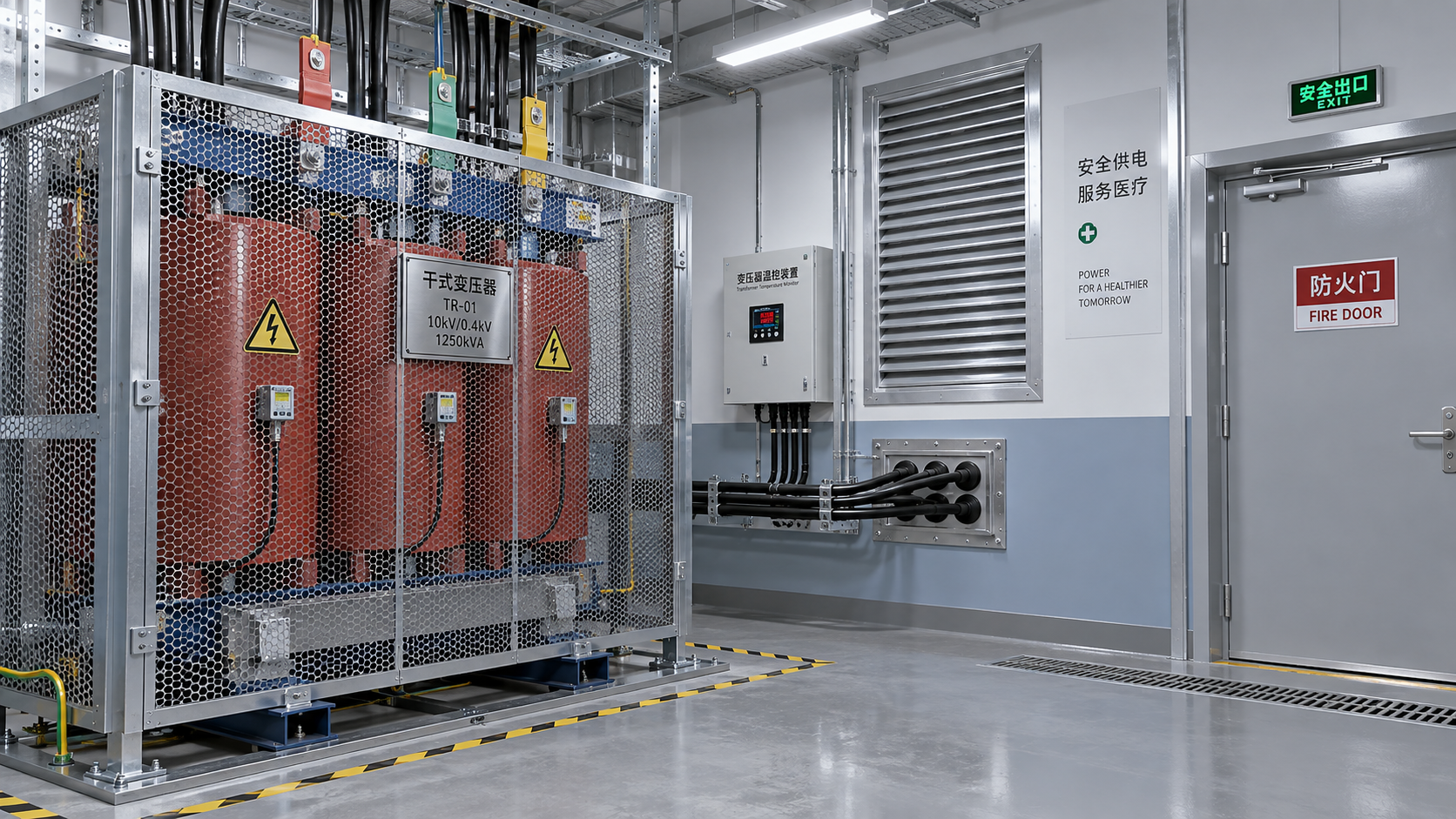
Dry-type transformers release heat into the surrounding air. In natural-air cooling, cooler air enters the relevant cooling passages and warm air rises away from the windings. An enclosure or room can interrupt that path even when there is no obvious physical contact with the transformer.
Follow the intended airflow from the room inlet, through or around the equipment as specified, to the outlet. An inlet placed where it draws back warm exhaust air can raise the effective cooling-air temperature. Louvers, screens, filters, duct bends, and nearby obstructions can also restrict flow. The gross opening size alone does not establish how much air can pass through it.
The room’s heat balance matters as much as the transformer’s footprint. Request the losses for the proposed rating and operating point, then include heat from other equipment and any relevant external heat gain. Compare that total with the ventilation system’s capacity under the expected outdoor and indoor conditions. Room ventilation must remove heat from the space; fans fitted to a transformer do not by themselves guarantee that the room can reject it.
Natural airflow or forced cooling?
Natural cooling avoids dependence on fan operation, but it still requires a viable air path and an acceptable ambient temperature. It is often the simpler choice where openings and room volume can support the specified duty without restricting access.
Forced cooling can be useful when the supplier has designed and rated the transformer for it. Evaluate fan power, controls, airflow direction, maintenance access, noise, and the response to a fan failure. Confirm the permissible load with fans running and with fans unavailable; do not assume the same rating applies in both conditions. A room exhaust fan and transformer-mounted fans should be assessed as a coordinated system, not as interchangeable remedies.
Match the rating to the actual load profile
Two installations with the same nominal demand can impose different thermal duties. Review expected continuous load, peak magnitude and duration, time between peaks, and foreseeable expansion. Ambient temperature and altitude can affect cooling capability, so provide these conditions to the supplier when requesting the rating and any applicable derating.
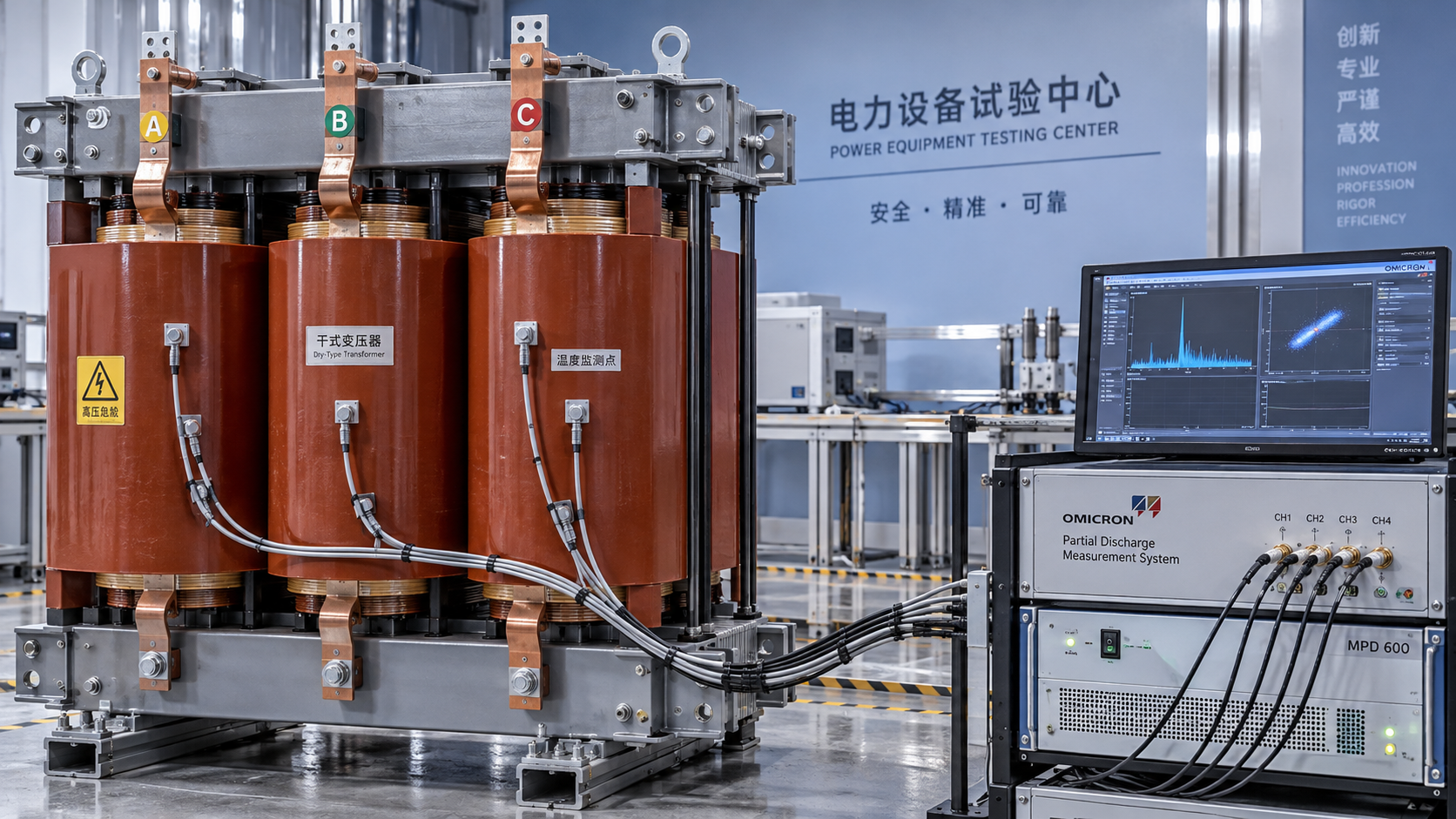
Also disclose loads that may introduce significant harmonics. Their additional heating effects should be assessed for the actual transformer design rather than assumed to be covered by a standard rating. Temperature monitoring is useful for observing operation, but a sensor and alarm do not compensate for an inadequately sized cooling path.
Where overload operation is proposed, obtain the manufacturer’s permitted loading conditions and the associated cooling configuration. Avoid treating a short-term overload capability as continuous spare capacity. The relevant decision is whether the unit can support the specified duty cycle without exceeding its documented thermal limits.
Compare configurations without treating model numbers as equivalents
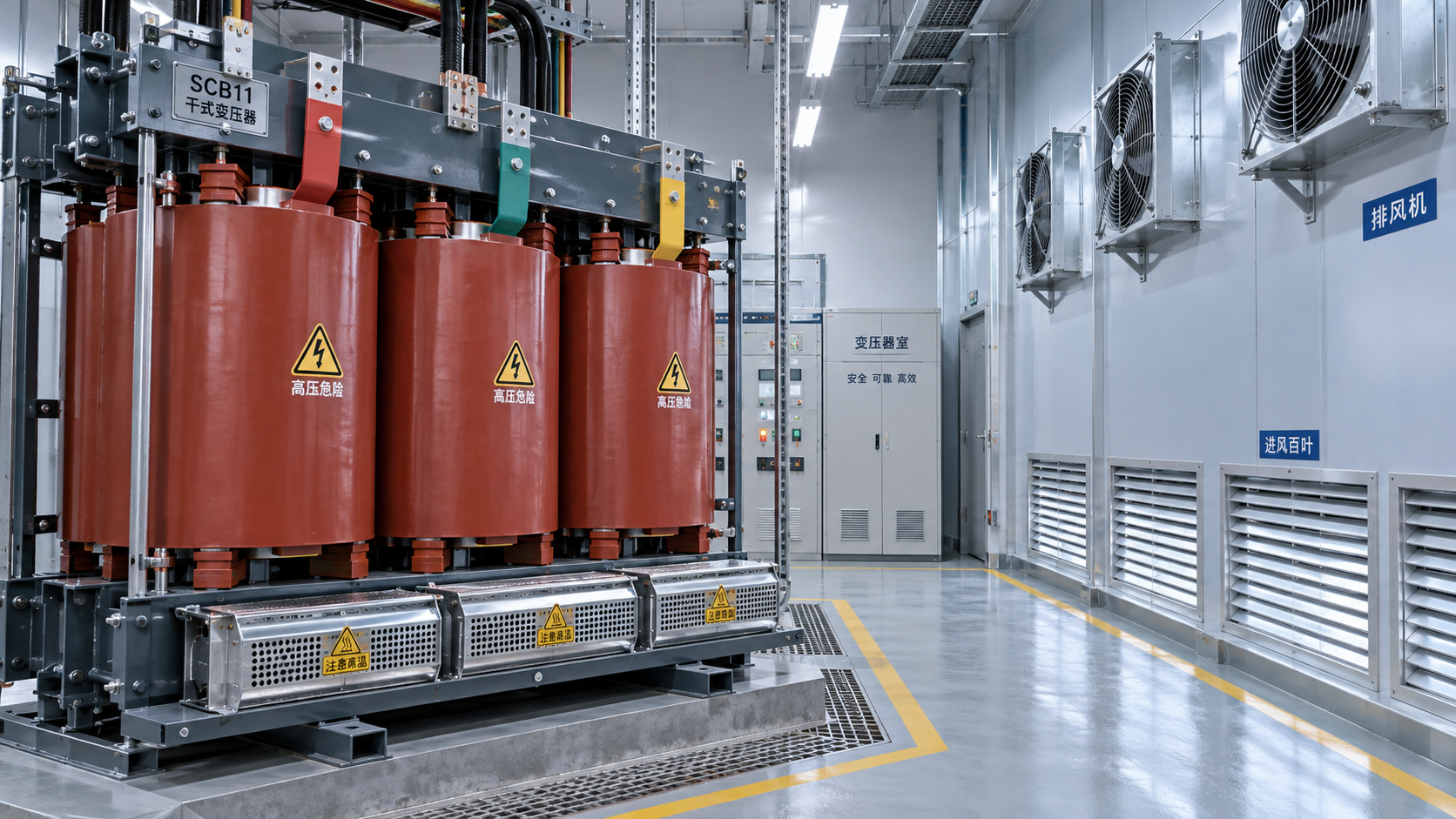
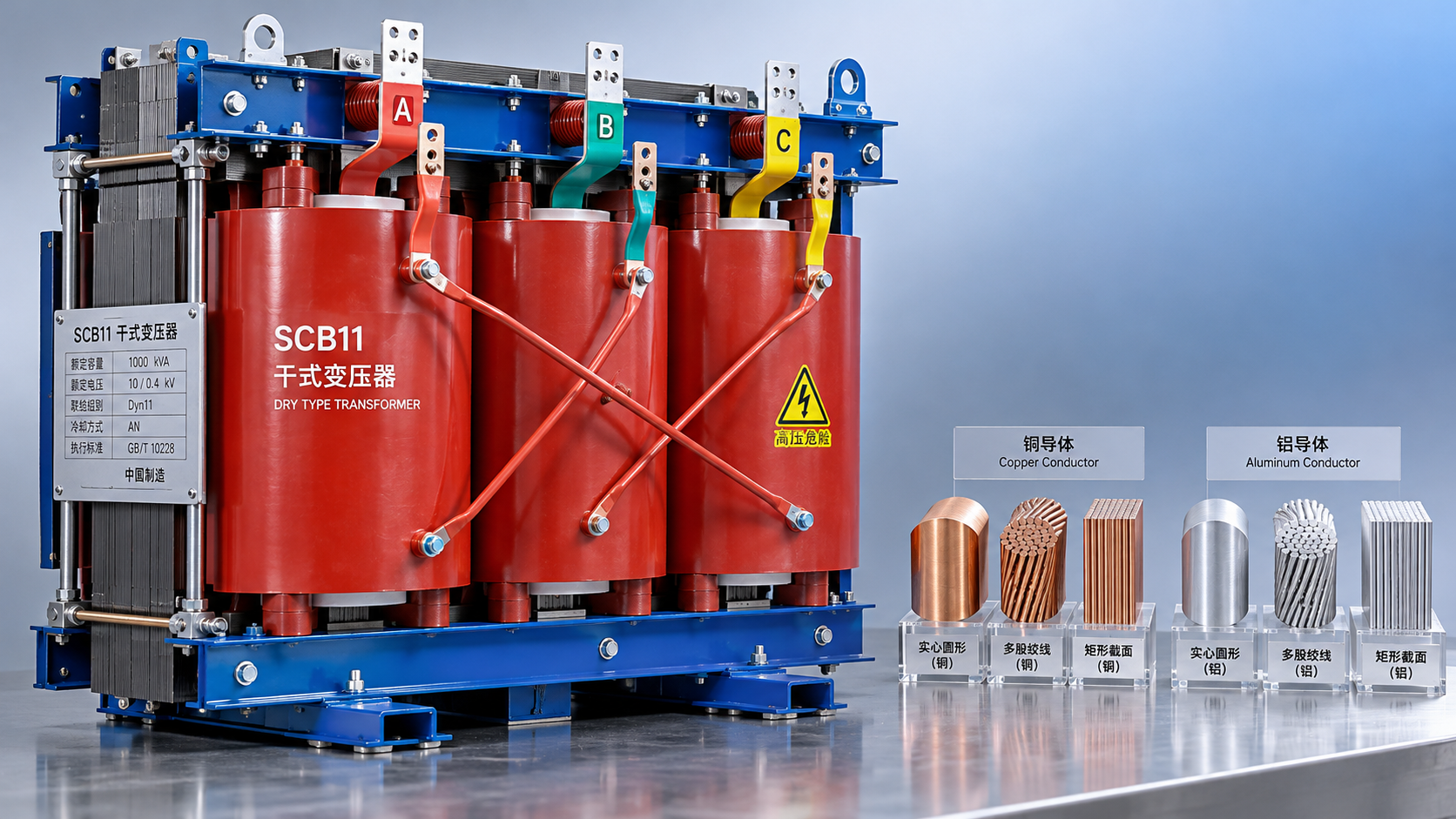
When an SCB12 unit cannot be accommodated with its required clearances, an alternative is to compare a different transformer configuration rather than simply reducing the surrounding space. The SCB11 Type Dry-Type Transformer is listed in a 30–20,000 kVA range at 35 kV and can be configured with temperature control and an air-cooling device. Its optimized high-voltage coil structure and resin-based insulation are relevant design characteristics, but they do not establish its dimensions or suitability for a particular room.
SCB11 and SCB12 designations should not be treated as interchangeable performance claims. For either option, request a quotation-specific drawing, losses, cooling designation, temperature limits, impedance, sound level, and ventilation requirements. Compare the proposed units at the same electrical rating and operating conditions, including any differences between natural and fan-assisted duty.
Resolve constraints before releasing the layout
A practical review can proceed in the following order:
- Fix the duty: document voltage, capacity, load profile, ambient conditions, altitude, and significant harmonic content.
- Obtain configuration-specific documents: request the outline, terminal arrangement, losses, cooling requirements, and clearances for the actual enclosure and accessories.
- Overlay the room layout: include cable routes, door swing, lifting access, adjacent equipment, and the spaces required for safe maintenance.
- Check the air path and heat removal: account for inlet and outlet restrictions, possible recirculation, other room heat sources, and the consequences of ventilation failure.
- Close the gaps: revise the room openings, equipment arrangement, cooling system, or transformer selection where the documented conditions cannot be met.
Before energization, verify that the installed arrangement matches the reviewed drawings and that temperature sensors, alarms, fans, and interlocks operate as specified. If the proposed clearance or ventilation differs from the supplier’s instructions, obtain an engineering assessment for that exact configuration rather than relying on the fact that the transformer physically fits.



 SCB12 Compact Transformer Design: Space and Ventilation Trade-Offs
 Verifying an SCB18 dry-type transformer manufacturer's production capacity
 How much ventilation does an SCB11 dry-type transformer room need?
 How winding material affects SCB11 dry-type transformer cost
 What fire safety requirements apply to hospital dry-type transformers?
 How to compare dry-type transformer manufacturers by test evidence
GET A FREE QUOTE
We offer reliable products, competitive prices, and nationwide professional support, committed to providing customers with efficient and energy-saving power equipment solutions.