


High-Voltage Transformer Selection: Insulation, BIL and Site Conditions
Selecting a high voltage transformer requires more than matching voltage and power ratings. Engineers must also assess insulation coordination, basic impulse insulation level (BIL), altitude, ambient temperature, humidity, and contamination at the installation site. These factors influence dielectric performance, cooling capacity, and long-term reliability. Evaluating them together makes it easier to compare specifications and identify gaps before a transformer is ordered.
Start with the network, not the nameplate
Rated voltage and apparent power establish the basic size of a transformer, but neither describes the electrical stresses it will encounter. A useful specification also identifies the highest system voltage, frequency, vector group, grounding arrangement, tap range, short-circuit conditions and expected loading profile.
The supply connection matters. A transformer connected to an exposed overhead line may face a different surge environment from one supplied through an underground cable. Switching devices, cable length, grounding and the location of surge arresters can also affect the voltage appearing at the transformer terminals. These details belong in the insulation coordination discussion, rather than being left until installation.
What BIL tells you—and what it does not
Basic impulse insulation level describes the ability of insulation to withstand a specified lightning impulse test voltage under defined conditions. It is not the normal operating voltage, and it is not a guarantee that a transformer will survive every surge occurring in service.
When comparing bids, check the specified impulse withstand level for each relevant winding and terminal, along with the applicable test standard. Also distinguish lightning impulse withstand from the separate power-frequency withstand requirement. A quotation that lists only a voltage class may leave too much open to interpretation.
Arrester selection should be considered alongside transformer insulation. The protective level seen at the transformer depends not only on the arrester itself but also on its location and connecting leads. Long leads or separation from the equipment can reduce the protective margin. The project’s insulation coordination study should establish the required margin and confirm whether the proposed arrangement is adequate.
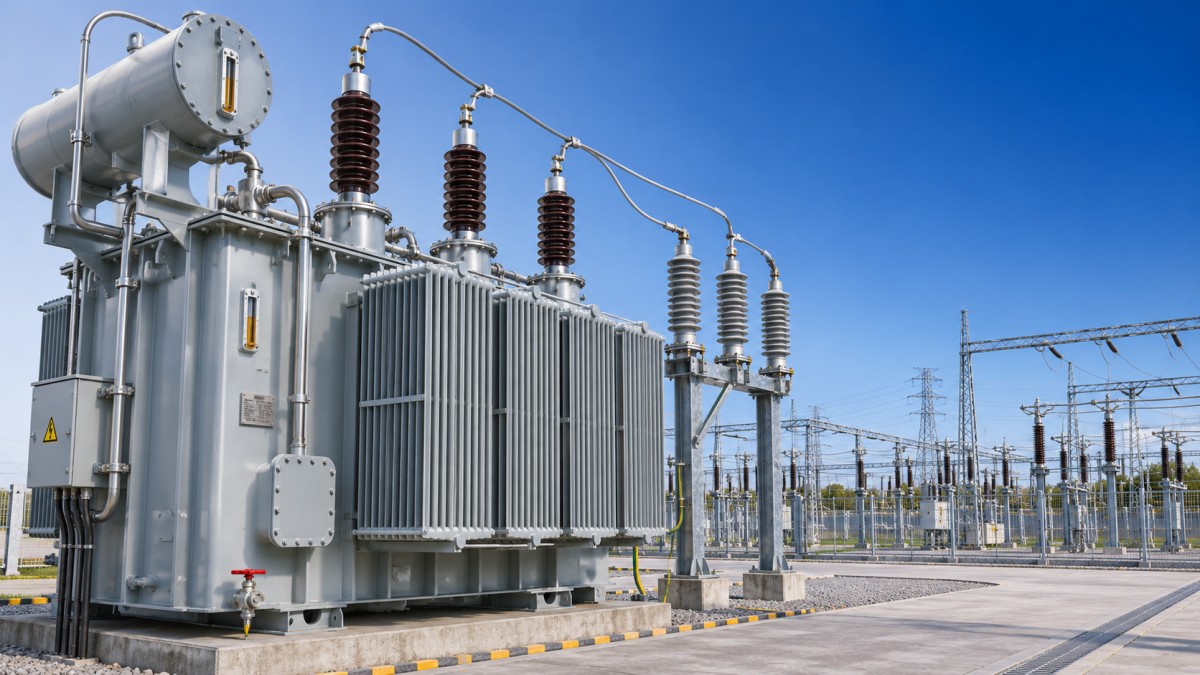
A higher BIL is not automatically the most economical answer. It may increase equipment size or cost, while a lower level without a properly assessed surge protection scheme can leave insufficient margin. The right comparison is between complete arrangements: transformer insulation, arresters, connections and the site’s likely overvoltages.
Altitude and temperature change the design assumptions
At higher elevations, lower air density can reduce cooling effectiveness and the dielectric strength of external air gaps. Depending on the equipment and applicable standard, the manufacturer may need to adjust clearances, cooling arrangements or the rated output. Do not assume that an altitude correction for external insulation applies in the same way to insulation inside a liquid-filled transformer; ask the supplier to identify which parts of the design are affected.
Ambient temperature deserves equal attention. Provide the maximum and minimum site temperatures, expected daily conditions and the temperature inside the transformer room—not merely the outdoor design value. Ventilation restrictions, nearby heat sources and enclosure losses can make the equipment’s actual cooling environment more demanding than the weather record suggests.
For variable loads, share the expected load cycle and any required emergency overload duration. An insulation thermal class identifies a temperature capability of the insulation system; it does not by itself authorize continuous operation at that temperature or guarantee a particular overload rating. Confirm temperature rise, cooling mode and permissible loading together.
Humidity and contamination affect dry-type choices
Condensation and conductive deposits are a difficult combination for exposed insulation surfaces. Coastal salt, industrial dust and moisture can create leakage paths, particularly when a transformer cools after shutdown. An enclosed location is not necessarily clean or dry: ventilation may bring contaminants into a room, while an overly restrictive enclosure can impair cooling.
The practical response depends on exposure. Discuss enclosure protection, ventilation, condensation control, inspection access and cleaning intervals with the manufacturer. If space heaters or filtered air are proposed, establish who supplies them and how they will be maintained. The enclosure rating alone does not describe every environmental risk.
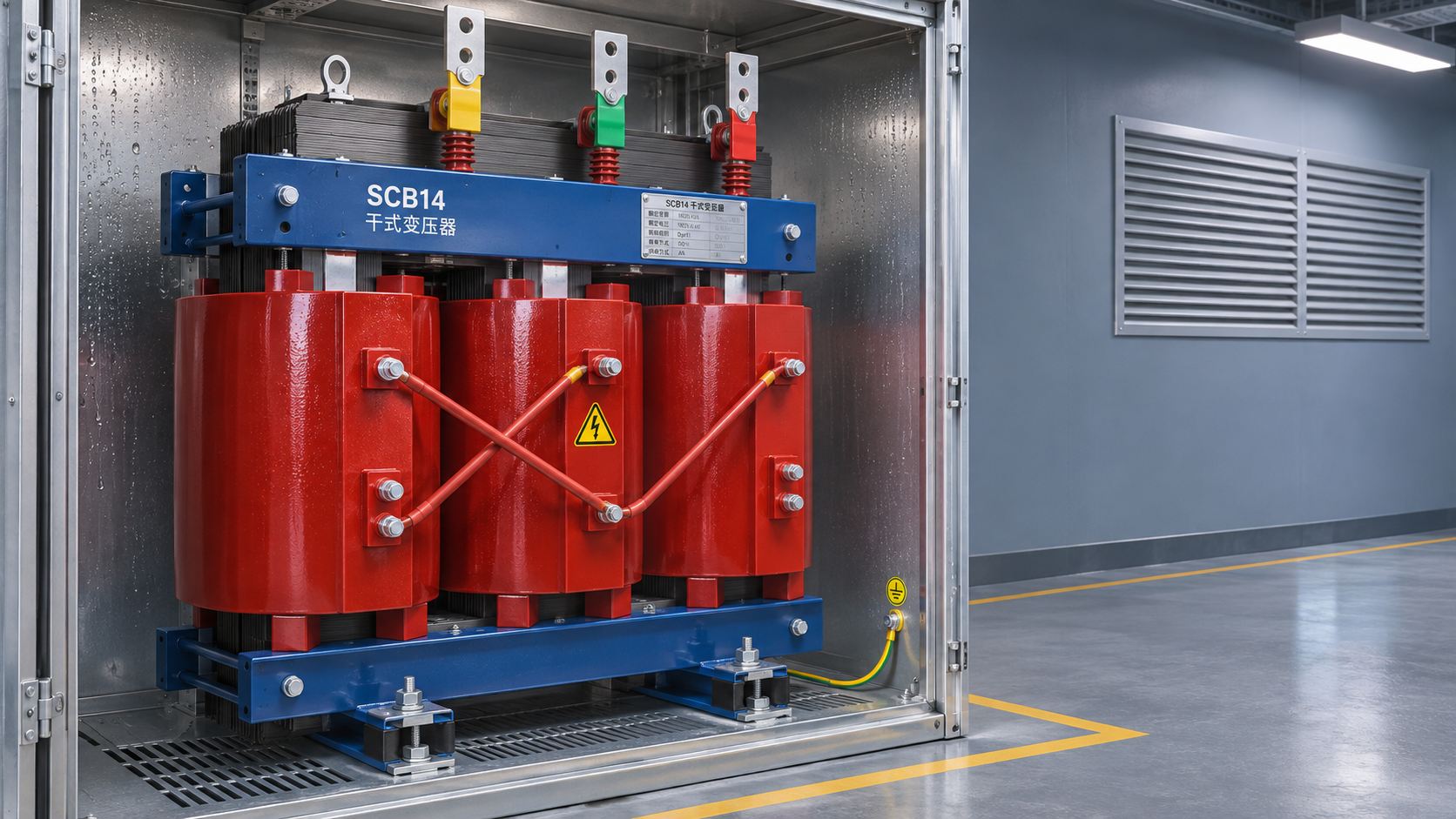
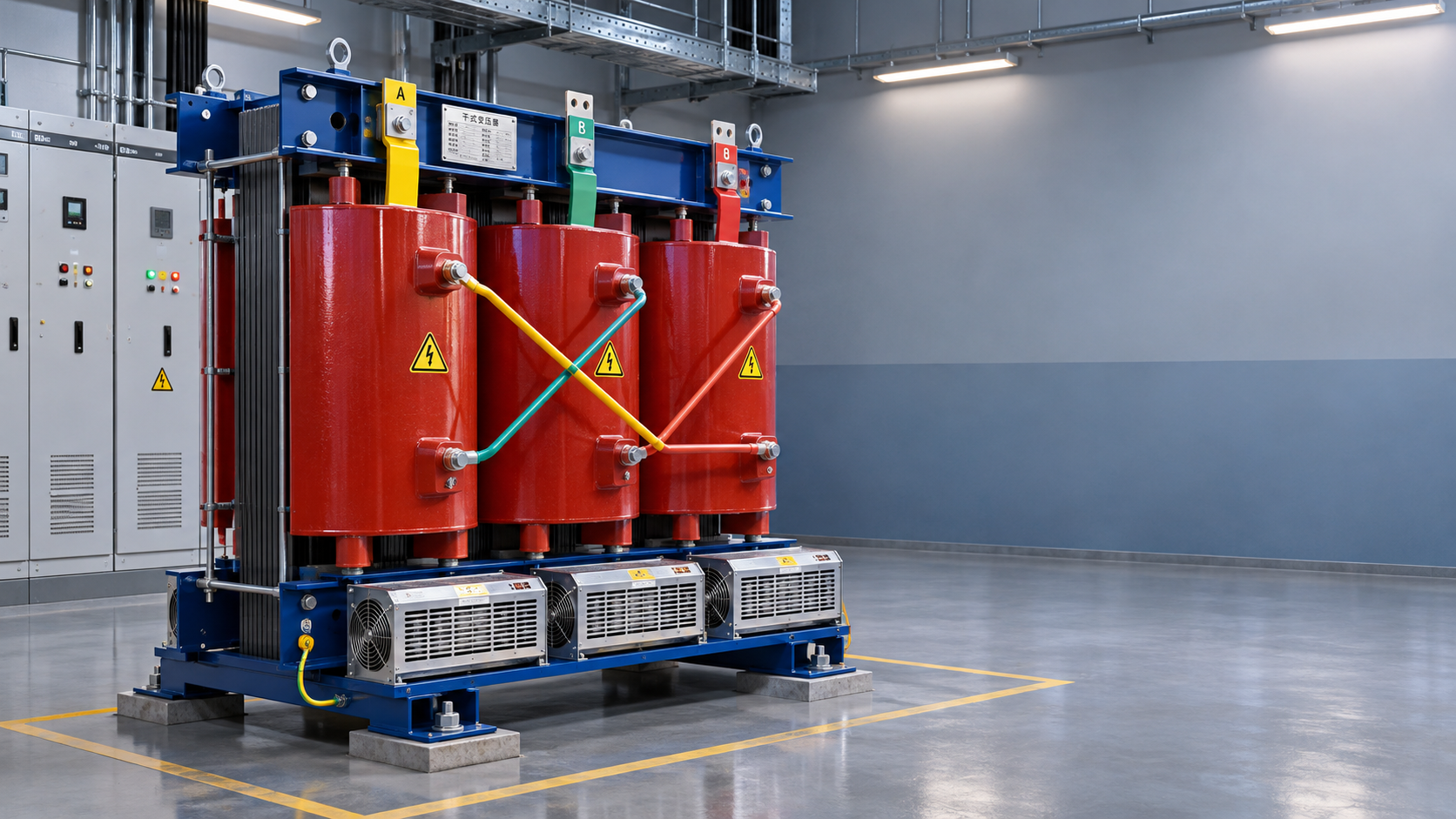
For indoor projects where fire behaviour and maintenance access are material concerns, Jiangsu Shengda Power Equipment’s Non-Encapsulated Dry-Type Transformer is one design to evaluate. Its stated features include H-class insulation and vacuum-impregnated, unencased coils. The supplier describes it as suitable for humid and polluted environments, but the actual site conditions, enclosure and maintenance plan should still be reviewed against the offered unit’s documentation.
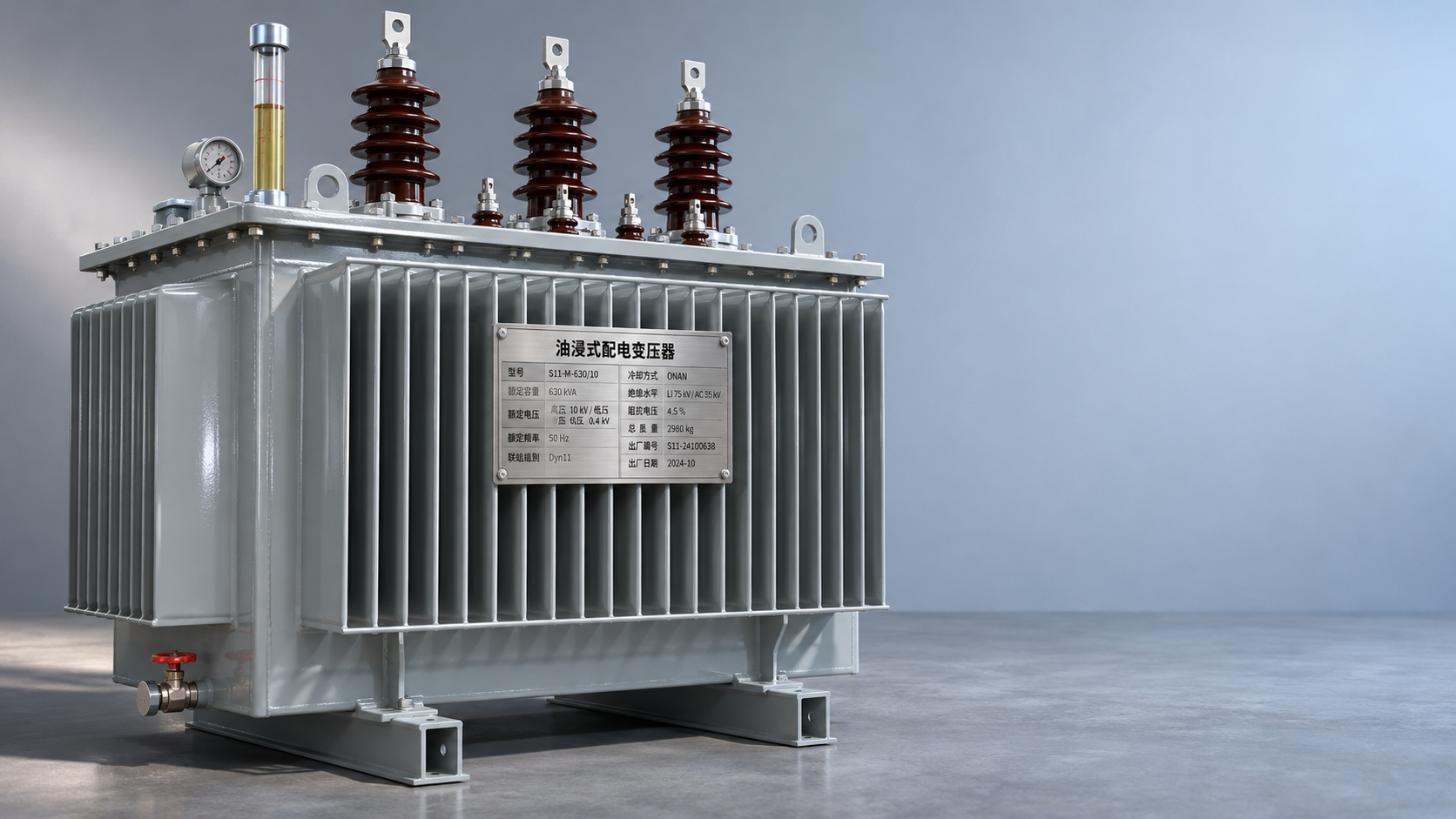
Dry-type construction also has trade-offs. It avoids insulating liquid in the installation space, but exposed or ventilated components may require particular attention to dust and airflow. Liquid-filled equipment may be appropriate elsewhere, subject to the project’s containment, fire protection and maintenance requirements. Neither construction should be selected solely on a generic claim about safety.
Make supplier comparisons technically equivalent
A low initial price can obscure differences in losses, noise, testing or site adaptations. Ask each bidder to state guaranteed no-load and load losses at the relevant reference conditions, impedance tolerance, sound level, cooling method and any derating. For an on-load tap-changing transformer, include the tap range and operating duty in the comparison.
The test schedule should identify routine tests and any agreed type or special tests, including impulse and partial discharge tests where specified. Request the proposed acceptance criteria, standard editions and documentation before placing the order. A statement of compliance is more useful when it names the applicable standard and makes clear which tests will be performed on the supplied unit.
Jiangsu Shengda Power Equipment manufactures transformer products including 10 kV and 35 kV models, dry-type units and on-load tap-changing designs. For a project evaluation, confirm the applicable standards and current editions for the destination market rather than assuming that a catalogue reference covers every contractual requirement.
Before requesting a final offer, consolidate the single-line diagram, insulation levels, arrester arrangement, site elevation, temperature data, contamination exposure and load profile into one specification. Ask bidders to list exceptions explicitly. That makes it easier to distinguish a genuine design alternative from an omission that could become a commissioning or maintenance problem.



 Where Can S22 Oil-Immersed Transformers Fit in Distribution Projects?
 Evaluating S20 Transformer Exporters: Documentation and Delivery Risks
 Protecting SCB14 Dry-Type Transformers From Moisture and Condensation
 Requesting an SCB18 Transformer Quote: Specifications to Include
 S20 Transformer Ratings Explained: Capacity, Losses and Impedance
 ZGS Combined Substation Cost: Equipment, Civil Works and Installation
GET A FREE QUOTE
We offer reliable products, competitive prices, and nationwide professional support, committed to providing customers with efficient and energy-saving power equipment solutions.