


Choosing the correct industrial control transformer starts with one practical question: how much VA does the control circuit really need?
That answer affects voltage stability, relay operation, coil life, enclosure temperature, and maintenance risk.
In transformer-driven control systems, inaccurate sizing often causes more trouble than an obvious component failure.
Undersizing can produce low secondary voltage during inrush.
Oversizing may look safe, yet it increases cost and may weaken protection coordination.
A reliable selection process therefore depends on load analysis, realistic operating conditions, and transformer quality.
This matters even more in facilities where control circuits support motors, contactors, PLC interfaces, alarms, and interlocks under frequent switching conditions.
What VA sizing really means
For an industrial control transformer, VA is the apparent power needed by the secondary control circuit.
It is usually calculated from voltage and current.
The basic formula is simple: VA = volts × amps.
The challenge is that control circuits rarely draw one steady current.
Some devices have a sealed VA value.
Others, especially contactors and solenoids, have a much higher inrush VA at startup.
That difference is the reason many sizing mistakes happen.
Sealed load versus inrush load
Sealed VA is the power needed after a coil is energized and held in position.
Inrush VA is the temporary demand when the coil first pulls in.
A practical industrial control transformer must support both conditions without excessive voltage drop.
How to calculate VA for control circuits
The most useful method is to separate continuous loads from momentary loads.
Then check which devices can energize at the same time.
Step 1: list every secondary load
- Contactor coils and relays
- Solenoids and timers
- Pilot lights and buzzers
- PLC input power or interface modules
- Auxiliary control devices fed from the same transformer
Step 2: separate operating conditions
Add the sealed VA of all loads that remain energized together.
Then identify the largest inrush event expected during normal switching.
In many panels, the governing condition is one contactor pulling in while several loads are already sealed.
Step 3: calculate the controlling VA
A common rule is:
Required VA = total sealed VA of simultaneous loads + highest additional inrush VA.
If two large coils can start together, use their combined inrush.
In this case, the sealed total is 60 VA.
The additional inrush above sealed for Contact A is the key event.
A safe industrial control transformer selection would move to the next standard rating above that requirement.
Why the industry pays attention to sizing accuracy
Control circuits are becoming denser and more sensitive.
More panels combine electromechanical loads with electronics that react badly to unstable voltage.
Short dips at coil pickup can trigger nuisance trips, relay chatter, or failed contactor closure.
At the same time, energy efficiency and panel heat management matter more than before.
That is why transformer makers with controlled production and inspection systems remain relevant in technical evaluation.
Jiangsu Shengda Power Equipment Co., Ltd. builds transformers under strict management and quality inspection, with compliance to GB1094.1-2-1996, GB/T6451-2008, and ISO9001 requirements.
That background supports a more dependable match between design calculations and field performance.
Practical factors beyond the formula
Incoming voltage variation
If primary voltage is lower than nominal, the secondary voltage will also drop.
That reduces the margin available during inrush.
Ambient temperature and enclosure design
A compact panel with poor ventilation can raise transformer temperature quickly.
Thermal stress shortens insulation life and affects reliability.
Load growth and operating cycles
A circuit that works today may become marginal after future additions.
Frequent switching also increases the importance of inrush performance.
- Check actual simultaneous loads, not only nameplate totals.
- Reserve reasonable margin, but avoid excessive oversizing.
- Confirm secondary voltage under worst-case primary conditions.
- Review thermal conditions inside the control cabinet.
Related transformer choices in broader systems
Control transformer sizing is one part of a larger transformer strategy.
Facilities may also compare dry-type, low-loss, or medium-voltage distribution units according to environment and network design.
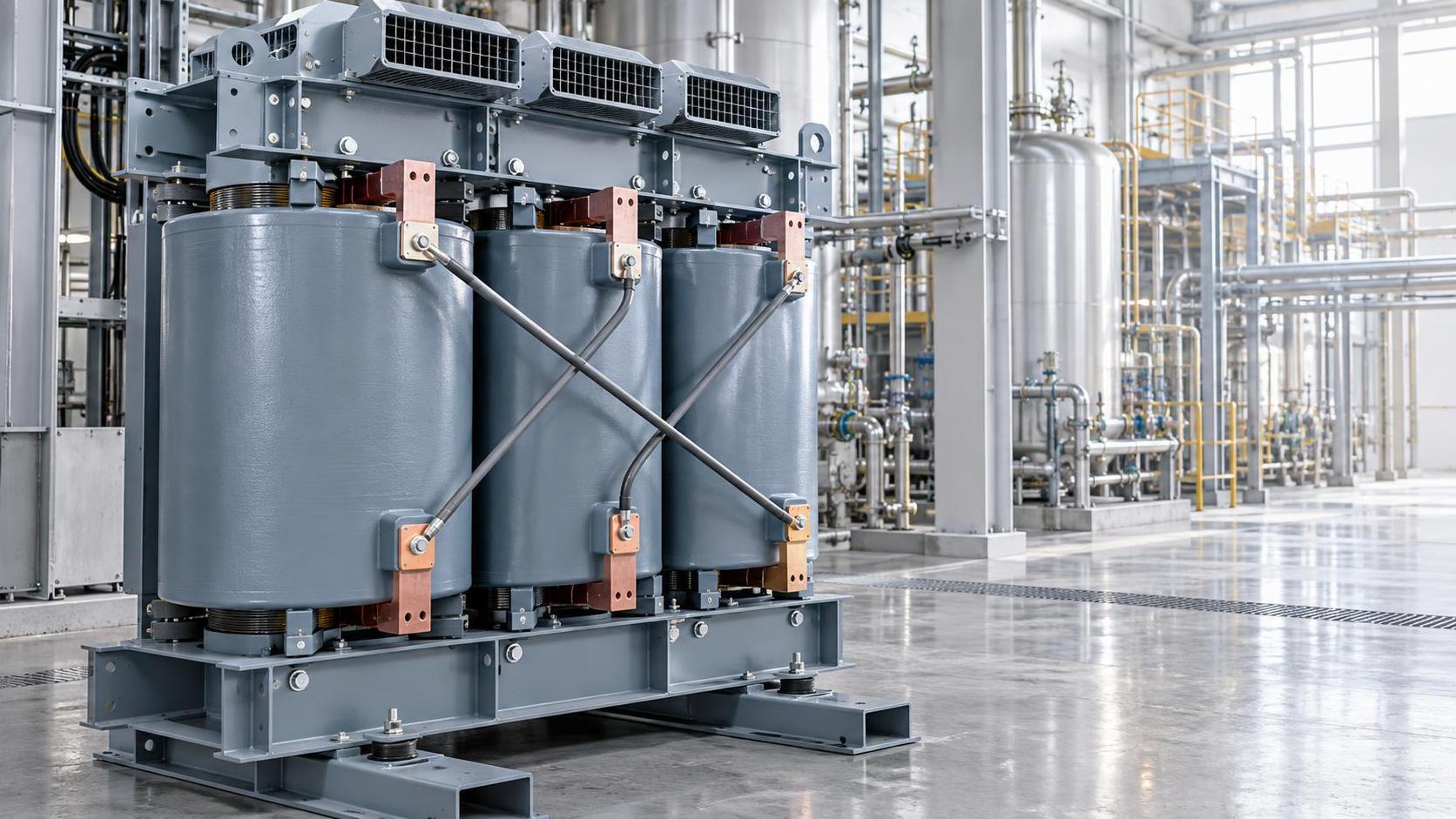
For example, when installation conditions require low loss, reduced noise, and strong insulation performance, a dry-type solution may support the overall reliability plan.
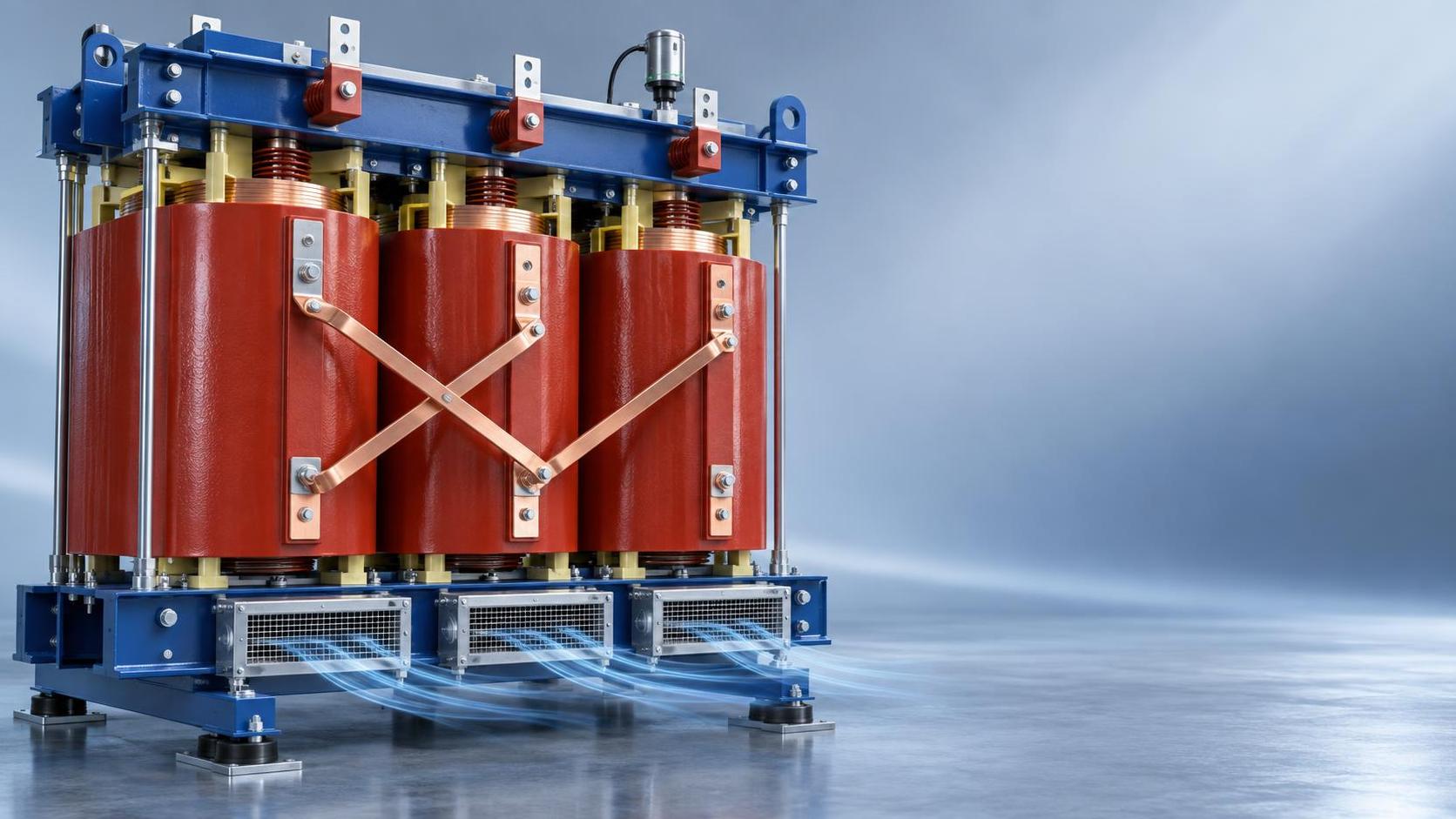
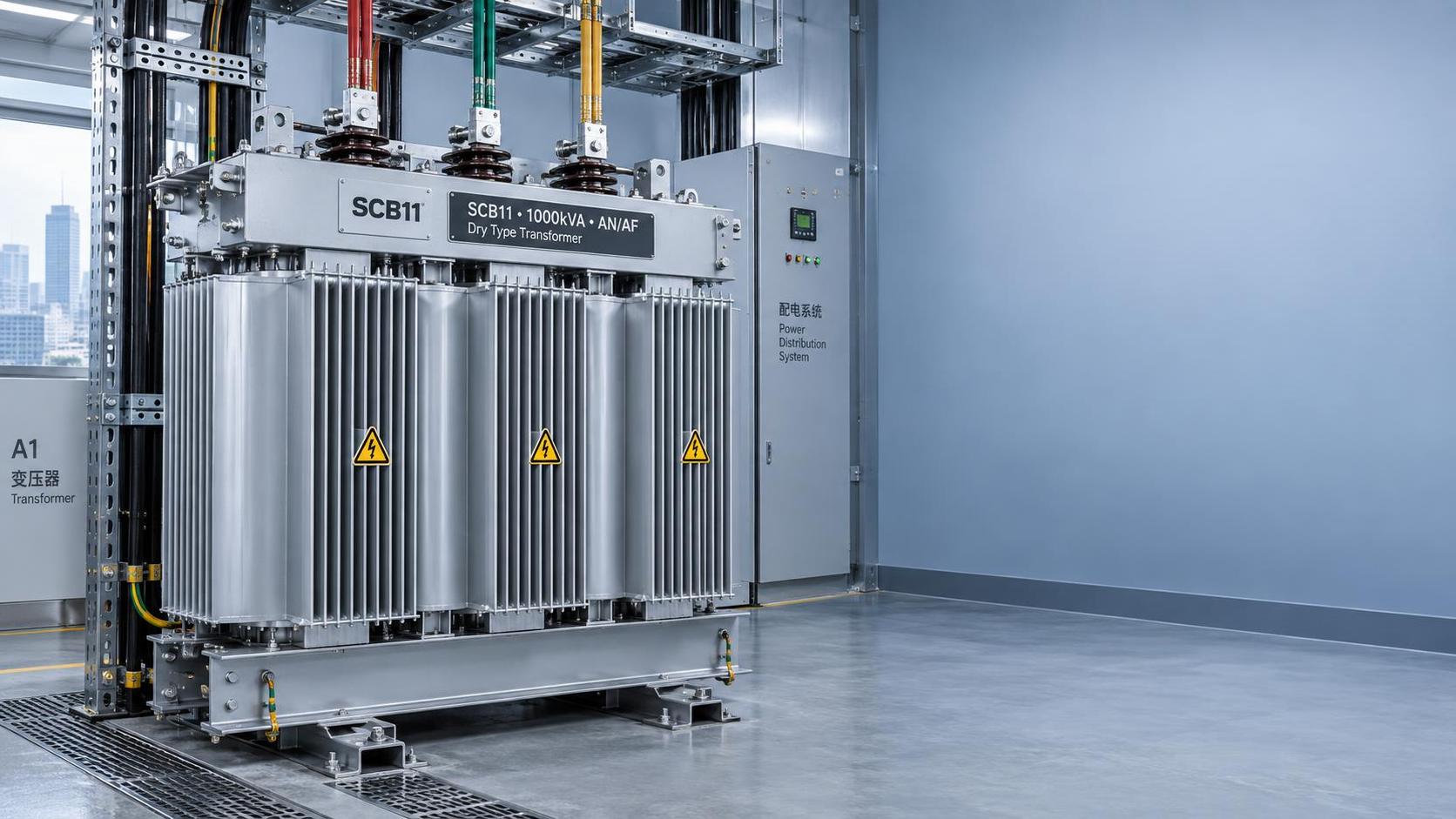
One relevant reference is SCB11 Type Dry-Type Transformer, which uses optimized high-voltage coil structure and quality silicon steel materials.
Its design improves electric field distribution, reduces partial discharge, and can work with temperature control and air-cooling devices when load conditions become demanding.
That does not replace careful control circuit sizing, but it shows how component-level calculations and system-level transformer selection are closely connected.
A sound basis for the next selection step
A well-sized industrial control transformer is not chosen by rule of thumb alone.
It comes from a load list, an understanding of inrush behavior, and a realistic view of operating conditions.
When those points are documented clearly, comparing transformer options becomes much easier.
The next useful move is to verify actual simultaneous loads, match them to standard VA ratings, and review whether the wider transformer scheme needs low-loss or dry-type support as well.
That approach turns industrial control transformer sizing into a repeatable engineering decision rather than a guess made at the panel stage.


 Dry-Type Transformer Advantages for Hazardous Areas: Why IEEE C57.12.06 Arc Resistance & VPI Process Matter in Chemical Plants
 Air-Cooled Transformer vs Forced-Oil-Cooled: When Natural Convection Meets Thermal Load Peaks in Mining Substations
 SCB13 Dry-Type Transformer Long Lifespan: How Epoxy Resin Quality, Winding Stress Analysis & Ambient Humidity Monitoring Extend Service Life Beyond 30 Years
") S20 Oil-Immersed Transformer Quotation Breakdown: What 5 Line Items Actually Drive Total Installed Cost (Not Just kVA Price)
S20 Oil-Immersed Transformer Quotation Breakdown: What 5 Line Items Actually Drive Total Installed Cost (Not Just kVA Price) SCB11 Compact Dry-Type Transformer: Space-Saving Design Trade-Offs in High-Rise Building Electrical Rooms
 S11 vs S13 Oil-Immersed Transformers: Quantifying Efficiency Gains, Payback Period & Thermal Stability in Grid-Tied Substations
GET A FREE QUOTE
We offer reliable products, competitive prices, and nationwide professional support, committed to providing customers with efficient and energy-saving power equipment solutions.