


A power transformer changes the voltage of alternating current (AC) between circuits through electromagnetic induction. On the grid, it raises voltage near generators for efficient transmission and lowers it at substations as electricity moves toward distribution networks and end users. The voltage changes, while the AC frequency stays the same.
Higher transmission voltage allows a given amount of power to flow at a lower current, reducing resistive losses in conductors. Transformers make that voltage change possible without a direct electrical connection between their windings. Their size, insulation, cooling system, and voltage ratings reflect where they are installed and the load they must carry.
Where power transformers sit on the grid
Electricity passes through several voltage levels between generation and consumption. The exact arrangement varies by network, but the sequence explains the transformer’s role:
- At generating stations: A step-up transformer raises the generator’s output voltage to a transmission level. Lower current for the same power reduces losses over long distances.
- At transmission substations: Transformers connect parts of the high-voltage network that operate at different voltage levels. They also support the transfer of power between transmission corridors and lower-voltage networks.
- At distribution substations: A step-down transformer reduces transmission or subtransmission voltage to the level used by local distribution feeders.
- Near electrical loads: Distribution transformers reduce feeder voltage further for buildings and equipment. Large industrial facilities may receive power at a higher voltage and use their own transformers on site.
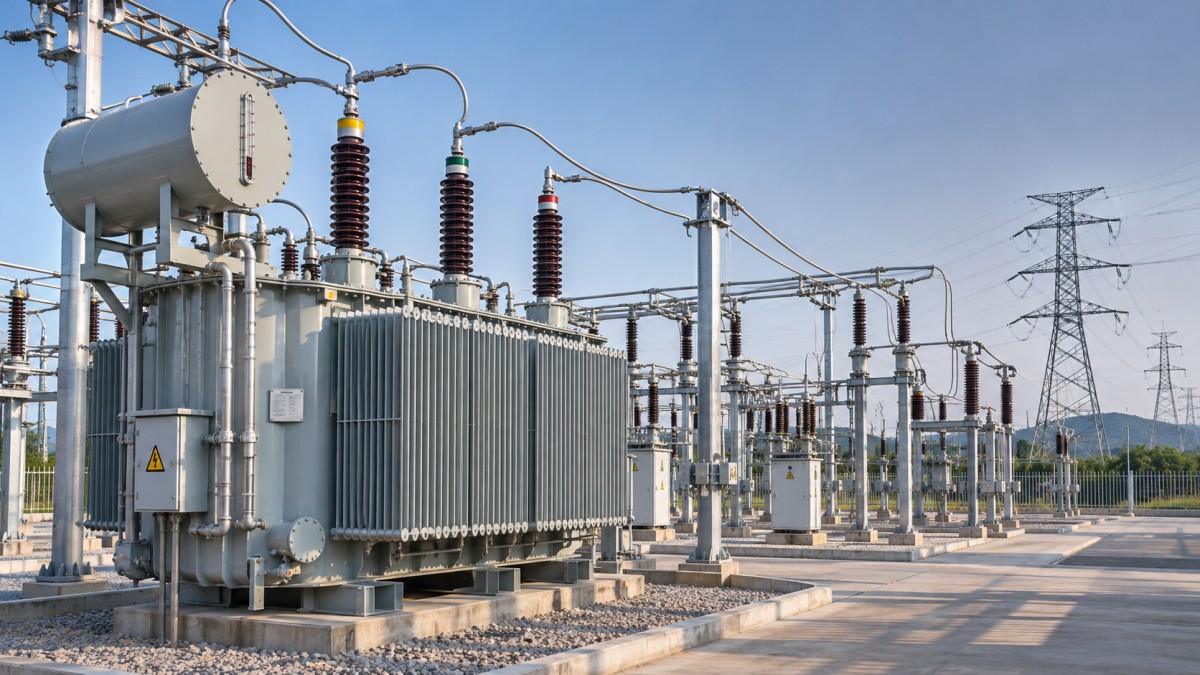
A renewable energy plant follows the same principle: output from its collection network is stepped up before connection to the wider grid. Transformers also link energy storage facilities and other large installations to the voltage level of their connection point.
How a transformer changes voltage
A basic transformer has a magnetic core and at least two windings. Alternating current in the primary winding produces a changing magnetic flux in the core. That changing flux induces voltage in the secondary winding. The ratio of turns in the two windings determines the approximate voltage ratio: more turns on the secondary side produce a higher voltage, while fewer turns produce a lower one.
A transformer does not create power. Apart from losses, power entering the primary side equals power leaving the secondary side. When voltage rises, current falls for the same power transfer; when voltage falls, current rises. The actual voltage at the terminals also changes with load because the windings and magnetic circuit have impedance.
Transformers require a changing magnetic field to operate continuously. They therefore work with AC; a steady direct-current supply does not produce the changing flux needed for normal transformer action.
Power transformers and distribution transformers
Both operate on the same electromagnetic principle, and the terminology overlaps. “Power transformer” often refers to units used in generation and transmission or in larger substations. “Distribution transformer” commonly describes a unit closer to the point of consumption, where voltage is reduced for local loads. A distribution transformer is still a transformer that transfers electrical power; the name describes its typical position and duty.
The distinction matters because operating patterns differ. A transmission substation unit and a transformer serving a building can experience different load cycles, insulation requirements, and constraints on space or noise. A label alone does not establish a unit’s capacity or suitability. Its rated voltages, apparent power rating, cooling method, and intended duty give a more useful picture.
Components that affect operation
The core provides a path for magnetic flux, while insulated copper or aluminum windings carry current. Insulation separates conductors and other live parts at different electrical potentials. These components generate or must withstand heat, so temperature control is part of the design.
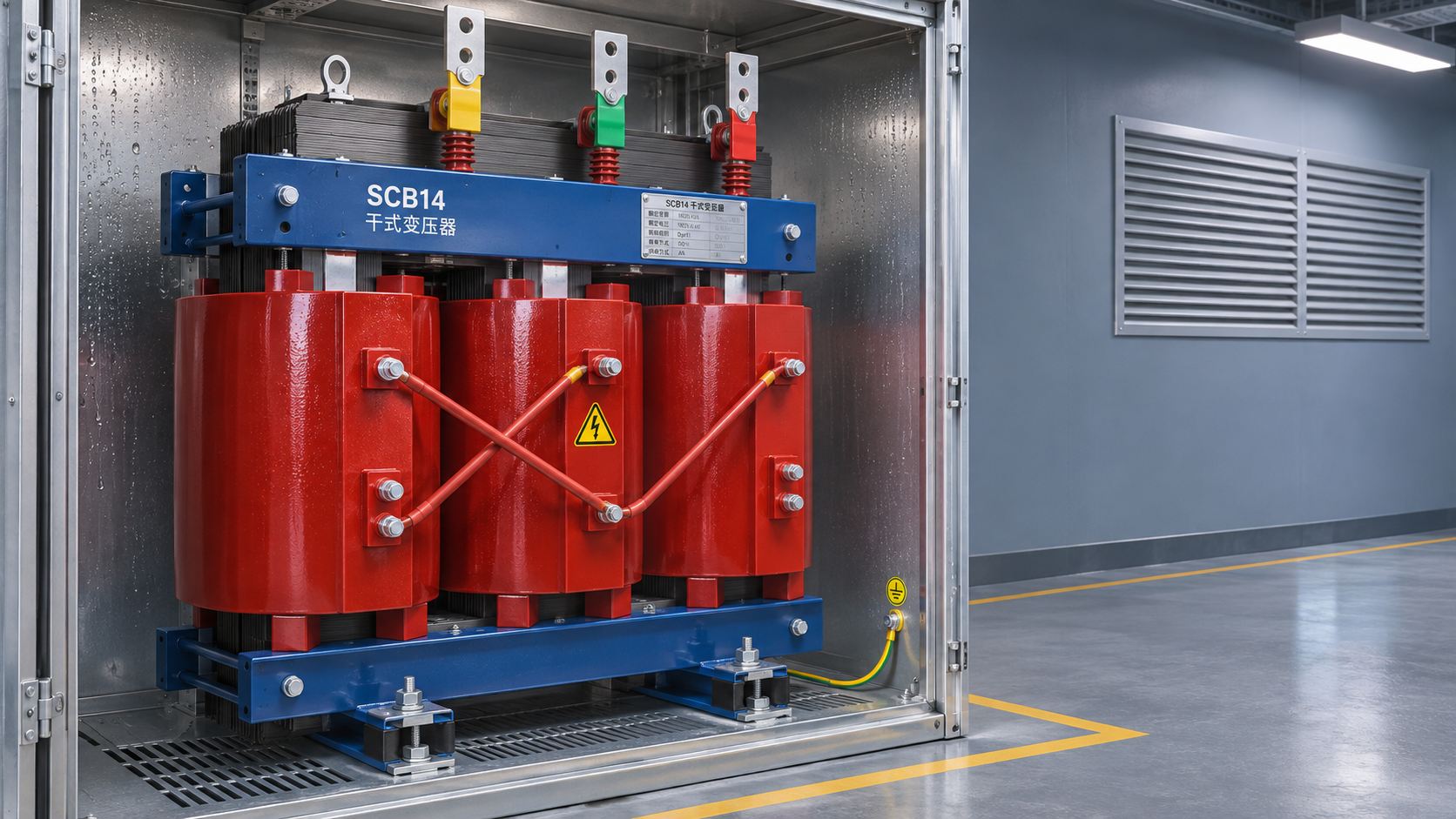
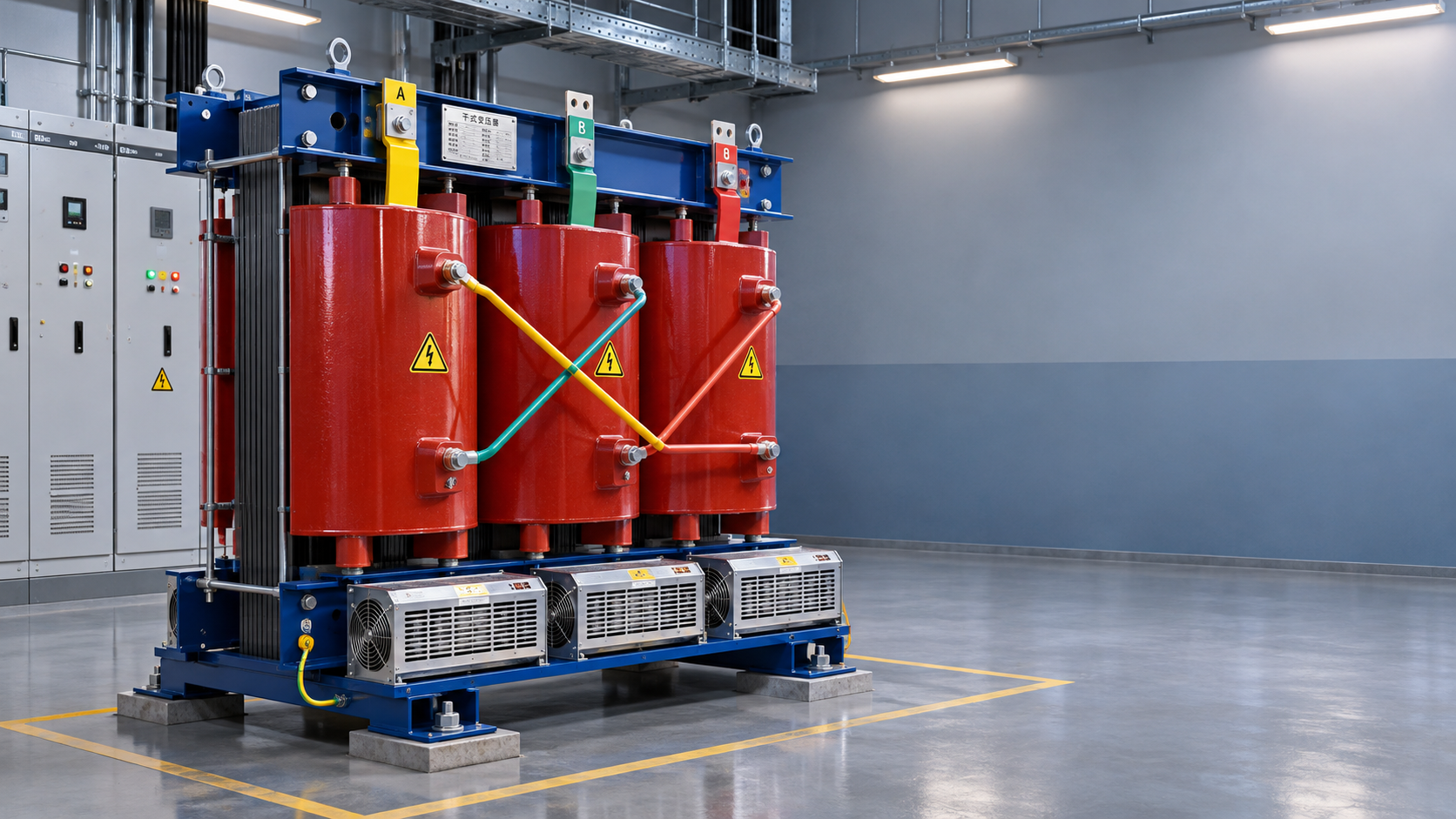
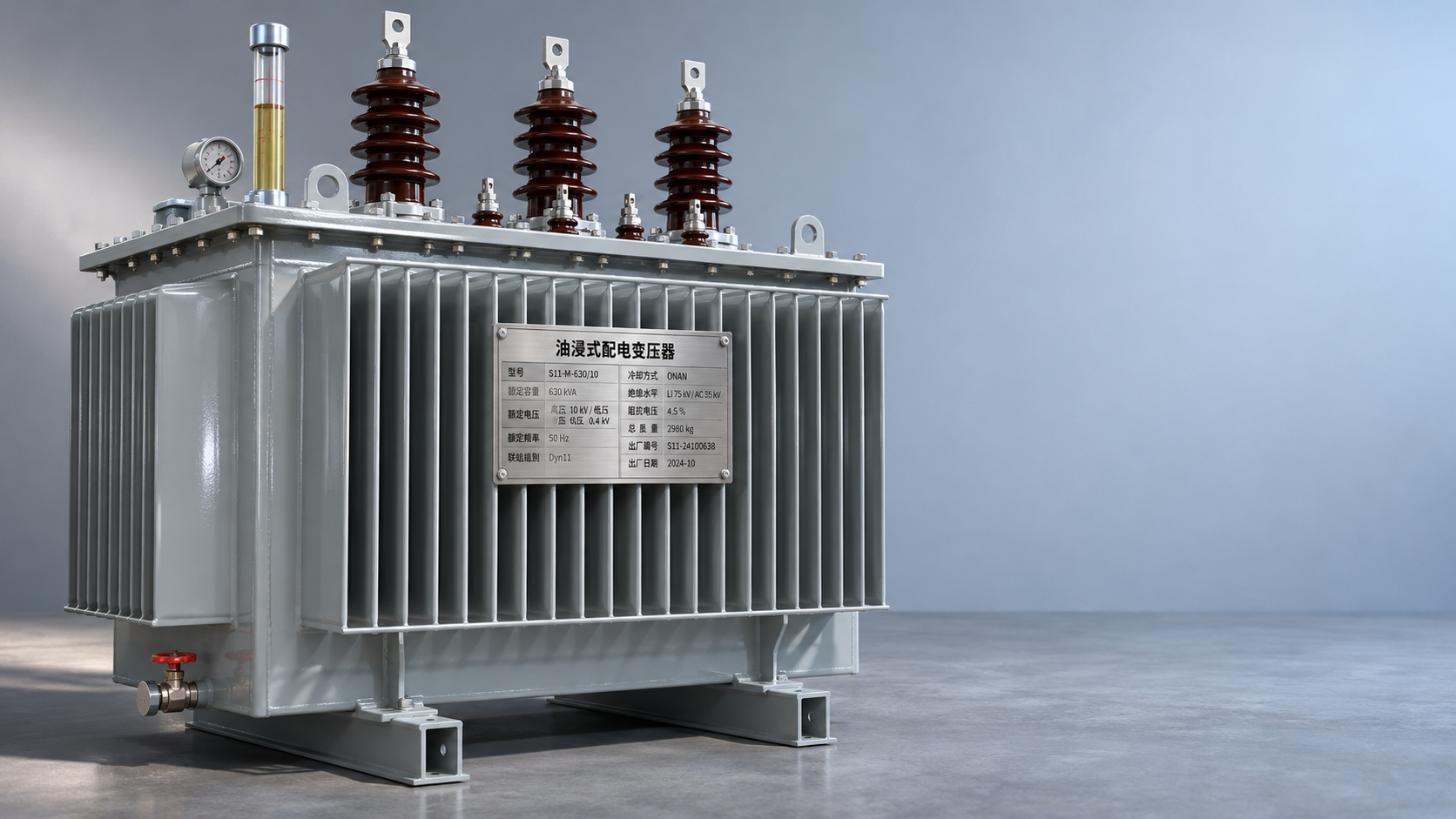
In an oil-immersed transformer, insulating liquid transfers heat away from the core and windings and contributes to electrical insulation. A dry-type transformer uses solid insulation and air for cooling. Oil-immersed units often serve outdoor substations, while dry-type units are also used indoors where installation and fire considerations influence the choice. Either type needs an installation suited to its cooling and protection requirements.
Many transformers have tap changers that adjust the effective winding ratio to help control voltage. An on-load tap changer makes adjustments while the transformer is energized and carrying load. An off-circuit tap changer requires the transformer to be de-energized before its setting is changed. Tap range and control arrangements determine what voltage variation the equipment can accommodate.
Reading transformer ratings in context
The apparent power rating, expressed in kVA or MVA, indicates the load the transformer is designed to carry under its specified conditions. It should be read alongside voltage, frequency, cooling, and temperature limits. A unit with the right MVA rating can still be unsuitable if its voltage ratio, connection arrangement, or available cooling does not match the network.
Losses occur whenever a transformer operates. Core losses are present while it is energized, even with no load connected; winding losses increase with current. A unit energized continuously at light load therefore has a different loss profile from one carrying a heavy load for long periods. Comparing only one loss figure can obscure that difference.
For an indoor distribution setting, the SCB13 Type Dry-Type Transformer illustrates this distinction: its stated no-load loss is more than 20% lower than that of the SCB11 model. That comparison concerns energized, no-load losses; total operating losses also depend on loading. Its suitability still rests on the required voltage, capacity, ventilation, and installation conditions.
Impedance is another rating with practical consequences. It affects voltage drop under load and the current that can flow during a short circuit. A transformer’s impedance must fit the surrounding network and its protective equipment, rather than being assessed as an isolated number.
Voltage control and protection at substations
A substation transformer works with switches, circuit breakers, and protective relays. The transformer changes voltage; the associated equipment detects faults and isolates affected circuits. Instrument transformers provide measurements used by protection and monitoring systems.
Temperature, load, and insulation condition affect service life. Oil-immersed units require attention to their insulating liquid and cooling equipment, while dry-type units rely on unobstructed airflow and clean insulation surfaces. A rise in operating temperature can reflect heavy loading, restricted cooling, or a developing fault, so the cause cannot be established from temperature alone.



 Where Can S22 Oil-Immersed Transformers Fit in Distribution Projects?
 Evaluating S20 Transformer Exporters: Documentation and Delivery Risks
 Protecting SCB14 Dry-Type Transformers From Moisture and Condensation
 Requesting an SCB18 Transformer Quote: Specifications to Include
 S20 Transformer Ratings Explained: Capacity, Losses and Impedance
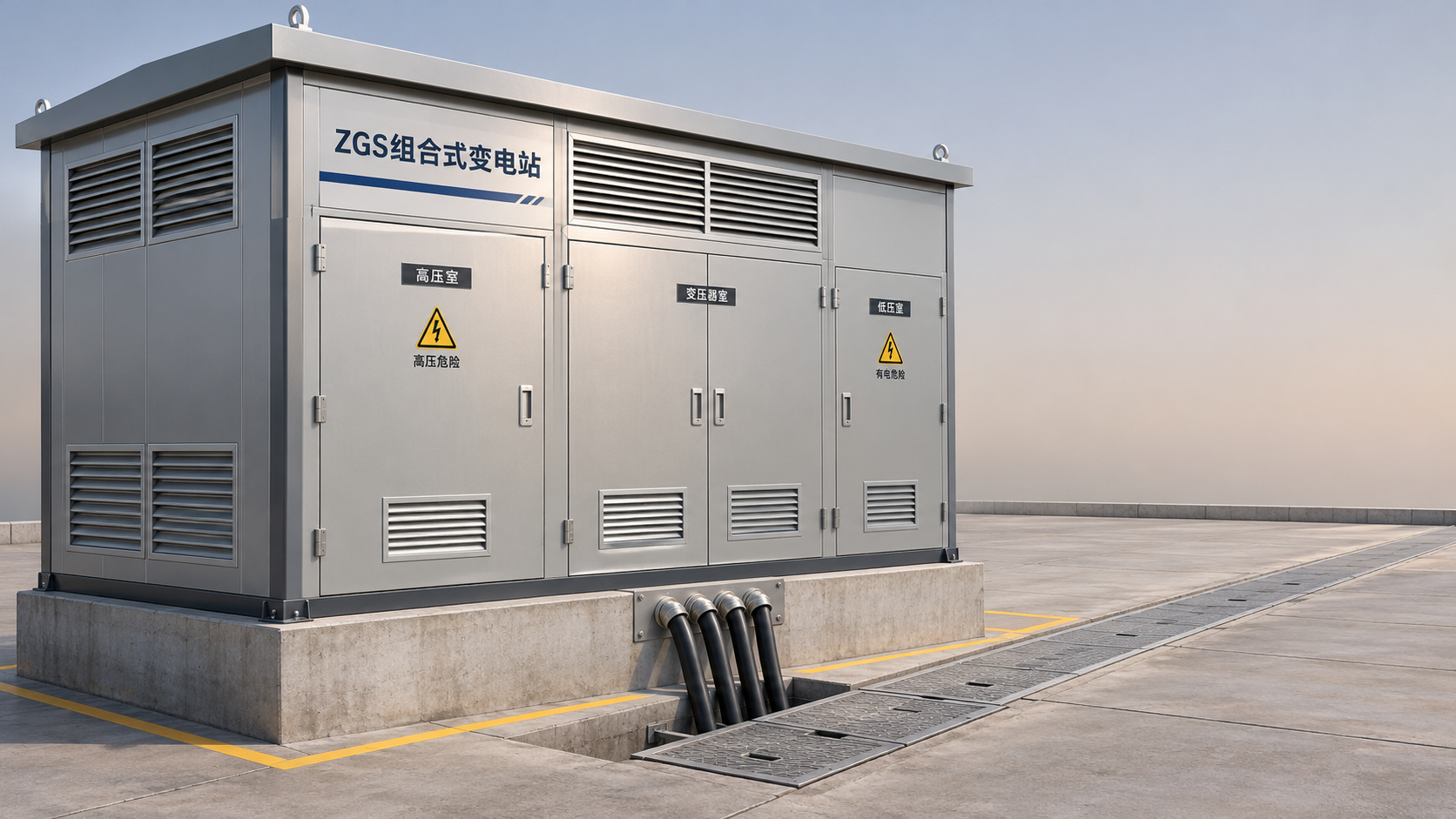
 ZGS Combined Substation Cost: Equipment, Civil Works and Installation
GET A FREE QUOTE
We offer reliable products, competitive prices, and nationwide professional support, committed to providing customers with efficient and energy-saving power equipment solutions.